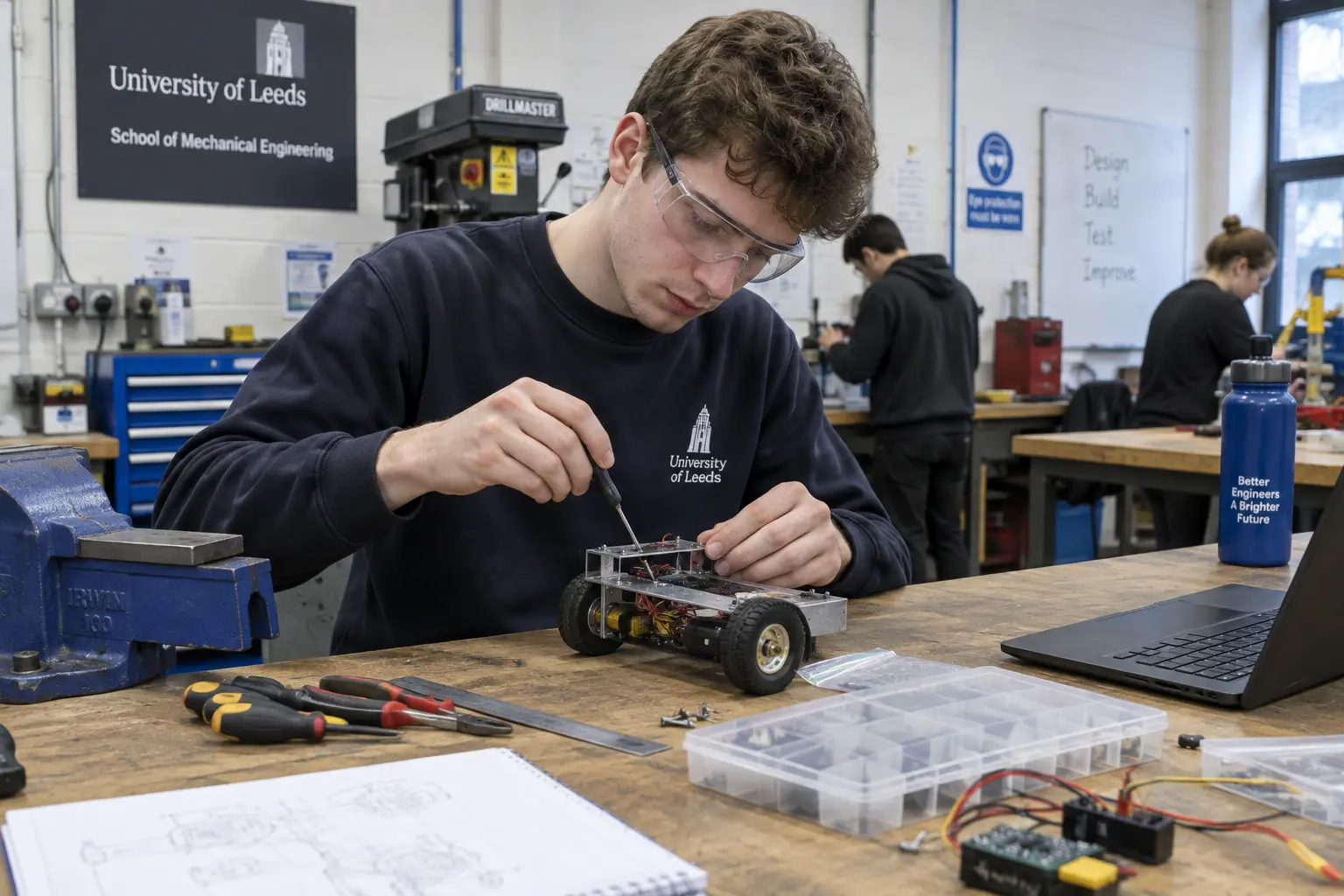
To budget and schedule an engineering dissertation: map your timeline backwards from submission through testing, workshop access, ethics/risk-assessment sign-off and supervisor review, then price the few real costs — printing, materials, and any software or component you are not issued for free. Below is the step-by-step version, built around what makes an engineering project different from a literature-based dissertation: physical access, lead times, and iteration.
Why an engineering dissertation timeline looks different
A literature-based or survey dissertation is mostly writing time. An engineering dissertation — design-and-build, simulation, or lab-based — has hard dependencies a writing-only project does not: booking workshop or lab time, waiting for a risk assessment to be signed off before you can touch equipment, ordering a component with a delivery lead time, and running enough design-test-redesign cycles to have real results by the time you write them up. Missing any one of these by a week can cascade into missing the whole submission, which is why an engineering timeline needs to be built backwards from the deadline with buffer at every dependency, not forwards from your enthusiasm on day one.
Step 1: Fix your submission date and work backwards
Start with the actual submission date from your handbook, then subtract, in order: time to print and bind (if required), time for a full proofread and final formatting pass, time to write up results and discussion once testing is complete, time for the testing/data-collection phase itself, time for any ethics or risk-assessment approval, and time to finalise your design or method. Writing the deadline backwards like this, rather than planning forwards, is what reveals whether your intended testing phase is actually feasible in the time left.
Step 2: Clear risk assessment and workshop induction before you plan to need them
Most UK engineering departments require a signed risk assessment and a workshop or lab induction before you can access machinery, chemicals, high-voltage equipment or certain software licences, and this approval step is not instant — it depends on your supervisor and technician availability, which varies by department and time of year. Build in explicit slack here: a project that assumes lab access from week one, with no buffer for approval delays, is the single most common cause of an engineering dissertation falling behind schedule. Raise your risk assessment as early as your department allows, even before your design is finalised, since the categories of work (not the exact procedure) are usually enough to get the process started.
Step 3: Account for component and material lead times
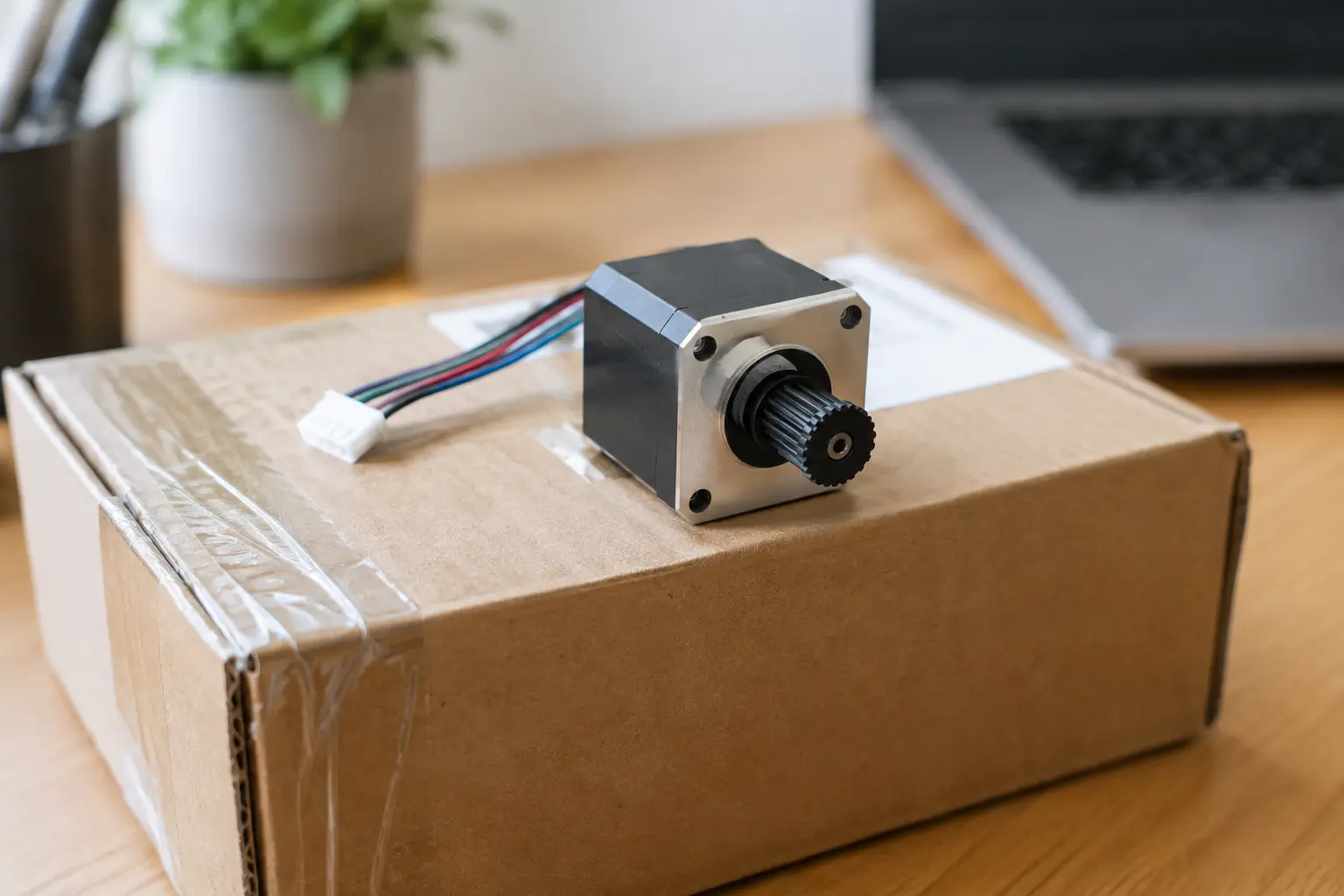
If your project needs a specific component, material or piece of test equipment you do not already have access to, its delivery lead time is now part of your critical path, not a side detail. A worked illustrative example: if a specific sensor takes three weeks to arrive after ordering, and you only order it once your literature review is finished in week 6, your testing phase cannot realistically start before week 9 — plan the order date, not just the testing date, into your schedule from the outset. Where possible, order or reserve equipment as soon as your design is fixed enough to know what you need, even if other chapters are still being written.
Step 4: Budget for the design-test-redesign cycle, not a single test
A design that fails its first test is normal, not a sign the project has gone wrong — but only if you have scheduled time for at least one redesign-and-retest cycle. Illustrative worked schedule for a twelve-week practical phase: weeks 1–2 build or set up; weeks 3–4 first test round; week 5 analyse results and redesign; weeks 6–7 second test round; week 8 buffer for a third round if needed; weeks 9–12 write up results, discussion and conclusions. Note that week 8 is deliberate buffer, not optimism — a schedule with no slack for a failed first test is the design equivalent of expecting every citation to be found on the first search.
Step 5: Price the few costs that are real
Most UK undergraduate engineering dissertations are not expensive, but three cost categories are worth budgeting explicitly rather than discovering late: consumable materials for a build or prototype (even a simple physical prototype can involve printing, fixings, or sensor costs that add up); any software licence not already provided free through your university (most CAD, simulation and analysis packages your department uses are available under an educational licence, but confirm this before assuming it, since a small number require a personal or lab-only licence); and printing, binding or poster costs for submission or a final presentation. State any cost your department does not cover as a delimitation on what you were able to test, not a hidden line in your discussion.
Step 6: Schedule supervisor meetings around your test dates, not just calendar weeks
The most useful supervisor meeting in an engineering dissertation is the one that happens right after a test round, while the results are fresh and a redesign decision still needs making — not a generic fortnightly check-in disconnected from your actual testing schedule. When you build your project plan, place supervisor meetings deliberately around the points where you will need a decision made (does a failed first test mean a design change or a testing-method change?), and say so explicitly when booking them.
A worked timeline and budget (illustrative)
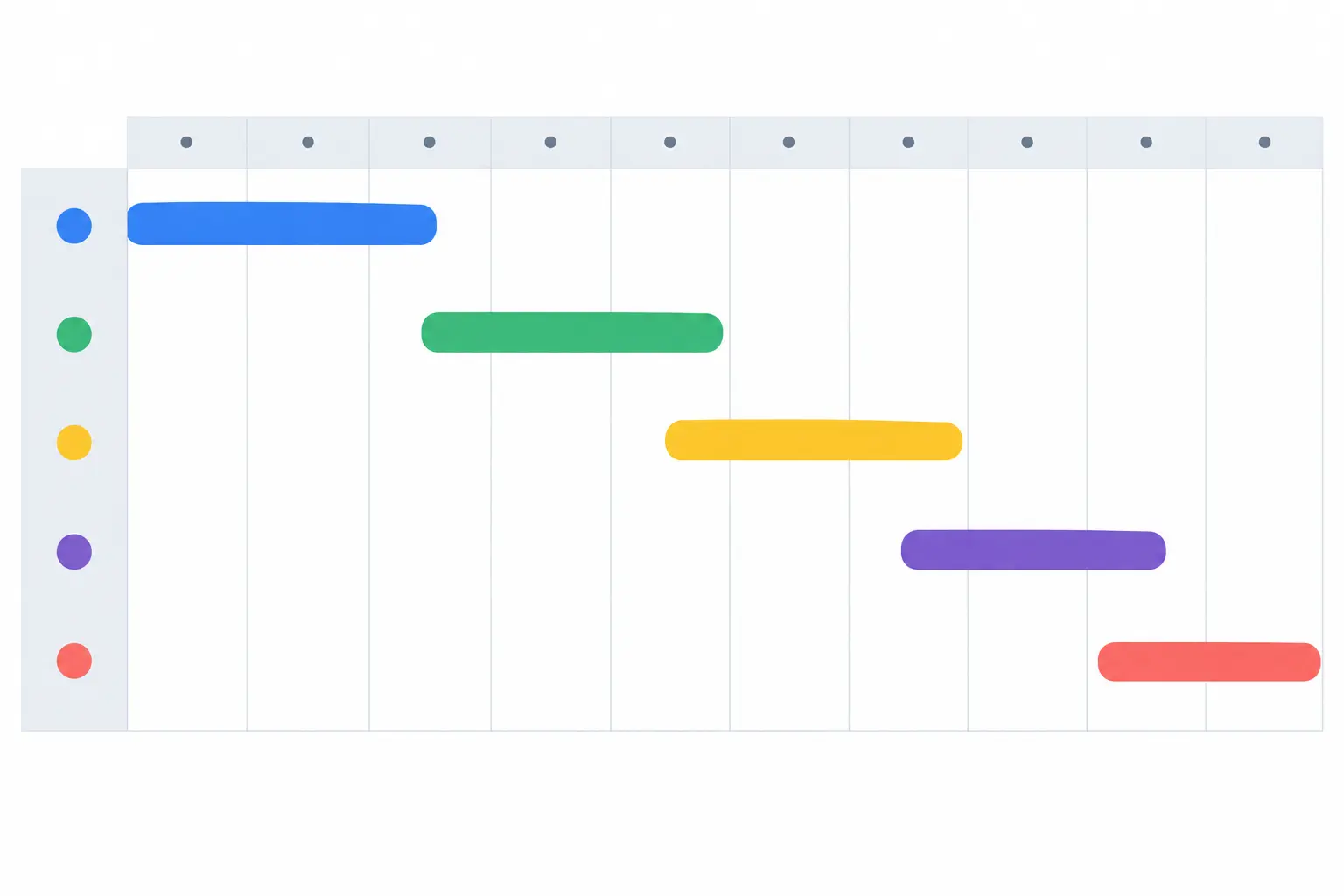
| Phase | Duration | Key dependency | Cost (illustrative) |
|---|---|---|---|
| Literature review and design brief | Weeks 1–4 | None | £0 |
| Risk assessment and workshop induction | Weeks 3–5 (overlapping) | Supervisor/technician sign-off | £0 |
| Component ordering | Week 5 (order), arrives week 7–8 | Design fixed enough to specify parts | £20–80 (illustrative, component-dependent) |
| Build/set-up and first test round | Weeks 8–10 | Components arrived, lab access approved | Consumables only |
| Redesign and second test round | Weeks 11–12 | First-round results analysed | Consumables only |
| Write-up, formatting, printing | Weeks 13–15 | Testing complete | £10–30 printing/binding |
This table is an illustrative structure, not a universal template — adjust every duration to your own department’s handbook dates and your specific project’s dependencies, and check your own module handbook for whether printed submission is even required, since many UK departments now accept digital-only submission.
Scheduling mistakes that cost engineering students the most time
- Ordering components after the design is “basically” finished, rather than as soon as the specification is fixed. A design that is 90% finished still cannot tell a supplier what to send; the last 10% of design decisions rarely change the core component list, so order against the fixed specification early.
- Treating risk assessment as a formality to submit once, then forgetting it. If your design changes materially after approval (a different chemical, a higher voltage, a different tool), most departments require the risk assessment to be updated and re-approved — leaving this until submission week is a common, avoidable delay.
- Planning one test round and no redesign buffer. As above, a first design rarely passes its first test unchanged; a schedule with zero slack for this is optimistic rather than realistic.
- Assuming workshop or lab hours are available whenever you want them. Bookable slots fill up around deadline crunch periods across the whole cohort, not just your own project — book earlier than feels necessary.
- Leaving the write-up until testing is fully finished. Drafting your methodology and literature review chapters while testing is still in progress, then adding results and discussion once data is in, spreads the writing load and avoids a last-fortnight bottleneck.
A worked referencing example for a technical standard
Engineering dissertations often cite a British or international standard rather than a journal article, and the Harvard format for this differs slightly from a normal source. Illustrative example: British Standards Institution (2015) BS EN ISO 9001:2015 Quality management systems — Requirements. London: BSI. In-text: (British Standards Institution, 2015). Always check the exact edition and year against the copy you actually used, since standards are periodically revised and an out-of-date edition number is an easy, avoidable error.
Frequently asked questions
How long does risk assessment approval usually take?
This varies by department and by how busy your supervisor and technicians are at the time, so there is no universal figure — ask your department directly and build in buffer rather than assuming a fixed number of days.
What if my first prototype or test fails completely?
Budget for this from the start by scheduling at least one redesign-and-retest cycle into your plan. A failed first attempt that you diagnose and redesign around, with the reasoning shown in your write-up, is often stronger evidence of engineering competence than a first attempt that happened to work.
Do I need to pay for CAD or simulation software?
Most UK engineering departments provide educational licences for the software you need at no cost to you, but confirm this for your specific package and department rather than assuming — a small number of specialist tools require a personal or lab-restricted licence.
Should my dissertation budget include my own time?
Some departments ask for a project plan that accounts for hours as well as costs; check your own handbook. Either way, scheduling your own time realistically against test dependencies, not just calendar weeks, is the more useful exercise regardless of whether it is formally assessed.
What happens if a component I ordered is delayed?
This is exactly why lead time needs to be built into your schedule rather than assumed away — order early, order from a supplier with a known delivery window where possible, and flag a genuine, unavoidable delay to your supervisor as soon as you know about it rather than after it has already cost you testing time.
Is a literature-only engineering dissertation an option if I run out of time?
Some departments allow a design-only or simulation-only project without physical build and test, which removes several of the lead-time risks above; check whether this is an option in your own department before defaulting to it, since it changes what your methodology chapter needs to justify.
How does this differ from a nursing or social-science dissertation timeline?
The core difference is physical dependency: a literature or survey-based dissertation’s critical path is mostly about ethics approval and participant recruitment, while an engineering dissertation’s critical path runs through workshop access, component lead times and test-redesign cycles. Our nursing dissertation timeline and budget guide shows how a different field’s constraints reshape the same planning exercise.
Where this fits with the rest of your project
Once your timeline is set, the two decisions that most affect whether you can hit it are which software you actually need and where your test or reference data will come from. Our comparison of design and analysis software for an engineering dissertation covers licensing and cost in more detail than the summary above, and our guide to UK data sources for an engineering dissertation is worth reading before you finalise a schedule that assumes data will simply be available when you need it. If your department has published its own submission handbook, our piece on Imperial College London’s engineering dissertation requirements shows what one such handbook actually specifies, as a model for what to look for in your own.
Planning your dissertation with Tesify
Tesify helps you turn a backwards-planned timeline like the one above into a working project plan tied to your own submission date, and helps you write up the reasoning behind a redesign decision clearly once your test results are in. Over 9,000 students have used Tesify across more than 15,000 dissertation chapters, and every dissertation on the platform is 100% written by you.