Tag: academic integrity

  • Where Should You Get Your Signposting Phrases? Five Sources Compared (2026)

    Where Should You Get Your Signposting Phrases? Five Sources Compared (2026)

    Your paragraphs do not connect, and you have gone looking for the words that will connect them. There are five places UK students get signposting language from, and they are not equally safe — one of them is a named academic-misconduct risk at several universities. Here they are compared, with a verdict.

    The comparison

    Source Cost What it actually gives you Where it falls short Safe?
    Academic Phrasebank (University of Manchester) Free on the web; paid PDF and Kindle editions Categorised model phrases by rhetorical function, with an explicit statement that reuse is not plagiarism Harvested from postgraduate dissertations, so some phrasing is grander than an undergraduate document needs Yes, with adaptation
    Your own university’s signposting guidance Free A categorised list plus, usually, a warning about overuse in the same document Shorter than the Phrasebank; quality varies a great deal between institutions Yes
    Generic linking-word lists (open web) Free A long undifferentiated list of words No categorisation by function, no guidance on when not to use one; encourages sprinkling Yes, but low value
    AI paraphrasing and rewriting tools Free tiers and paid plans Rewritten sentences, sometimes with connectors inserted Named as academic misconduct in several UK regulations; alters your meaning without telling you Check your regulations first
    Published articles in your own field Free via your library The conventions your markers actually read, at the right level and in the right discipline Slow, and you have to notice the moves rather than just read past them Yes

    The verdict, stated plainly

    Use the Academic Phrasebank as your default, cross-checked against your own university’s guidance, and read three articles in your field to calibrate. Do not use a paraphrasing tool to generate connective tissue — the risk is real and asymmetric, and it does not solve the problem you actually have.

    The rest of this page explains why, and why the fix for disconnected paragraphs is usually not a word at all.

    1. The Academic Phrasebank — the default, and it licenses its own reuse

    The Academic Phrasebank is the most widely recommended academic phrase resource in UK higher education, and its signposting page is the single most useful thing on it. It opens with the best available description of what signposting is for:

    “Previewing what is to follow in a paper or dissertation is like showing a map to a driver; it enables them to see where they are going. So it is useful to think of a preview section as a ‘road map’ for the reader. It must be accurate, but it must be easy to follow.”

    The phrases are grouped by the job they do rather than dumped in a list. Reintroducing a topic: “As discussed above, …”, “As previously stated, …”, “As was mentioned in the previous chapter, …”. Moving between sections: “Turning now to …”, “Having defined what is meant by X, I will now move on to discuss …”, “So far this paper has focused on X. The following section will discuss …”. Summarising a section before you leave it: “The previous section has shown that …”, “Thus far, the thesis has argued that …”.

    Crucially, it settles the plagiarism question about itself. The Phrasebank states that its items “are mostly content neutral and generic in nature; in using them, therefore, you are not stealing other people’s ideas and this does not constitute plagiarism.” It attaches one condition, and it matters: “In most cases, a certain amount of creativity and adaptation will be necessary when a phrase is used.”

    It also publishes the boundary, drawn from a survey of 45 academics at two British universities. A phrase you can safely reuse “should not have a unique or original construction; should not express a clear point of view of another writer; may be up to nine words in length; beyond this ‘acceptability’ declines”. That nine-word ceiling is the most concrete guidance on borrowed phrasing published anywhere in UK higher education.

    One caveat for undergraduates. The corpus the phrases came from “consisted of 100 postgraduate dissertations completed at the University of Manchester”. The material transfers, but it was harvested a level above you, and a few formulations will sound inflated in a 10,000-word undergraduate dissertation. Adapt down.

    2. Your own university’s guidance — and the warning it prints next to the list

    Most UK universities publish a signposting page, and the good ones do something the open-web lists never do: they categorise by function, and then they tell you to stop.

    Newcastle University publishes the most complete taxonomy encountered — two families, signposting of order (listing, referring forward, referring backward, transitioning) and signposting of relations (addition, similarity, illustration, contrast, cause and effect, summary, reformulation, emphasis) — each with a gloss on what the category is for. Its framing is the clearest statement of why this matters: “These words may not seem important, but they’re really the glue that holds a piece of writing together. Without signposting language, writing can lose direction, become confused and read like a series of unrelated points.” And then the instruction that the category structure exists to serve: “There are different kinds of links and relationships, so you need to choose a signposting word that does the right job.”

    York divides the same territory by scale, into “major signposting” and “linking words and phrases”. Portsmouth separates connectives from transition signals: “Connectives link sentences, phrases and ideas, in order to take your reader through what you are saying. Transition terms are a type of connective, but they are used more specifically for indicating some kind of change or development.” Hull states the purpose: “By making explicit how points are connected to each other you make it easier for your reader to follow your arguments.”
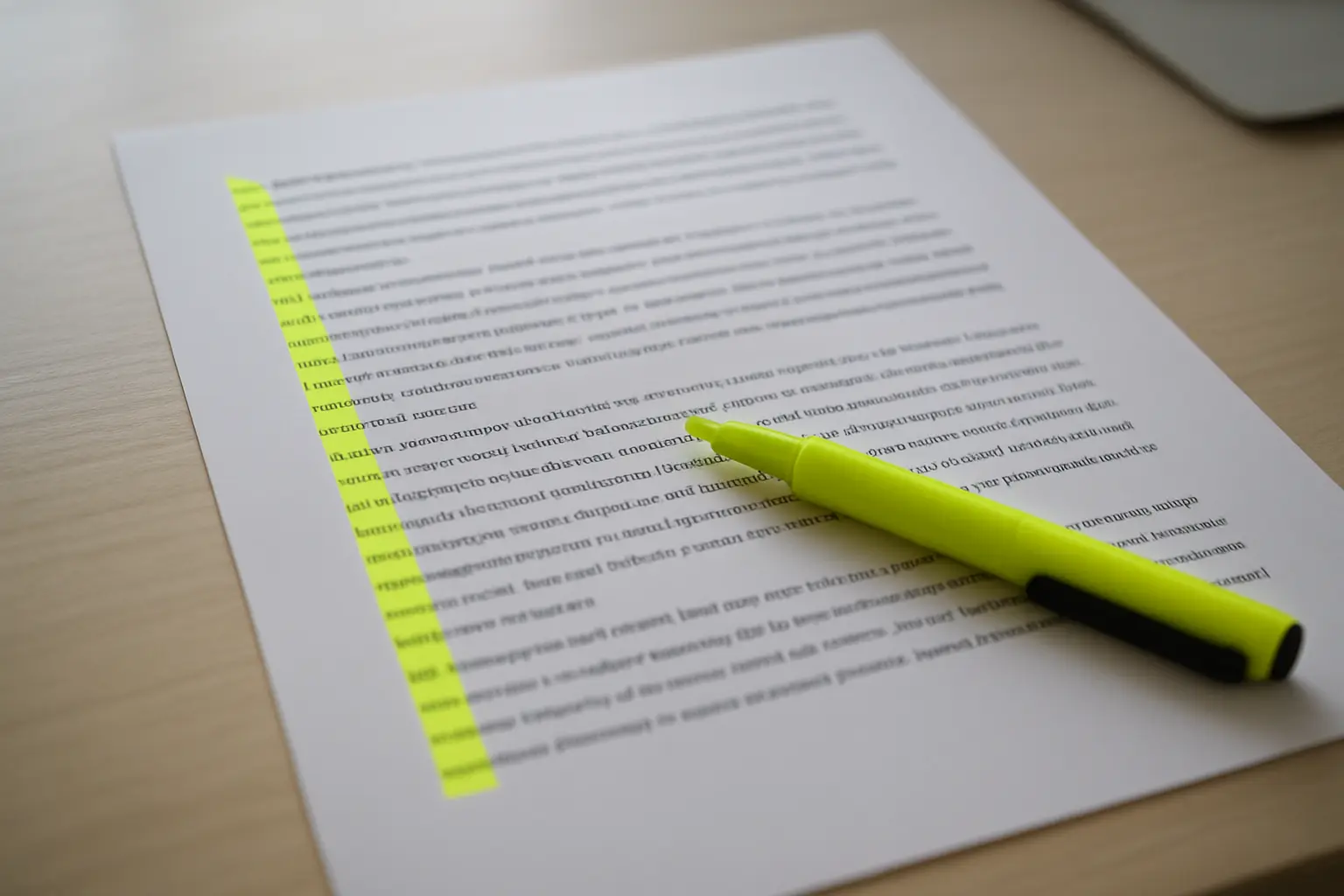
    A draft page where linking words have been dropped onto the front of every paragraph
    The failure mode the lists themselves warn about: a connector at the front of every paragraph, doing no work.

    3. Why the lists come with their own warning attached

    Here is the structural point that most advice on this topic misses. The same institutions that publish the big connector lists publish, in the same document, the warning not to work through them mechanically.

    Hull runs a long categorised list and then closes it: “Don’t overdo it. Only use signposts when they add clarity to your work. Some students try to put a signposting word into every sentence which can actually obscure meaning.” It gives the test that actually works: “Only use a word like ‘consequently’ if you really mean that the following sentence is a true consequence of the previous one!”

    Newcastle, having published the most exhaustive taxonomy of the lot, ends with: “Use deliberately — You don’t need to use a signposting word in every sentence, so before you do ask yourself if it helps make the meaning clearer, or just bogs down the writing.”

    Portsmouth is blunter about the motive: “You should not try too hard to make your writing look more academic by using words and phrases purely to appear more academic.” Bradford College reduces it to a line: too many signposts and linking words “can be almost as bad as having none.”

    The underlying distinction, from a UK EAP teaching resource, is the one worth carrying: “a text is cohesive if its elements are linked together, and coherent if it makes sense. These are not necessarily the same thing. That is, a text may be cohesive (i.e. linked together), but incoherent (i.e. meaningless).” And the consequence: “a text which is poorly organised is not going to be made more coherent simply by ‘peppering it’ with discourse markers.”

    That is why a source that only emits connectors — which is exactly what a generic list and a rewriting tool both do — cannot fix the problem. It supplies cohesion where you needed coherence.

    There is one measured pattern worth knowing about yourself. Loughborough University London summarises published research by Granger and Tyson, Lei, and Appel and Szeib finding that second-language writers tend to overuse connectors while first-language writers tend to underuse them. If you are writing in your second language, the sprinkling failure is statistically the one to watch for; if English is your first language, you may need more signposting than instinct suggests, not less.

    4. AI paraphrasing tools — where the real risk sits, and where UK policy splits

    Students reach for a rewriting tool when a paragraph will not flow, and this is the one option on the table that can cost you a degree rather than a mark.

    Several UK universities name it directly. Sheffield Hallam: “It is also an act of plagiarism to use paraphrasing software to reword the work of others without clear attribution of the original source.” Swansea: “If a student submits a software-generated paraphrase as part of their work, they are claiming that they were the author of that paraphrase. This is considered Academic Misconduct.” Loughborough’s Regulation XVIII lists paraphrasing and translation software alongside generative AI as a misconduct category. Nottingham comes closest to naming the specific move students make — rewording text specifically so it stops matching in similarity software — and names products, QuillBot and Wordtune among them.

    But UK universities are not uniform on this, and pretending otherwise would be false. Warwick’s library publishes a page about QuillBot that carries no prohibition at all, describing it neutrally as helping with paraphrasing text. Two UK universities, one product, opposite postures. Your own institution’s regulations are the only ones that govern you — read them before you open the tool, not after.

    If you are unsure where the line sits generally, our guides to what happens if you are accused of academic misconduct and to the AI tools a UK dissertation writer can actually use cover the wider question.
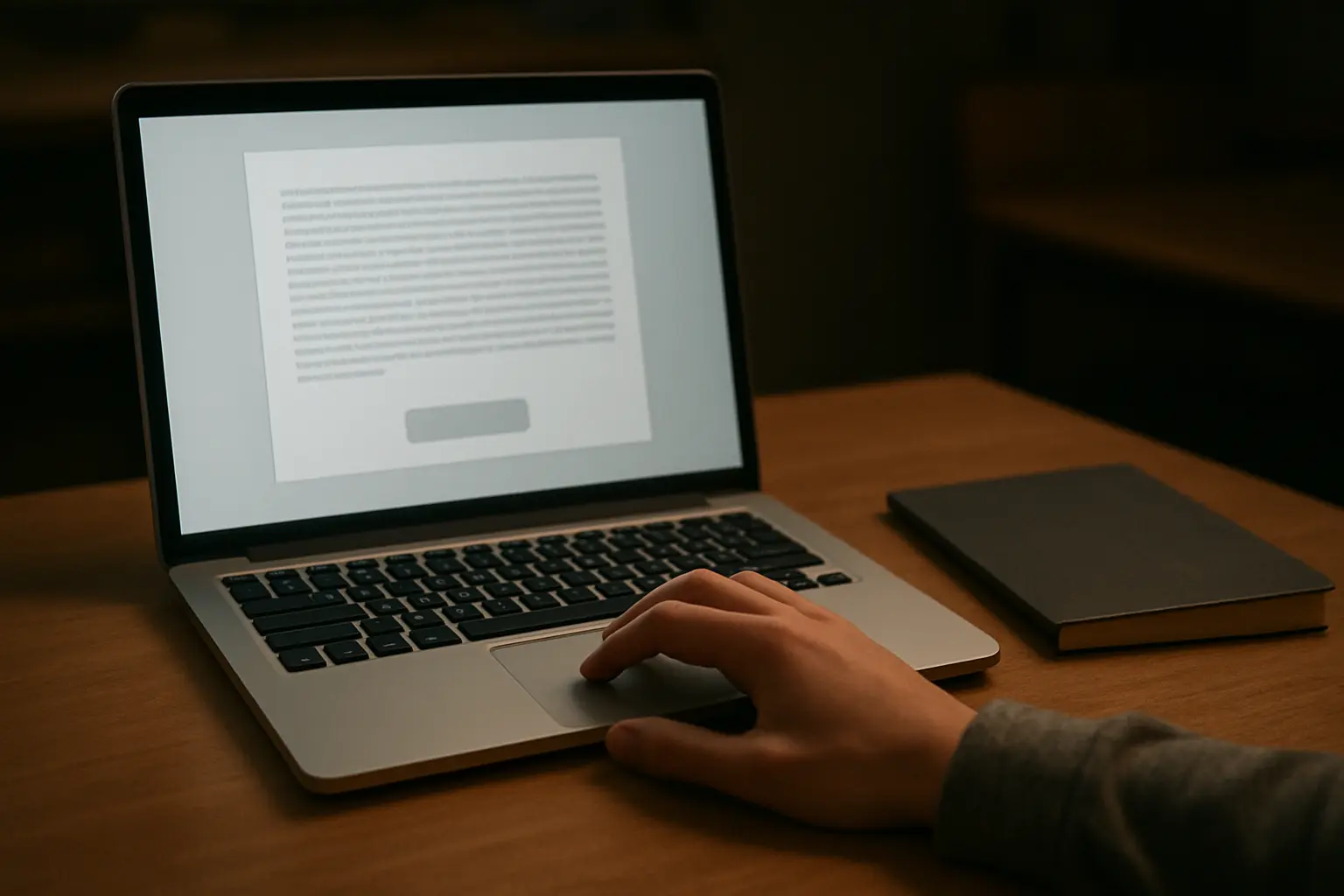
    A passage pasted into an online rewriting tool, the route that turns a phrasing problem into a misconduct one
    The rewriting tool is the one option here that converts a writing problem into a conduct problem.

    5. Published articles in your field — the slow option that calibrates the other four

    Open three articles from the journals your literature review cites most and read only the first sentence of each section and each paragraph. You are looking for what those writers do at the joints, and you will find that the moves are narrower and plainer than any list implies.

    This is also the only source that tells you what your discipline expects, which no general resource can. It settles related register questions at the same time — whether your field writes in the first person, for instance, which we cover in can you use “I” in a UK dissertation.

    Two places where this advice does not apply

    Everything above concerns your chapters. Two sections run on different rules.

    • The abstract. Signposting comes out. An abstract that says the first chapter reviews the literature and the second sets out the methodology describes the document rather than the research, and the contents page already does that job — see how to write a dissertation abstract.
    • The results chapter. Its conventions are about reporting numbers, not about connecting arguments, and the Phrasebank has a separate set of moves for it; our results chapter guide works through those.

    Where Tesify fits

    The honest position: no tool supplies coherence, because coherence is a property of your argument rather than of your vocabulary. What a tool can do is stop you losing the thread across 10,000 words written over four months.

    Write your dissertation in Tesify: hold the whole structure in one workspace so you can see whether section two actually follows from section one, draft the transitions in place rather than bolting them on at the end, and keep the bibliography formatting itself. It is a drafting workspace, not a rewriter — the words stay 100% yours, which is precisely the distinction the regulations quoted above turn on. There is a free tier.

    Frequently asked questions

    Where should I get signposting phrases from?

    The University of Manchester’s Academic Phrasebank first, then your own university’s signposting guidance. The Phrasebank gives categorised model phrases and states plainly that using them “does not constitute plagiarism”, because the items are “mostly content neutral and generic in nature”.

    Is using phrases from the Academic Phrasebank plagiarism?

    No, and it says so itself: the items “are mostly content neutral and generic in nature; in using them, therefore, you are not stealing other people’s ideas and this does not constitute plagiarism.” It does add a condition — “In most cases, a certain amount of creativity and adaptation will be necessary when a phrase is used.”

    How long a borrowed phrase is acceptable?

    The Phrasebank’s own guidance, drawn from a survey of 45 academics at two British universities, sets the ceiling at about nine words: a reusable phrase “may be up to nine words in length; beyond this ‘acceptability’ declines”. It should also “not have a unique or original construction” and “not express a clear point of view of another writer”.

    Was the Academic Phrasebank built from undergraduate writing?

    No, and it is worth knowing. The corpus the phrases were taken from “consisted of 100 postgraduate dissertations completed at the University of Manchester”. The phrases transfer well to undergraduate work, but they were harvested at a level above yours, so some will sound grander than your document needs.

    Can I use QuillBot or a paraphrasing tool for connectors?

    This is genuinely risky and UK universities disagree about it. Sheffield Hallam states that “It is also an act of plagiarism to use paraphrasing software to reword the work of others without clear attribution of the original source.” Warwick’s library, by contrast, describes QuillBot neutrally with no prohibition attached. Check your own regulations before you touch one.

    Why does my writing sound worse after I add linking words?

    Because cohesion and coherence are different things. As one UK EAP teaching resource puts it, “a text is cohesive if its elements are linked together, and coherent if it makes sense. These are not necessarily the same thing.” Connectors create cohesion; only a real logical sequence creates coherence.

    How many signposting words should a paragraph have?

    Fewer than you think. Hull warns that “Some students try to put a signposting word into every sentence which can actually obscure meaning.” Newcastle asks you to “ask yourself if it helps make the meaning clearer, or just bogs down the writing.” Bradford College puts it most sharply: too many “can be almost as bad as having none.”

    Do second-language writers use more connectors than native speakers?

    The published research suggests so. Loughborough University London summarises work by Granger and Tyson, Lei, and Appel and Szeib finding that second-language writers tend to overuse connectors while first-language writers tend to underuse them. If English is your second language, the overuse pattern is the one to watch for.

    What is the difference between signposting and linking words?

    Scale. York divides them into “major signposting” and “linking words and phrases” — the first orients the reader to whole sections, the second joins sentences. Newcastle splits the same territory into signposting of order and signposting of relations.

    Should my abstract contain signposting?

    No — the abstract is the one place where it should come out. An abstract that lists what each chapter does describes the document rather than the research, and a contents page already does that job. Everything on this page applies to the chapters, not to the abstract.

    Is it enough to just vary my connectors?

    No. Swapping “however” for “nevertheless” changes nothing if the logical relationship is wrong in the first place. Hull gives the real test: “Only use a word like ‘consequently’ if you really mean that the following sentence is a true consequence of the previous one!”

    What should I do if a paragraph will not connect to the next one?

    Treat it as a structural signal rather than a vocabulary problem. If no connector honestly fits between two paragraphs, they are usually in the wrong order, or a third paragraph is missing between them. Reaching for a stronger linking word hides the gap instead of closing it.

  • Write My Dissertation With AI: What That Can Honestly Mean in 2026

    Write My Dissertation With AI: What That Can Honestly Mean in 2026

    You have a research question, a folder of sources, possibly a spreadsheet of results, and a document that is still mostly headings. Six weeks left, or three, and every writing session ends with the same two paragraphs rewritten. That is the search behind “write my dissertation with AI”, and it deserves a straight answer rather than a sales page.

    The straight answer: nothing can write it for you and leave you with a degree you can keep. Something can get it written far faster than you are managing alone. The difference between those two sentences is the whole subject, and it is worth ten minutes before you type your question into anything. If you want to start now, Tesify is free to begin — but read the workflow first, because using it well is what makes the difference.

    What “write it for me” actually costs

    Two options sit behind that phrase and both fail, for different reasons.

    Paying a person. Selling, arranging or advertising these services to students in England has been a criminal offence since 2022 — and yet, as of December 2025, the Crown Prosecution Service and the Department for Education both confirmed no offence had reached a first hearing in a magistrates’ court. The enforcement record is empty, which tells you the industry is not going anywhere and that the risk sits entirely on your side. The seller risks a fine that has never yet been imposed; you risk the degree. The full map is in our guide to legitimate and criminal dissertation help.

    Pasting a chatbot’s output. This fails on the product, not just the ethics. A general model has never read your sources, does not know what your data showed, cannot see your supervisor’s feedback, and invents citations that look flawless and do not exist. A marker’s first move with an unfamiliar reference is to look it up, and a fabricated one is found in about thirty seconds. Beyond that, you cannot discuss work you did not think through — and being able to explain your own argument is what every conversation with your supervisor tests.

    The reframe that actually helps

    Students in this position rarely lack the ability to write, or the material. What they lack is a structure that converts a pile of reading and results into an ordered sequence of small writing tasks. “Write chapter four” is not a task; it is a fog. “Write 300 words stating what the interviews showed about workload, using the three extracts already chosen” is a task, and you can do it in twenty minutes.

    Turning the fog into the task list is mechanical work, entirely legitimate to delegate, and it is the single highest-value thing a tool can do for you. Everything below is built on that.

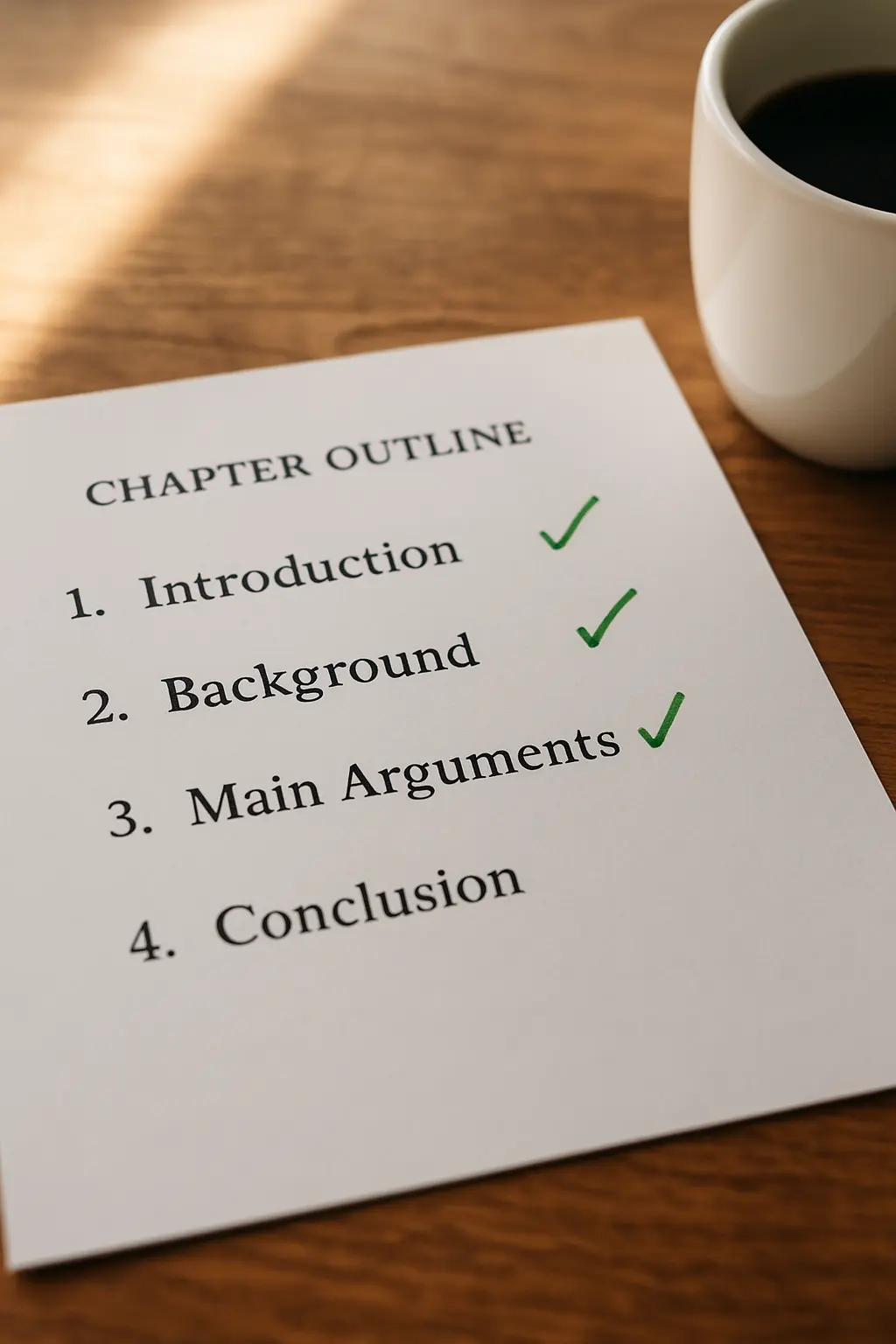
    A dissertation broken into a numbered chapter skeleton with each section's job noted
    Every section with a one-line statement of its job. This page is what turns six weeks of dread into thirty finishable pieces of work.

    Chapter by chapter: what you can hand over, and what you cannot

    Introduction

    Hand over: the conventional shape — context, problem, gap, aims, questions, structure — and a critique of whether your draft actually delivers each. Keep: the claim about why your question matters. Write this chapter last, whatever order the document is in.

    Literature review

    Hand over: reorganising a review you have drafted, checking whether topic sentences match their paragraphs, and suggesting thematic groupings for studies you have read and summarised. Keep, absolutely: deciding what the literature says, judging quality, choosing what matters, and every citation. Never accept a reference from a tool you have not opened and read. The full boundary, with a model declaration, is in our guide to writing a literature review with AI, honestly.

    Methodology

    Hand over: the architecture and the prompts — philosophy, approach, design, sampling, instruments, analysis, ethics — and whether you have justified each decision rather than merely described it. Keep: the justifications. Our walkthrough of the methodology chapter has the structure you can lift, and this is often the fastest chapter to finish because you already know what you did.

    Results

    Hand over: table and figure formatting, and the conventional reporting sentence for a given test — the exact APA construction is set out in our guide to running and reporting a t-test. Keep: the analysis, and every number. Never let a tool near your data values.

    Discussion

    Hand over: a structural check that each finding is interpreted against the literature and that your limitations are specific rather than boilerplate. Keep: the interpretation itself. This chapter is where the marks concentrate and where delegation is most visible, because generic discussion prose reads as generic immediately.

    Bibliography

    Hand over the lot. Formatting citations is clerical work nobody awards marks for and everybody deducts marks over. An automatic bibliography that generates from what your text actually cites removes the cited-but-not-listed problem entirely — see our guide to the AI Harvard referencing generator.

    The one test that settles every case

    Forget “is AI allowed” as your organising question, because the answer varies by institution, by department and sometimes by module. Ask this instead:

    Could you sit with your supervisor, be stopped at any paragraph, and explain why it says what it says?

    If yes, you wrote your dissertation, whatever tools were on the desk. If no, you did not, and no policy wording rescues that. This test also happens to be what a marker applies, which is why it is the one worth optimising for.

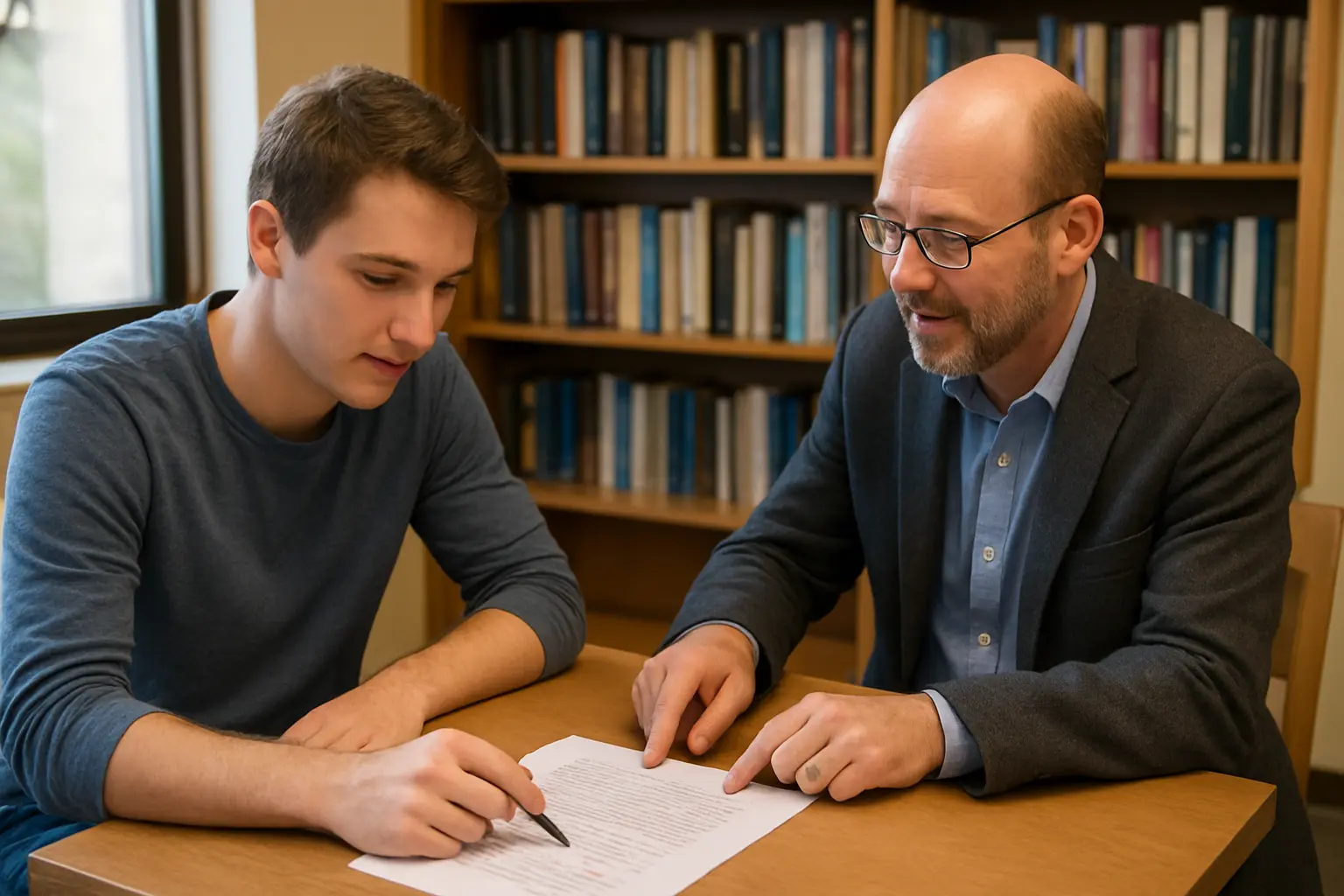
    A supervision meeting discussing a draft the student can explain and defend
    This meeting is the real assessment of authorship. Everything else is administration.

    How Tesify is built for this

    Tesify is a dissertation workspace rather than a chatbot, and the difference is that it holds the whole project. It builds the chapter structure for your project, works from your research questions, sources and findings, drafts with you section by section instead of producing a finished essay, maintains the bibliography in your citation style as you cite, and checks your drafts before your university does.

    The design commitment is the important part: everything stays 100% written by you. Tesify handles structure, formatting and momentum; the reading, the reasoning and the words are yours, which is the only configuration that survives the supervisor test. More than 9,000 students have used it across more than 15,000 chapters, and you can start free.

    It also does not need to be your only tool. A general chatbot is genuinely useful for explanation and critique, and a reference manager holds your library — the sensible combination is set out in our comparison of the best AI tools for dissertation writing.

    Tonight, if you are behind

    1. Build the skeleton. Every chapter, every section, one line saying what each section has to achieve. An hour, and the fog becomes a list.
    2. Write the methodology. You already know what you did and the structure is conventional. Having one finished chapter changes your relationship to the whole project more than any amount of planning.
    3. Spend the good hours where the marks are. Analysis and discussion outweigh a perfect introduction. Timebox by weight, not by document order.
    4. Fix the bibliography once, automatically, instead of five times by hand at 2am.
    5. Tell your supervisor where you actually are. Being three weeks behind is a solvable problem; being three weeks behind and silent for a month is a worse one.

    None of this requires you to be more disciplined than you have been. It requires the work to be broken into pieces small enough to start. Open your dissertation in Tesify and build the skeleton tonight — it is free to start, and the chapter you finish tomorrow is the one that changes the next six weeks.

    Frequently asked questions

    Can AI write my whole dissertation for me?

    It can generate text that looks like a dissertation, and that text will contain invented citations, no engagement with your data, and nothing you can defend in a supervision meeting. It cannot produce work that is honestly yours, which is what you are being assessed on.

    Is using AI to write a dissertation cheating?

    It depends entirely on what you use it for and what your institution permits. Structure, formatting, referencing and critique of your own writing are widely accepted; submitting generated text as your own work is not. Read your academic integrity policy and the assessment brief, and follow any declaration requirement.

    How much does Tesify cost?

    You can start free and build real chapters before deciding whether you need anything more. There is no charge to try the workflow on your actual dissertation.

    Will my university know I used Tesify?

    There is nothing to hide. Tesify supports your writing rather than replacing it, so what you submit is your own work. If your department asks you to declare tool use, declare it — a use you can state openly is a use you have already vetted.

    Is my unpublished research safe?

    Your work in Tesify is yours: it is not published or shared into any public database, and you can export it. Keep your own exported backup as a habit with any tool you use.

    What if I only have three weeks left?

    Three weeks of structured, prioritised writing produces far more than most students believe, and far more than any ghost-writer working without your data could. Build the skeleton, write the methodology first, and give the good hours to analysis and discussion.

    Can it help if I have not collected my data yet?

    Yes — the introduction, literature review and methodology can all be drafted before your results exist, and having them written is what makes the analysis period survivable. Check that your ethics approval is in place before you collect anything.

    Does it write in British English?

    Yes, and you should check the final draft for consistency regardless of what you write in. UK departments expect British spelling and conventions unless your handbook says otherwise.

    What if my supervisor has stopped replying?

    Chase once by email, then contact your department’s dissertation coordinator or postgraduate office — supervision is an institutional obligation, not a personal favour. Keep writing while you wait rather than treating silence as permission to stall.

    Will using AI make my writing sound generic?

    It will if you let a tool generate your prose. It will not if the tool handles structure and formatting while you write the sentences, which is the workflow described here and the reason it survives a supervision meeting.

  • Best AI Tools for Writing a Dissertation in 2026: An Honest Comparison for UK Students

    Best AI Tools for Writing a Dissertation in 2026: An Honest Comparison for UK Students

    Most “best AI tools” lists are feature dumps that ignore the only question that matters at undergraduate level: which jobs can you hand over without handing over your authorship. So this comparison is organised by job rather than by brand, because a tool that is perfectly safe for one task is a misconduct case in another. Table first, then the verdict.

    Category The job it does Typical cost Risk to your authorship Verdict for a dissertation
    Dissertation workspaces (Tesify) Chapter structure, drafting scaffolding, automatic bibliography, self-checking, in one place Free to start Low — built around you writing The default
    General chatbots Explaining concepts, critiquing your own prose, rubber-ducking an argument Free tier, paid upgrades High if used to generate submitted text Useful, narrowly
    Referencing and bibliography tools Extracting metadata and formatting citations consistently Free tiers widely available Negligible — clerical work Use one, always
    Language and grammar editors Correcting expression in text you wrote Free tier, paid upgrades Low if it edits, higher if it rewrites Fine within your policy
    Paraphrasing and “humanising” tools Rewording existing text Free tier, paid upgrades Very high Avoid

    The shortlist, ranked

    1. A dissertation workspace — the only category built for the actual problem

    The reason general tools disappoint on a dissertation is scale. A chatbot has no memory of your chapter two when you are writing chapter four, no idea what your research questions were, and no way to keep a bibliography synchronised across 10,000 words. What stalls students is not sentence-level writing but the shape of the thing: which chapter comes next, what each section has to achieve, where the argument has a hole.

    Tesify is built for that. It structures the dissertation chapter by chapter, drafts with you from your own research questions, sources and findings, maintains the bibliography in your citation style as you cite, and checks your drafts before your university does. More than 9,000 students have used it across more than 15,000 chapters, and it is free to start.

    Who it suits: anyone writing a full dissertation rather than a 2,000-word essay. Where it falls short: it is not a general-purpose assistant — if you want something to explain Bayesian statistics or write your CV, use a chatbot.

    2. A referencing tool — the cheapest marks on the list

    Citation formatting is clerical work that universities do not award marks for and do penalise you for getting wrong. Automating it is uncontroversial, and no institution requires you to declare a formatting tool. Pair a reference manager for your library with automatic formatting inside your draft; the trade-offs between the managers are in our comparison of Zotero, Mendeley and EndNote, and the drafting-side workflow is covered in our guide to the AI Harvard referencing generator.

    Where it falls short: generated entries inherit whatever errors the source metadata carried, so one checking pass against your handbook is still yours to do.

    3. A general chatbot — excellent at three things, dangerous at a fourth

    Used well, a chatbot is a patient tutor: explain heteroscedasticity, tell me what this reviewer’s comment probably means, critique the logic of this paragraph I wrote, suggest what is missing from this outline. All four of those operate on your material or your understanding.

    Where it falls short, decisively: references. General-purpose models produce citations that look impeccable — plausible authors, real-sounding journal, well-formed volume and pages — for papers that do not exist, and attach real authors to work they never wrote. In a literature review this is the fastest route to a misconduct meeting, because a marker’s first instinct with an unfamiliar reference is to look it up. Never accept a citation from a tool you have not personally opened and read. The full workable boundary is set out in our guide to using AI in a literature review, honestly.

    4. A language editor — legitimate, with a line

    Correcting grammar, punctuation and awkward phrasing in text you wrote is among the most widely accepted uses, and many institutions treat it much as they treat proofreading. The line is between editing your expression and restating your argument: the moment a tool is producing the ideas rather than tidying them, you have crossed from proofreading into authorship. Check whether your institution requires you to declare the use, because several do.

    5. Paraphrasing and “humanising” tools — the category to avoid

    These promise to reword text so it reads differently, and they are marketed at exactly the anxiety this whole subject generates. Three reasons not to. Rewording someone else’s text without citing it is still plagiarism — synonym-swapping with the source’s structure intact is patchwriting, which markers catch by reading. Tools sold specifically to evade detection are a service whose only purpose is concealment, and paying for concealment is not a good position to be in if you are ever asked. And the output is usually worse: mangled academic terminology and sentences that no longer say anything precise.

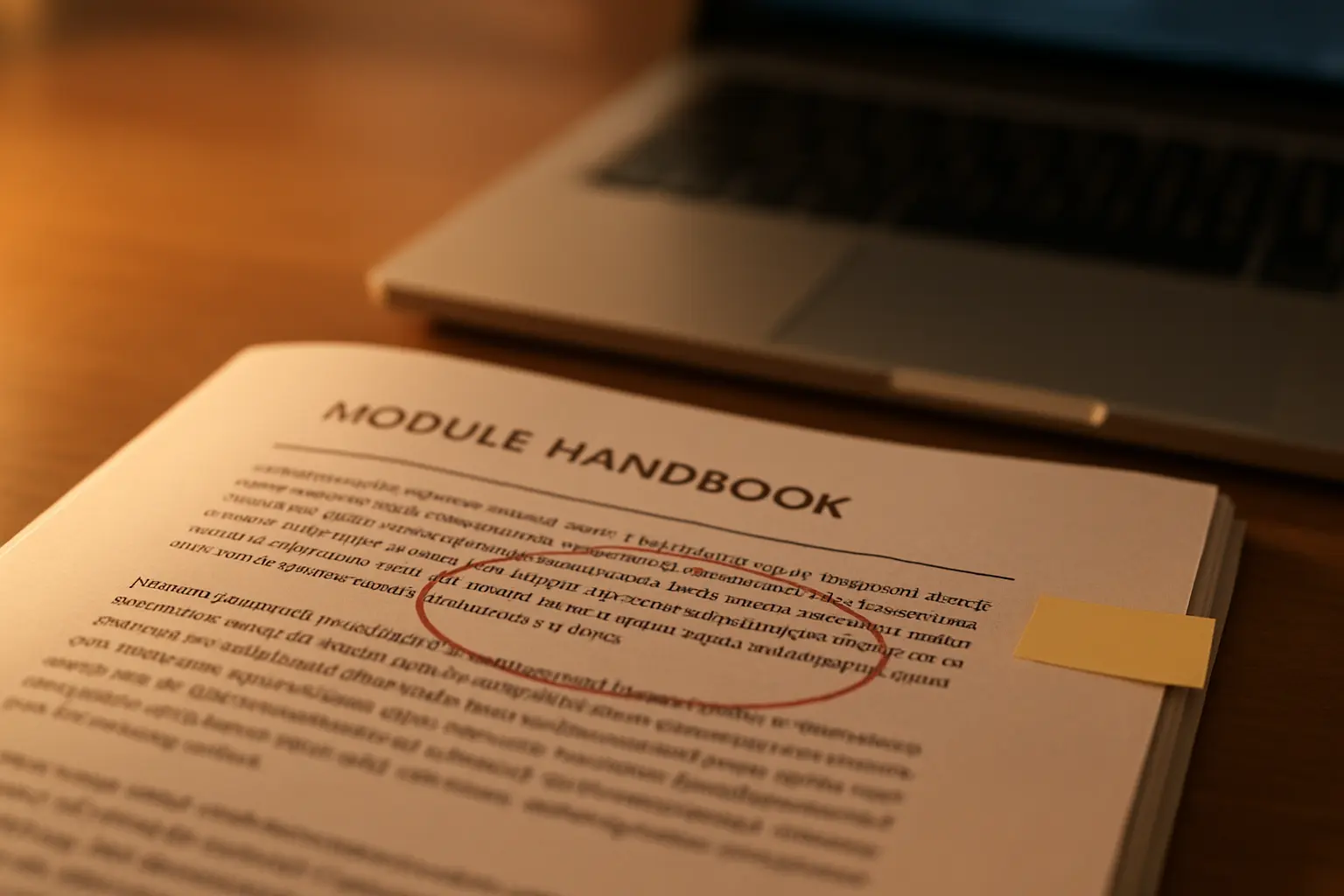
    A module handbook's AI-use clause, the rule that overrides any tool review
    Every recommendation on this page is subordinate to one document, and it is not this one.

    The recommendation

    Use a dissertation workspace for the writing, an automatic bibliography for the referencing, and a general chatbot for explanation and critique of your own work. Skip the paraphrasers entirely. That combination covers every job an undergraduate dissertation actually presents, leaves your authorship unambiguous, and costs nothing to try.

    If you buy exactly one thing, do not buy anything until you have checked what your university already provides. Institutions increasingly license tools centrally, and your library or IT pages will say so — although provision is still a minority experience, as the survey data in our roundup of UK student AI use shows.

    The rule that overrides every review, including this one

    Your module handbook and each assignment brief are the authority on what you may use. UK institutions have taken meaningfully different positions on generative AI, departments differ from their own university’s default, and two modules on the same course can carry different rules.

    So before you adopt anything: find your institution’s academic integrity policy, find the assessment brief’s AI statement, and if there is not one, ask in writing. Where declaration is required, write it specifically — “AI was used” invites suspicion, whereas naming what you used it for demonstrates you understood the boundary. And keep your working: drafts with version history, dated notes and annotated PDFs are what protects a student who is wrongly queried.

    How to judge any tool in five minutes

    1. Who is the author of the output? If the answer is the tool, stop.
    2. Would you show your supervisor the tool openly? Legitimate tools survive daylight; services that advertise discretion are telling you something.
    3. What happens to your text? Your dissertation is unpublished research. Read the provider’s current documentation on storage, access and training use — the terms page, not the marketing page.
    4. Does it invent sources? Test it: ask for five references on your topic and try to find them. What you learn in ten minutes will shape how you use it for six months.
    5. Does it promise an outcome? “Guaranteed 2:1” is not a feature claim, it is a warning. Where that shades into something criminal to sell in England is mapped in our guide to legitimate versus criminal dissertation help.
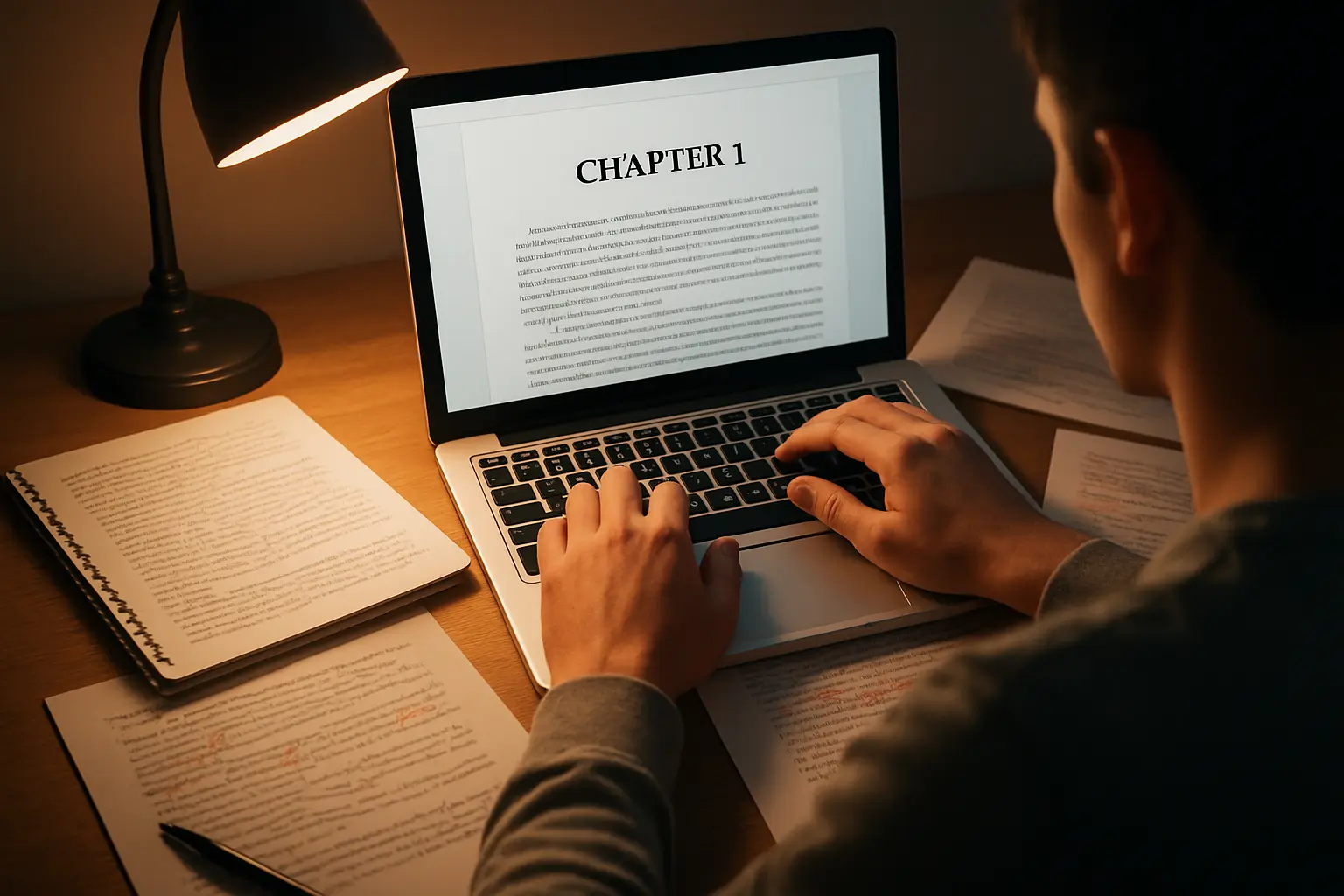
    A student drafting a chapter from their own notes and sources
    The configuration that works: your notes, your sources, your sentences — and the mechanical work handed off.

    What none of them will do

    No tool will read your literature for you, decide what your data mean, or defend your argument in a supervision meeting. Those are the parts that carry the marks, and every hour a tool saves you on formatting is only worth something if you spend it there.

    Nor will any tool tell you what your university’s similarity software will say. Self-checking is worth doing before submission for the honest reason — finding the quotation you forgot to mark — and consumer results are directional only; our plagiarism checker comparison covers what a self-check can and cannot establish.

    Start your dissertation in Tesify free — structure, drafting support, automatic bibliography and self-checking in one place, with every word still written by you.

    Frequently asked questions

    What is the best AI tool for writing a dissertation?

    For the whole job — structure, drafting, bibliography and checking across tens of thousands of words — a purpose-built dissertation workspace beats a general chatbot, because chatbots have no memory of your project and cannot maintain a reference list. Use a chatbot alongside it for explanation and critique.

    Is it allowed to use AI to write a dissertation?

    Assistance is widely permitted and generation of submitted text usually is not, but the rules are set by your institution and often by the individual module. Read your academic integrity policy and the assessment brief, declare what you are asked to declare, and never submit text you could not explain.

    Are there free AI tools for dissertation writing?

    Yes. Tesify is free to start, most reference and bibliography tools have capable free tiers, and the major chatbots have free tiers. Check what your university licenses centrally before paying for anything.

    Will my university detect AI use?

    Detection tools exist, are probabilistic and are contested, so this is the wrong question to organise your behaviour around. Universities increasingly assess authorship through assessment design — orals, drafts, supervised work — and the durable protection is being able to discuss your own argument.

    Can AI write my literature review?

    Not defensibly. Deciding what the literature says, judging study quality and choosing what matters to your argument are the intellectual content of the chapter. Delegate those and you have commissioned a review rather than written one — and the fabricated-citation problem makes it detectable as well as wrong.

    Are paraphrasing tools against the rules?

    Rewording a source without citing it is plagiarism regardless of how it was reworded, and tools marketed specifically for evading detection are difficult to explain to a panel. Cite properly and paraphrase from your own understanding instead.

    Is my dissertation safe if I write it in an online tool?

    Read the provider’s current terms on storage, access and whether your text may be used for training. Your dissertation is unpublished research, so this is a reasonable question to ask of anything. Keep your own exported backup as a habit whichever tool you use.

    Should I tell my supervisor I am using AI?

    Yes, and it is usually a productive conversation rather than a risky one. Supervisors would far rather advise you on a legitimate workflow early than discover an ambiguous one at submission.

    Does using an AI tool need to go in my methodology chapter?

    Tools used in your research process — analysis software, transcription, screening support — belong in your methods. Writing support is usually handled by a declaration rather than the methods chapter, but follow whatever format your department specifies.

    What if my department bans AI entirely?

    Then that is the rule, and it applies to you regardless of what any tool’s marketing says. Reference managers and spellcheckers are almost never covered by such bans, but check the wording rather than assuming, and ask your module leader if it is ambiguous.

  • UK University Academic Misconduct Statistics 2026: What the Data Actually Shows

    UK University Academic Misconduct Statistics 2026: What the Data Actually Shows

    No UK body publishes national academic misconduct statistics. Not HESA, not the Office for Students, not the QAA — nobody counts cases across the sector. The most substantial recent evidence is a BBC Freedom of Information request to every UK university, published on 17 December 2025, which produced usable responses from 53 institutions.

    That absence is the first finding, and it matters more than any single number, because it means every “X thousand students caught cheating” headline you have read was built from a partial FOI exercise with a self-selected response rate. Below is what genuinely exists, attributed and dated, followed by the reasons the figures cannot be added together.

    The key figures

    Measure Value Source and year
    UK institutions publishing national misconduct case counts None No sector body collects the field (2026)
    Universities giving usable responses to a UK-wide FOI on essay-cheating investigations, year ending summer 2024 53 BBC News, 17 Dec 2025
    Of those, institutions reporting international students disproportionately represented in misconduct investigations 48 of 53 BBC News, 17 Dec 2025
    University of Lincoln: share of its 387 investigations involving non-UK students 78% BBC News, 17 Dec 2025
    — against a non-UK share of its student population of 22% BBC News, 17 Dec 2025
    Prosecutions under the essay-mill offence since April 2022 None — no recorded offence has reached a first hearing in a magistrates’ court Crown Prosecution Service and Department for Education, to BBC News, Dec 2025
    Institutions signed up to the QAA Academic Integrity Charter More than 200 QAA, charter launched 21 Oct 2020
    Institutions represented by Universities UK 141 Universities UK, via BBC News, Dec 2025
    Papers reviewed since 2023 in which Turnitin’s detector found AI wrote at least 20% of the material More than 1 in 10 Turnitin (vendor figure), via BBC News, Dec 2025
    Non-UK students enrolled at UK universities, 2023-24 730,000 — 25% of all students Reported by BBC News, Dec 2025

    Why is there no national dataset?

    Because academic misconduct is handled entirely inside each autonomous institution. A case is raised by a marker, investigated under that university’s own regulations, and resolved by its own panel. No return goes to a regulator, and no agency has ever been given the job of collecting one. The nearest thing to a sector-wide instrument is the QAA’s Academic Integrity Charter, launched on 21 October 2020, which more than 200 institutions have signed — but a charter is a set of commitments, not a statistical return.

    The consequence for anyone citing figures: national totals do not exist, and any that circulate have been assembled by journalists from FOI responses. That is legitimate evidence and it should be described as what it is.

    Institutional records held separately by each university rather than centrally
    Every case file sits inside one institution. There is no drawer marked “UK total”, which is why national misconduct statistics do not exist.

    Why can’t the institutional figures be compared?

    Three reasons, and they are the substance of any serious discussion of this data.

    Definitions differ. Universities categorise misconduct differently, and the same behaviour can be logged as poor academic practice at one institution and as misconduct at another. One university told the BBC that many of its cases concerned poor practice such as bad referencing rather than intentional cheating. A count that mixes a mis-formatted bibliography with a purchased dissertation is not measuring one thing.

    Detection effort differs. A high case count can mean an institution has a rigorous detection and reporting culture rather than more dishonest students. A low one can mean staff are not referring cases — the BBC’s investigation quotes a former lecturer saying colleagues “turned a blind eye”. Counts of detected cases measure detection at least as much as behaviour.

    The denominators differ. Comparing raw case numbers across institutions of wildly different size and subject mix tells you almost nothing without expressing them as a rate.

    How should the international-student finding be read?

    Carefully, because it is the figure most likely to be misused. Of the 53 institutions that responded usably, 48 reported that international students were disproportionately represented in misconduct investigations, and the University of Lincoln reported that 78% of its 387 investigations involved non-UK students who make up 22% of its student population.

    What that measures is who gets investigated, not who cheats. At least three explanations are consistent with the same numbers: differences in prior training in UK referencing conventions, which produces poor-practice cases rather than deliberate ones; the possibility that work written in a second language attracts more scrutiny; and genuine differences in behaviour. The data cannot distinguish between them, Universities UK declined to comment on the reasons, and one university offered the poor-practice explanation directly.

    If you cite this in a dissertation, cite it as a disparity in investigation rates with the explanations unresolved. Presenting it as a finding about who cheats is a claim the evidence does not support, and it is precisely the kind of overreach a marker will circle.

    What happened to the essay-mill law?

    Providing, arranging or advertising cheating services for financial gain to students in post-16 education in England became a criminal offence in 2022. As of December 2025, both the Crown Prosecution Service and the Department for Education told the BBC they had no recorded offences reaching a first hearing in a magistrates’ court under the Skills and Post-16 Education Act — no prosecutions at all.

    Meanwhile the BBC found dozens of companies still advertising essay-writing services to UK students, and interviewed an operator, based outside the UK, who said prices started at £200 and that larger doctorate or master’s orders could reach £20,000, while denying he broke English law on the grounds that his essays were “model answers”. The gap between a law on the books and an enforcement record of zero is itself the citable finding here. What the law actually says, and why the student side of the transaction is governed by university regulations rather than the courts, is set out in our guide to legitimate and criminal dissertation help.

    A university's own academic regulations, the only authoritative source for its procedures
    With no national framework of penalties, your own institution’s regulations are the only document that describes what actually happens to you.

    What about AI detection figures?

    Turnitin’s chief product officer told the BBC that in more than one in ten papers reviewed since 2023, its detection tool found AI had written at least 20% of the material. Treat this as what it is: a vendor’s figure about its own product, generated by a detector whose accuracy is contested, reported without independent verification. It is quotable if you attribute it in exactly those terms and do not present it as a measurement of student behaviour.

    Self-reported behaviour is measured elsewhere and by an independent survey, and the two should not be blended — the figures on how many UK students actually use AI are in our roundup of UK student AI use survey data, and what similarity and detection software can and cannot establish is unpacked in our plagiarism checker comparison.

    What penalties do universities actually impose?

    There is no national tariff. Reported penalties range from a warning, through a mark of zero for the assessment, to suspension or exclusion from the institution. Universities UK states that all universities have codes of conduct including severe penalties for students submitting work that is not their own.

    The practical consequence is that no website can tell you what will happen in your case, because the answer lives in your own institution’s academic regulations. In regulated professional routes — nursing, medicine, law, teaching — a finding can additionally reach a fitness-to-practise process, which is a separate and more serious track.

    How to cite these figures

    Attribute the FOI findings to BBC News, naming the reporter and the publication date of 17 December 2025, and state the response base — 53 institutions providing usable responses to a request sent to every UK university, covering the academic year ending summer 2024. Attribute the prosecution figure to the Crown Prosecution Service and the Department for Education as reported in that investigation. Attribute the charter figure to the QAA with its launch date. Attribute the Turnitin figure to Turnitin.

    Then state the limitation once, plainly: these are not national statistics, the response base is partial, and definitions are not standardised across institutions. A sentence acknowledging that is worth more in a dissertation than a bigger number would be — the same discipline that applies to reading any published statistic, as we set out alongside the sector’s degree classification statistics.

    If you are here because you are worried about your own work rather than writing about the sector, the useful response is procedural rather than statistical: know your institution’s rules, keep your drafts and reading notes, and use tools that leave the authorship unambiguously yours. Tesify structures and drafts your dissertation with you — every word written by you, which is the only position that is safe in any regulatory climate.

    Frequently asked questions

    How many UK students are caught cheating each year?

    Nobody knows, because no UK body collects the figure. The most substantial recent evidence is a BBC FOI request to every UK university that produced usable responses from 53 institutions for the year ending summer 2024. Any national total you see has been estimated from partial data.

    Does HESA publish academic misconduct data?

    No. HESA collects student, staff and qualification data; academic misconduct is not among the fields it gathers. The same is true of the Office for Students and the QAA.

    Has anyone been prosecuted for running an essay mill?

    No. As of December 2025 the Crown Prosecution Service and the Department for Education both told the BBC there were no recorded offences reaching a first hearing in a magistrates’ court under the Skills and Post-16 Education Act, despite the offence having been in force since 2022.

    Are international students more likely to cheat?

    The data does not show that. It shows that 48 of 53 responding institutions reported international students being disproportionately represented in misconduct investigations, which measures who is investigated. Differences in prior referencing training, greater scrutiny of second-language writing, and genuine behavioural differences are all consistent with the same figures.

    What is the QAA Academic Integrity Charter?

    A set of sector commitments on protecting academic integrity, launched on 21 October 2020, which more than 200 UK institutions have signed. It is a statement of principles rather than a data collection or a regulatory requirement.

    What percentage of student work contains AI-generated text?

    Turnitin says its detector found AI wrote at least 20% of the material in more than one in ten papers reviewed since 2023. That is a vendor figure from a contested detection technology and should be attributed as such rather than quoted as a measurement of student behaviour.

    What punishment do UK universities give for plagiarism?

    There is no national tariff. Reported outcomes range from a warning or a mark of zero through to suspension and exclusion, and in professional programmes a case can also reach fitness to practise. Your own institution’s academic regulations are the only authoritative source for your situation.

    Why do misconduct numbers vary so much between universities?

    Because definitions, detection effort and student numbers all differ. A high count can indicate thorough detection rather than more cheating, and a low one can indicate under-reporting. Raw counts are not comparable without rates and shared definitions, neither of which exists.

    Can I use these figures in my dissertation?

    Yes, with full attribution and a stated limitation. Name the source, the date, the response base and the fact that these are FOI-derived rather than official statistics. Handled that way, the absence of a national dataset becomes a point you can make rather than a gap you have to hide.

    Where would national data come from if it existed?

    It would require a sector body to define misconduct categories consistently and mandate an annual return from every provider. No such requirement exists in any of the four UK nations, which is why the position has not changed despite repeated calls for better sector-level evidence.

  • How Many UK Students Use AI for Coursework? The 2026 Survey Data

    How Many UK Students Use AI for Coursework? The 2026 Survey Data

    94 per cent of full-time UK undergraduates say they use generative AI to help with assessed work, and 95 per cent use AI in at least one way, according to the HEPI/Kortext Student Generative AI Survey 2026 (Report 199, published 12 March 2026; fieldwork by Savanta, December 2025; 1,054 respondents).

    Two years ago the same survey series was asking whether students had tried these tools. The 2026 question is no longer whether but how — and the most consequential number in the report is not the 94 per cent but the smaller one underneath it: the share of students putting AI-generated text directly into assessed work has quadrupled since 2024. Every figure below is from the published survey unless attributed otherwise, and each is written so it can be quoted alone.

    The headline figures

    Measure Value Source and year
    Use AI in at least one way 95% HEPI/Kortext Survey 2026
    Use generative AI to help with assessed work 94% HEPI/Kortext 2026
    Include AI-generated text directly in assessed work 12% HEPI/Kortext 2026
    — same measure, 2025 8% HEPI/Kortext 2026 (trend)
    — same measure, 2024 3% HEPI/Kortext 2026 (trend)
    Say assessment has changed significantly in response to AI 65% HEPI/Kortext 2026
    Feel encouraged by their institution to use AI 36% HEPI/Kortext 2026
    Say their institution provides AI tools 38% HEPI/Kortext 2026
    Believe AI has improved their student experience 49% HEPI/Kortext 2026
    Believe AI skills are essential to thrive today 68% HEPI/Kortext 2026
    Use AI for companionship, advice or loneliness ~15% HEPI/Kortext 2026

    What does the survey actually measure?

    The population is full-time UK undergraduates — 1,054 of them, surveyed by Savanta in December 2025 and reported by the Higher Education Policy Institute with Kortext in March 2026. That scope matters when you quote it: the figures describe undergraduates, not postgraduates, and self-reported behaviour, not observed behaviour. Self-report cuts both ways on a topic with a misconduct shadow — some respondents may understate uses they think are banned, others may count a grammar checker as “AI” — so treat the numbers as the best available estimate of a population that has every reason to be coy, not as an audit.

    The number that matters: 3% → 8% → 12%

    “Using AI to help with assessed work” spans everything from asking for an explanation of a concept to summarising an article — most of it uncontroversial and much of it officially encouraged. Including AI-generated text directly in submitted work is a different category, and it is the one moving fastest: 3 per cent in 2024, 8 per cent in 2025, 12 per cent in 2026. Whether any given instance is misconduct depends entirely on the module’s rules — some assessments now explicitly permit disclosed AI drafting — but the trend line explains why 65 per cent of students say assessment itself has changed significantly in response to AI. Universities are redesigning around exactly this behaviour.

    A chat assistant on a phone beside handwritten lecture notes
    Near-universal use, minority institutional provision: the gap between the two is where policy trouble lives.

    The support gap

    Set the adoption figures against the institutional ones and the tension is obvious: 94 per cent of students use generative AI on assessed work, but only 36 per cent feel encouraged by their institution to use it and only 38 per cent say their institution provides AI tools. Fewer than half — 48 per cent — feel teaching staff help them develop the AI skills they will need for their careers. In other words, the behaviour is universal while the guidance, provision and training remain minority experiences. For students the practical consequence is that the rules governing your AI use are local and often new: the module handbook and each assignment brief are where your actual permissions live, and they can differ between two modules on the same course.

    Reading survey data critically — a dissertation skill in itself

    If you plan to cite these figures in your own work, practise on them the scrutiny your markers will practise on you. Check the population before generalising: a finding about full-time undergraduates says nothing direct about part-time or postgraduate students. Check the instrument: “use AI” is whatever the questionnaire defined it to be, and comparisons across different surveys with different wordings are not comparisons. Check the trend’s provenance: the 3–8–12 series is quotable because it comes from the same survey series asking the same question, which is exactly what makes it stronger evidence than two unrelated polls. And note what is not measured — detection, misconduct outcomes, actual marks — so you do not smuggle claims the data cannot carry. That checklist is transferable to every statistic in your literature review.

    How to use AI on a dissertation without gambling your degree

    The survey describes what students do; it says nothing about what your department permits, and that distinction is the whole game. Three habits keep you on the right side of it. Read the assessment brief’s AI statement before touching a tool, and where none exists, ask — in writing. Keep the authorship yours: tools that structure, check and format leave you the author; pasting generated text into an essay that claims to be your own writing is the behaviour the 12 per cent figure tracks, and it is the one that ends up at misconduct panels where rules forbid it. And disclose what your department asks you to disclose — a use you can state openly is a use you have already vetted. The full method is in our guide to writing a literature review with AI, honestly, and the authorship line — why similarity software cannot settle it in either direction — is unpacked in our plagiarism checker comparison.

    Used that way, AI assistance and academic credit point the same direction rather than against each other. Tesify is built for exactly that division of labour — structure, formatting and bibliography handled, every word still written by you.

    Where AI shows up beyond coursework

    Two findings worth quoting because they widen the picture. Around 15 per cent of students report using AI for companionship, advice or to address loneliness — a wellbeing datum hiding in an education survey. And 49 per cent believe AI has improved their student experience overall, against a landscape the report describes as polarised, with students split roughly evenly on several of the big questions. The average student is not an enthusiast or a refusenik; they are a pragmatist using the tools available for the work in front of them, with or without institutional blessing.

    How to cite these figures

    Attribute to the Student Generative AI Survey 2026, Higher Education Policy Institute and Kortext (HEPI Report 199, published 12 March 2026), fieldwork by Savanta in December 2025 with 1,054 full-time UK undergraduate respondents. Name the population when quoting — “of full-time UK undergraduates surveyed” — and use the report’s own trend figures for prior years rather than splicing numbers from different survey series, whose question wordings differ. Degree outcomes data, if you need it alongside, is covered in our degree classification statistics roundup.

    Frequently asked questions

    What percentage of UK students use AI in their studies?

    95 per cent of full-time UK undergraduates report using AI in at least one way, and 94 per cent use generative AI to help with assessed work specifically (HEPI/Kortext, 2026).

    How many students submit AI-written text?

    12 per cent report including AI-generated text directly in assessed work in the 2026 survey — up from 8 per cent in 2025 and 3 per cent in 2024. Whether that constitutes misconduct depends on each assessment’s rules.

    Is using AI for university work cheating?

    Not inherently — most reported uses are explanation, summarising and study support, and many departments explicitly permit disclosed AI assistance. It becomes misconduct where use breaks the assessment’s stated rules or misrepresents authorship. The brief for each assignment is the authority.

    Do universities provide AI tools to students?

    Mostly not yet: only 38 per cent of students say their institution provides AI tools, and only 36 per cent feel encouraged to use AI (HEPI/Kortext, 2026).

    Has assessment really changed because of AI?

    65 per cent of students say assessment has changed significantly in response to AI (2026). The direction of change varies — more in-person and oral assessment in some departments, explicit AI-permitted tasks in others.

    Who conducted this survey and how big is it?

    The Higher Education Policy Institute with Kortext, fieldwork by Savanta in December 2025, 1,054 full-time UK undergraduates. It is the fourth wave of the series, which is what makes its trend lines quotable.

    Does the survey cover postgraduate or part-time students?

    No — the sample is full-time undergraduates. Quoting the figures for postgraduates or the whole student body misstates the population.

    Are students confident AI skills matter for their careers?

    68 per cent believe AI skills are essential to thrive today, while fewer than half feel teaching staff help them develop those skills — one of the report’s clearest gaps.

    Can universities detect AI-generated writing?

    AI detection is probabilistic and contested, and no figure in this survey measures detection. Universities increasingly assess authorship through assessment design — orals, drafts, supervised work — rather than relying on detectors alone.

    Where can I read the full report?

    HEPI publishes the Student Generative AI Survey 2026 as Report 199 on hepi.ac.uk, free to download, with the questionnaire wording and full tables — the right source to cite in academic work.

  • Dissertation Help UK Online: What Is Legitimate, What Is Criminal, and What Actually Works (2026)

    Dissertation Help UK Online: What Is Legitimate, What Is Criminal, and What Actually Works (2026)

    Three weeks from the deadline, chapter two is a heading, and your search history has started to fill with “dissertation help UK online”. You are not lazy and you are not alone — this is the most predictable crisis in higher education, and an entire industry exists to monetise exactly this moment. Some of that industry is legitimate and useful. Some of it will take your money and hand you a misconduct case. And one slice of it is, in England, literally criminal to operate. The legitimate route — structuring and drafting your own dissertation in Tesify — starts free; here is the honest map of everything else.

    The law changed, and most students still do not know

    Since 2022, providing or arranging contract cheating services for students in England has been a criminal offence. The Skills and Post-16 Education Act 2022 — Part 4, Chapter 1 — defines a “relevant service” as completing all or part of an assignment on behalf of a student where the result could not reasonably be considered the student’s own work (section 26), makes it an offence to provide or arrange such a service in commercial circumstances (section 27), and separately criminalises advertising it (section 28). The provisions cover students at higher education providers, and the penalty on conviction is a fine.

    Notice what the law targets: the seller, not the buyer. Section 27(6) is explicit that a student does not commit the offence merely by using such a service. Before you exhale — that is not a safe harbour. It simply means Parliament left the student’s side of the transaction to the university, and the university’s tools are the ones that actually reach you: misconduct panels, capped or voided marks, suspension, expulsion, and in regulated professions a fitness-to-practise record. The essay mill risks a fine; you risk the degree the essay mill was supposed to save.

    Why ghost-written work fails even when nobody catches it

    Set integrity aside for one paragraph and look at the product. A ghost-writer working from your title in five days produces generic text with fabricated familiarity: no access to your data, your module’s marking criteria, your supervisor’s feedback or your previous chapters. Markers who have read your coursework all year notice voltage drops in voice immediately, and a viva-style conversation about “your” methods ends the question fast. Add the practical failure modes — blackmail by the service itself, recycled text that fails similarity checks, missed deadlines with no recourse, since the contract was for something no court will enforce sympathetically — and the commercial ghost-writing option is bad even on its own cynical terms. The economics of the panic purchase only work for the seller.

    Symbolic image of a contract cheating service offering ghost-written work
    The seller commits the offence; the student carries the academic risk. Both sides of that trade are bad.

    The spectrum of online help, sorted honestly

    Always legitimate: your supervisor and department writing support, university study-skills services, librarian help with searching, and software that does clerical work — reference managers, bibliography generators, spelling and grammar checking, structural templates. Nobody has ever faced a panel for using a citation tool.

    Legitimate with rules: proofreading — most universities permit a third party to suggest minor corrections but not rewrite your text, and policies differ enough that you should read yours first. AI assistance sits here too: increasingly permitted for structuring, feedback and study support, but governed by module-level rules and usually a disclosure requirement. The workable line, which we develop in our guide to honest AI use in a literature review, is authorship — tools may scaffold, check and organise; the intellectual work and the words must remain yours.

    Never legitimate: buying written-to-order chapters or “model answers” you then submit, having someone sit your work for you, or “guaranteed 2:1” services of any description. This is the s.26 territory — services producing work that cannot reasonably be considered completed personally by you — and no amount of “for reference only” small print changes what happens when you submit it.

    What the panic actually needs: structure, not a ghost-writer

    Here is the thing about the three-weeks-left crisis: the students in it rarely lack ability or material. They lack a structure that turns notes, half-read PDFs and a supervisor’s cryptic comments into an ordered sequence of writing tasks. That is a solvable, mechanical problem — and solving it is legitimate help.

    The rescue sequence that works: first, fix the skeleton — chapters, sections, and the one-sentence job of each section, so the remaining work becomes a list rather than a fog. Second, write the methods chapter tonight, because you already know what you did and its structure is conventional — a finished chapter by tomorrow changes your psychology more than any pep talk. Third, timebox the rest by marks: the analysis and discussion earn more than a perfect introduction, so they get the good hours. Fourth, run your similarity self-check while there is still time to fix what surfaces — our plagiarism checker comparison covers what a self-check can and cannot tell you.

    This is precisely the shape of help Tesify sells, which is why we can describe it without euphemism: it structures your dissertation chapter by chapter, keeps the bibliography formatted automatically as you cite, checks your drafts, and leaves every word yours — 100% written by you. More than 9,000 students have used it across more than 15,000 chapters, and the account is free to start, which matters at 1am three weeks out: open your dissertation in Tesify now and turn the fog into a task list tonight.

    How to vet any service in sixty seconds

    Four questions separate the legitimate from the dangerous faster than any review site. Who is named as the author of the work at the end — you, genuinely, or them? Would you show your supervisor the service openly — legitimate tools survive daylight; ghost-writers advertise discretion for a reason. What exactly are you paying for — a capability you use, or a deliverable someone produces? And does it promise outcomes — “guaranteed first”, “plagiarism-free, written for you” — that no honest party can guarantee? Any service that fails the daylight test fails, full stop.

    Frequently asked questions

    Is buying a dissertation illegal in the UK?

    Selling or arranging it is a criminal offence in England under the Skills and Post-16 Education Act 2022 (sections 26–28), which also bans advertising such services. The student buyer commits no criminal offence under section 27(6) — but faces the university’s misconduct machinery, which can cost the degree itself.

    Does the essay mill law cover university students or just colleges?

    It covers post-16 education in England including higher education providers within the meaning of the Higher Education and Research Act 2017 — so yes, university students’ assignments are squarely in scope.

    Is using Tesify considered contract cheating?

    No. Contract cheating means someone else completes your assignment. Tesify structures your dissertation, formats your bibliography and checks your drafts while you write every word — the authorship stays yours, which is the line that matters both legally and academically. If your course requires disclosure of AI-assisted tools, disclose it; it survives daylight.

    How much does legitimate dissertation help cost?

    Your supervisor, library and study-skills service are free. Tesify is free to start. Paid proofreading is legitimate within your university’s rules. If someone quotes you hundreds of pounds per chapter, you are no longer shopping for help; you are shopping for a misconduct case.

    Is paying a proofreader allowed?

    At most UK universities, yes, within written limits: correction of spelling, grammar and punctuation, not rewriting, restructuring or fixing your arguments. Policies differ by institution and some require you to declare it — read yours before engaging anyone.

    What happens if my university finds out I bought work?

    A misconduct investigation, typically with the submission voided and penalties up to exclusion, recorded on your file. In nursing, law, medicine and other regulated routes it can also reach fitness-to-practise. Services sometimes threaten exposure to extract further payments — a documented pattern worth knowing before you ever hand one your name.

    Can my university tell if a human ghost-writer wrote my dissertation?

    Often, yes — not only through software but through voice discontinuity with your marked coursework, your inability to discuss the work, and drafts you cannot produce. Detection does not require a detector.

    Is my dissertation private if I write it in Tesify?

    Yes — your work is yours, it is not published or shared into any public database, and you can export it. Keep your own backups as a habit with any tool.

    I have three weeks and 2,000 words written. Is it recoverable?

    Usually, yes — three weeks of structured, prioritised writing produces more than most students believe, and far more than a ghost-writer with none of your material could. Fix the skeleton, write methods first, spend the good hours where the marks are, and check similarity before submission. Start tonight rather than Thursday.

    Where do I report an essay mill?

    Tell your university’s academic integrity team — institutions collate and escalate reports, and advertising these services to students in England is itself an offence under section 28. Reporting also protects the coursemates the service will target next.

  • Dissertation Proofreading Services UK Compared (2026): Check Your Own Policy First

    Dissertation Proofreading Services UK Compared (2026): Check Your Own Policy First

    Before any comparison is useful, one fact has to come first: whether you are allowed to pay a proofreader at all depends on which UK university you attend, and the sector genuinely contradicts itself. At one named institution paying a professional to proofread your dissertation is a misconduct offence. At another it is permitted by default. At a third it is permitted but must be declared at submission. Read your own policy before you read a single price list, because the wrong purchase here is not a waste of money — it is an academic misconduct case.

    Scribbr Proofed PaperTrue Software you run yourself
    What you get Proofreading and editing combined, returned as Word Track Changes Managed editing; pay-as-you-go for single documents Tiered editing packages Spelling, grammar and consistency checking on your own draft
    Headline price published? No — core rate is quote-only; add-ons are published No consumer rate on the prices page No rate served on the pricing page Free or low-cost; no per-document charge
    Published add-on prices (GBP) Structure Check from £0.0055/word; Clarity Check from £0.0055/word; APA formatting £1.00/page; customised formatting from £1.95/page/item; citation editing £2.20/source
    Turnaround options 3, 6 or 12 hours; 24 hours; 3 days; 7 days Varies by plan Varies by tier Immediate
    Permitted at Reading? No No No Yes — spell and grammar software is explicitly allowed
    Best for A one-off pre-submission pass where your policy permits it Longer-term or repeat work Package buyers Everyone, everywhere, at every stage

    Three named UK universities, three incompatible rules

    Sheffield Hallam University — permitted by default. Its Guidelines on third-party proofreading for undergraduate and postgraduate taught students state that “third-party proofreading is allowed for any piece of academic writing unless stated otherwise”, with any prohibition appearing in the module handbook. It also defines third-party proofreaders broadly: “professional proofreaders, fellow students, friends or family members”.

    University of Nottingham — permitted, but declare it. Its proofreading regulation recognises that “students may wish to ask a third party to proofread work prior to submission”, and then adds the condition most students never hear about: “at the point of submission, students will be expected to declare whether or not they have had their work proofread and if so, indicate that the proofreader has worked within the regulations’s restrictions.”

    University of Reading — forbidden. Its policy on the use of editorial and proof-reading services states that “students are not permitted to use another person (‘third party’) to proof-read or edit their assessed work”, and spells out that this includes “a friend, family member, classmate, or a professional or paid proof-reading or editorial service”. Doing so “is an offence under the University’s Academic integrity and misconduct regulations”. Grammar and spell-checking software such as Grammarly or Word’s built-in functionality remains allowed, with a warning to watch for distortion of intended meaning. There is one narrow exception, for research-degree students where proofreading happens during the publication process for part of a thesis — which does not help an undergraduate.

    Three universities. Allowed, allowed-with-declaration, and a misconduct offence. There is no UK-wide rule to fall back on, and no service can tell you which regime you are in.

    Three different UK university proofreading policies laid out side by side
    The single most valuable ten minutes in this decision is spent on your own university’s policy page, not on a review site.

    The mismatch nobody tells you about: identify is not correct

    Even where proofreading is permitted, what a proofreader may do is drawn far more tightly than what a commercial editing service sells. Sheffield Hallam publishes both lists, and reading them together is instructive.

    A proofreader may: identify punctuation, spelling and typographical errors; identify grammatical and syntactical errors and anomalies; identify formatting and layout errors and inconsistencies such as page numbers, font size, line spacing, headers and footers; identify errors in labelling of diagrams, charts or figures; highlight overly-long or complex sentences or paragraphs, especially where meaning is ambiguous; draw attention to repeated phrases or omitted words; and draw attention to inaccurate or inconsistent referencing.

    A proofreader may not: add content in any way; rewrite passages to clarify meaning; rearrange or re-order paragraphs to enhance structure or argument; change any words or figures except to correct spelling; check or correct facts, data, calculations, formulae, equations or computer code; implement or alter the referencing system; re-label diagrams; reduce content so as to comply with a specified word limit; make grammatical, syntactical or stylistic corrections; or translate any part of the work into English.

    Read those two lists next to each other and the operative distinction appears: a proofreader may identify a grammatical error but may not correct it. Now read what a commercial service sells. Scribbr states that every order combines proofreading and editing, covering language errors in spelling, punctuation, grammar and syntax, plus academic style and conventions, delivered as feedback and suggestions in Word Track Changes.

    Those are not the same activity. A service making tracked stylistic and grammatical corrections is doing more than Sheffield Hallam’s list permits a proofreader to do — even though Sheffield Hallam permits proofreading. The industry sells “proofreading and editing” as one product; universities regulate proofreading and editing as two different things, one allowed and one not.

    The practical consequence: if your policy permits proofreading, you are responsible for keeping the engagement inside it. That means asking the service for identification and comments rather than accepting rewrites, reviewing every tracked change individually, and making the changes to your master copy yourself. Sheffield Hallam puts that duty on you explicitly — the student “must take responsibility for choosing what advice to accept, and must make the changes to the master copy of the work him/herself”, and it is “the student’s responsibility to prove that a proofreader has adhered to” the guidelines, which is why it advises keeping both the original and the submitted copy.

    What the services actually publish about price

    Here is a finding that ought to be in every comparison and is in almost none: none of the three main services publishes a headline rate you can read without submitting your document.

    Scribbr routes its core proofreading and editing price through an instant-quote calculator rather than a published per-word rate. What it does publish are its add-ons, in pounds: a Structure Check and a Clarity Check each start at £0.0055 per word, APA formatting is £1.00 per page, customised formatting starts at £1.95 per page per item, and citation editing is £2.20 per source. Turnaround runs from same-day at 3, 6 or 12 hours through 24 hours, 3 days and 7 days, with faster delivery costing more. Note also that its APA formatting service states editors “cannot make changes to the content of your paper” — the service itself draws a line, and it is a narrower one than its marketing implies.

    Proofed‘s prices page now leads with business and managed-services plans; a per-document consumer rate is not published there, though it describes offering “a full range of proofreading and editing plans, from pay as you go for single documents to managed services”.

    PaperTrue‘s pricing page loads but does not serve its rate table in the page content, so a student comparing on price cannot do so from the page alone.

    Two things follow. First, treat any figure you see quoted in a blog as unverified — we could not verify a single core per-word rate from the services’ own pages in August 2026, and we are not going to invent one. Second, get quotes from at least two services on your actual word count and turnaround before deciding, because the variables that move the price — length, deadline and add-ons — are exactly the ones a headline rate hides.

    A student getting an online quote for a proofreading service before deciding whether to pay
    Every published price is an add-on. The core rate arrives only after you hand over your word count and your deadline.

    The recommendation

    Do nothing until you have read your own university’s proofreading policy, and if it forbids third-party proofreading, stop there — the decision is made and no service is worth the risk.

    If your policy permits it and requires a declaration, as Nottingham’s does, use a service, keep the engagement to identification and comments, review every change yourself, and declare it. Scribbr is the most transparent of the three on what it does and how it returns work, and its published add-on prices at least let you model part of the cost; get a quote on your real word count before committing.

    If your policy permits it and you are choosing between paying and not paying, spend the money only on a finished document, once, and only after your own consistency pass — a proofreader charging by the word should not be finding errors you could have found for free.

    And whichever regime you are in, the one thing every UK university permits is software you run yourself on your own draft. Reading’s policy, the strictest of the three, says so explicitly while banning every human option. That is not a consolation prize: consistency errors accumulated over 10,000 words are found far more reliably by a machine than by a tired reader, and they are found in week six rather than in submission week.

    Cheaper things to fix first

    Most of what students pay proofreaders to catch is not prose at all. Referencing inconsistency is the biggest single category, and it is entirely automatable — our guide to Harvard referencing covers the rules, and note that Sheffield Hallam’s list expressly forbids a proofreader from implementing or altering your referencing system, so this is work you must do anyway. Accidental similarity is the second, and a self-check before submission finds it while there is still time to fix it honestly. Over-length is the third, and it is another thing Sheffield Hallam bars a proofreader from touching — you cannot pay someone to cut you down to the limit, so check what your department counts using our survey of dissertation word counts across UK universities and plan the cut yourself.

    If what you actually need is not polishing but the chapters themselves, Tesify structures and drafts your dissertation with you, maintains the bibliography in your citation style as you cite, and checks your drafts before your university does — all inside your own workspace, with everything staying 100% written by you. It is free to start, and it removes exactly the classes of error a proofreader is not permitted to fix for you.

    For the wider map of what counts as legitimate help and what is criminal to sell in England, see our guide to dissertation help online. And if you are wondering how common tool use has become among your coursemates, the numbers are in our summary of UK student AI use survey data.

    Frequently asked questions

    Is it allowed to pay someone to proofread my dissertation?

    It depends entirely on your university. Sheffield Hallam allows third-party proofreading “for any piece of academic writing unless stated otherwise”. The University of Reading prohibits it outright, including friends and family, and treats it as an offence under its academic integrity and misconduct regulations. There is no UK-wide rule.

    Do I have to declare that I used a proofreader?

    At some institutions, yes. Nottingham expects students to declare at the point of submission whether their work has been proofread and to indicate that the proofreader worked within the regulation’s restrictions. Where a declaration is required and you do not make one, the use itself becomes the problem.

    What is a proofreader actually allowed to change?

    Less than most services sell. Sheffield Hallam’s list permits a proofreader to identify spelling, punctuation, grammatical and formatting errors and to draw attention to problems — and forbids rewriting, reordering paragraphs, changing words other than spelling, altering the referencing system, cutting to a word limit, or making grammatical, syntactical or stylistic corrections.

    How much does dissertation proofreading cost in the UK?

    None of the main services publishes a core per-word rate you can read without requesting a quote. Scribbr publishes add-on prices — Structure and Clarity Checks from £0.0055 per word, APA formatting £1.00 per page, citation editing £2.20 per source — and prices the core service through a calculator. Get two quotes on your actual word count rather than trusting a figure quoted elsewhere.

    Is Scribbr proofreading allowed by UK universities?

    Where third-party proofreading is permitted at all, a service can be used within the limits your policy sets. Where it is prohibited, as at Reading, using any paid service is a misconduct risk regardless of how the service describes itself.

    Can my friend or family member proofread my dissertation instead?

    Not automatically, and this catches people out. Both Sheffield Hallam and Reading define third parties to include friends and family, so an unpaid favour is governed by exactly the same rule as a paid service.

    Is using Grammarly or Word’s grammar check allowed?

    Generally yes, and notably it remains allowed even under Reading’s strict policy, which permits grammar and spell-checking software while banning human proofreaders. Reading does warn about the risk of distorted meaning, which is a real hazard with technical terms.

    Can a proofreader cut my dissertation down to the word limit?

    No. Reducing content to comply with a specified word limit appears explicitly on Sheffield Hallam’s list of things a proofreader may not do. Cutting is your job, and it is an editing judgement rather than a clerical one.

    What should I keep as evidence if I use a proofreader?

    Both your original file and the copy you submit, plus the tracked-changes version you received. Sheffield Hallam puts the burden of proving that a proofreader stayed within the guidelines on the student, which is impossible without those files.

    Is proofreading worth paying for at all?

    Only on a finished document, only where your policy allows it, and only after you have fixed the automatable layers yourself. Referencing consistency, similarity and length are the three biggest sources of lost marks, and a proofreader is either forbidden from fixing them or the most expensive way to do it.

  • What Happens If You Are Accused of Academic Misconduct on Your Dissertation?

    What Happens If You Are Accused of Academic Misconduct on Your Dissertation?

    You are notified in writing and given the evidence, you are offered a meeting at which you can respond, and a decision is taken on the balance of probabilities — whether something is more likely than not to have happened — rather than beyond reasonable doubt. Outcomes range from guidance and a mark reduction to exclusion, and you can appeal, on limited grounds.

    Everything after that first paragraph is institution-specific, and the differences are large. What follows is the shape of the process, illustrated with the published procedures of two named UK universities, so you can read your own regulations knowing what to look for. Your own institution’s rules are the only ones that govern your case.

    What actually happens first?

    A notification, in writing, with the evidence attached. The University of Portsmouth’s student guide sets out the sequence in three lines: “Notification: You’ll be informed in writing about the concerns and given the evidence”; “Meeting: You’ll have an opportunity to explain your side and provide evidence”; “Outcome: You’ll be informed of the decision and any actions to be taken.”

    You are entitled to see what is being put to you before you respond — if the letter refers to evidence you have not been sent, ask for it. And the meeting is your opportunity, not a formality; the account you give there is the main thing the decision is made on.

    What standard of proof does a university use?

    The civil standard, not the criminal one. Portsmouth states it directly: “Under the University’s Student Conduct Policy, the burden of proof is the ‘balance of probabilities’. This means that following an investigation into misconduct, the University can decide whether it believes that something is more likely to have happened than not.” And, explicitly: “There is no expectation for reported misconduct to be proven beyond reasonable doubt (as happens in a criminal court).” UCL’s Academic Manual says the same — adjudicators “should apply ‘on the balance of probabilities’”.

    This is the thing students most often misjudge. A university does not have to prove anything to a criminal standard; it has to conclude that your explanation is less likely than the alternative. That makes the specificity of your account decisive, because a vague denial loses to a detailed allegation, while a documented account frequently beats a thin one.

    How many stages are there, and how long do they take?

    Two published examples, both with indicative timescales, and they are structured differently.

    Portsmouth runs three phases. Early Resolution is “supported locally, typically through the reported student’s school” with an indicative timeframe of “between 5 to 10 working days”, and outcomes limited to “support and guidance to improve academic practices, warnings and reductions in marks”. Investigation follows where early resolution is not possible or the matter is more serious, at “between 15 to 20 working days but this may be exceeded in some more complex cases”. The Panel phase runs “between 25 to 40 working days”, and at that level “a reduction of marks for entire modules or years of study, and permanent exclusion is a possibility in the most serious cases”.

    UCL instead routes cases by how much of the assessment is affected: a Module Leader adjudicates where the misconduct affects up to 10% of a component, an Exam Board Chair between 10% and 33%, a Departmental Panel above 33% or on a second offence, and an Academic Misconduct Panel handles the most serious and repeat cases. Its time limits are procedural rather than phase-length: notification within 10 working days at the lower levels, and a panel “organised within 4 working weeks”. Severity determines who decides, so being routed to a panel is a statement about scale rather than a verdict.

    A student meeting a students union academic adviser before a misconduct panel hearing
    The advice service is independent of the university and does this every week. You will do it once.

    Who decides, and who is allowed to be in the room with you?

    Decision-makers are meant to be people who have not touched the case before. Portsmouth specifies that its Investigator “has not been involved in the case before the investigation stage” and that its Escalation Panel “has not been involved in the case before the Panel Stage”.

    On accompaniment, UCL is precise and restrictive: a student may bring a “friend” who “must be a member of staff at UCL, a Students’ Union Advisor or student representative, or a student currently registered at UCL”, and that person “may be legally qualified but will not act in a legal capacity”. In other words, you can bring a solicitor as a supporter, and they cannot represent you.

    Portsmouth recommends the independent route explicitly: “We also recommend that students consider accessing independent advice and support from the Students’ Union Advice Service.” Take that seriously. An SU adviser has read your institution’s procedure many times, knows what a panel does with a given kind of explanation, and is not employed by the department bringing the case.

    What should you do in the first 48 hours?

    Portsmouth’s own list is short: “Respond promptly and honestly to any correspondence and in meetings”; “Seek support from the Students’ Union Advice Service or your personal tutor”; “Ask questions if there is anything you do not understand.”

    Add one practical step, because it is the one that changes outcomes: preserve your working record before anything is overwritten. Document version history, search history and database exports, reading notes, annotated PDFs, supervisor emails, drafts in a cloud folder. A dissertation written normally leaves a long trail, and a panel deciding which account is more likely is answered better by eight months of drafts than by any assertion.

    Do not edit, tidy or delete anything. Do not submit a “corrected” version unless asked. Both look worse than the thing you were worried about.

    Drafts, version history and reading notes kept as evidence of how a dissertation was written
    Version history, notes and annotated sources are the record of how the work was made. Keep them from day one, not from the day you need them.

    What penalties can a university actually impose?

    There is no national tariff, so the honest answer is a published ladder from one institution. UCL’s runs, in ascending order of who is deciding: a mark reduction of 10 percentage points or one letter grade, or resubmission with the offending material removed, at Module Leader level; a mark capped at the pass threshold, a mark within the condonable range, or a mark of 0.00% / Grade F at Exam Board Chair level; and at panel level, suspension for the remainder of the academic year, or exclusion from UCL with or without an interim qualification.

    Two definitions from Portsmouth are worth knowing precisely, because the words are used loosely in conversation and exactly in regulations. Suspension “is a temporary break in your studies” during which “you will not have access to any University resources such as the Library or your computer account”, though the university email account remains available. Exclusion “permanently ends your studies with us and means that you are no longer a student at the University”, with access to university resources including email withdrawn.

    Is poor academic practice the same thing as misconduct?

    Not in principle, and the difference is usually where the case is actually won or lost. Portsmouth’s list of offences separates deliberate acts — “Falsifying Data: Fabricating evidence or results for an assignment”, “Impersonation: Having someone else take an exam or complete work on your behalf”, “Fraudulent claims: submitting false claims or evidence in support of extenuating circumstances claims” — from the referencing failures that produce most first-year cases.

    If what happened is a mishandled citation rather than an attempt to deceive, say so plainly and show the mechanism: the note that lost its source, the quotation marks that did not survive a copy-paste, the reference manager set to the wrong style. That is an argument about intent and process, and it is the argument that moves a case down the severity ladder. It also has to be true — a fabricated explanation is a second offence.

    Preventing the honest version of this is mostly mechanical: cite as you draft, and know your department’s variant of Harvard referencing before the final week. A reference list that does not match the text is a common trigger, as our guide to how many references a dissertation should have explains from the marking side.

    Can you appeal, and on what grounds?

    Yes, and the grounds are narrow — and they differ between institutions, which matters because an appeal that does not fit a listed ground is usually rejected without being considered on its merits.

    UCL lists four: that “the decision or panel process was not conducted in accordance with the procedures”; that “fresh evidence has become available which was not available and could not reasonably be available for consideration during the decision or panel process”; that “the judgement of misconduct was not reasonable given the circumstances of the case”; or that “the penalty will have a significant impact on the student given their specific circumstances”. Appeals must be submitted within 10 working days of formal notification.

    Portsmouth lists two: administrative error, “if the university or assessment organization made a mistake or didn’t follow proper procedures when making their decision, and you can provide evidence of this”; and personal circumstances, “if personal issues prevented you from completing part of the process, and you had valid reasons for not disclosing these earlier”. It adds that an appeal failing these criteria “may instead be treated as a complaint”.

    Notice what is missing from both lists: simple disagreement with the finding. “I did not do it” is an argument for the original hearing, not for an appeal. If you believe the finding is wrong, the ground you need is procedural error, fresh evidence, or unreasonableness — and you have to say which.

    What is a Completion of Procedures Letter, and what is the OIA?

    The Completion of Procedures Letter is the document that says the university’s internal process is finished. Portsmouth explains its function: “At the end of your appeal, the University will provide you with a Completion of Procedures letter. This letter will enable you to make a complaint to the Office of the Independent Adjudicator for Higher Education (OIA) if you are still unhappy with the outcome.”

    Three of the OIA’s published expectations are worth knowing while you are still inside the internal process. It considers it “good practice for providers to complete consideration of a formal complaint or academic appeal and any associated review within 90 calendar days”. It expects a Completion of Procedures Letter at review stage to be issued “as soon as possible and within 28 days”. And “the time limit for bringing a complaint to the OIA is 12 months” from the date of that letter. The OIA reviews whether a provider followed a fair procedure and reached a reasonable decision; it does not remark your dissertation.

    Where does AI fit into this?

    Where your institution’s rules put it, and those rules are now explicit rather than implied. Portsmouth’s position is permissive with a condition: AI tools “are permitted to assist your learning, as a tool to assist and inform research and generation of ideas, planning and output but their use must be transparent”, with the instruction to “always cite when AI tools are used” and the warning that “failing to acknowledge AI assistance may lead to misconduct charges”.

    That locates the offence in non-disclosure rather than in use. The method that keeps you clearly inside the line is set out in our guides to honest AI use in a literature review and to what separates legitimate dissertation help from contract cheating, and what similarity software can and cannot establish is covered in our comparison of plagiarism checkers.

    If you are reading this before anything has happened and want the version of your dissertation that leaves an unambiguous trail, Tesify structures and drafts it with you — the bibliography built from what your text cites, and every word written by you. It is free to start.

    Frequently asked questions

    What standard of proof is used in a university misconduct case?

    The balance of probabilities. Portsmouth states that this means the university “can decide whether it believes that something is more likely to have happened than not”, and that there is “no expectation for reported misconduct to be proven beyond reasonable doubt”. UCL applies the same standard.

    Can I bring a lawyer to an academic misconduct hearing?

    Usually only as a supporter, not as an advocate. UCL permits a “friend” who must be UCL staff, a Students’ Union Advisor or student representative, or a registered UCL student, and states that this person “may be legally qualified but will not act in a legal capacity”. Check your own regulations, because the permitted list varies.

    How long does an academic misconduct case take?

    It depends on the stage. Portsmouth publishes indicative timeframes of 5 to 10 working days for Early Resolution, 15 to 20 for Investigation and 25 to 40 for the Panel phase. The OIA regards 90 calendar days as good practice for completing a formal process and any review.

    Will academic misconduct show on my transcript or references?

    That is set by your institution’s regulations rather than nationally, and it differs. Ask the caseworker directly what is recorded, for how long, and what a reference request would disclose — get the answer in writing rather than inferring it.

    What is the difference between suspension and exclusion?

    Portsmouth defines suspension as “a temporary break in your studies” with library and computer account access withdrawn but the university email account retained, and exclusion as permanently ending your studies so that “you are no longer a student at the University”.

    Can I appeal simply because I disagree with the decision?

    No. Appeal grounds are listed and narrow: procedural error, fresh evidence that could not reasonably have been available earlier, an unreasonable judgement, or disproportionate impact of the penalty, depending on your institution. UCL’s deadline is 10 working days from formal notification, so diarise it the moment your outcome letter arrives.

    What evidence helps me most?

    The record of how the work was made: document version history, dated drafts, reading notes, database search exports, annotated PDFs and supervisor correspondence. On a balance-of-probabilities test, a documented process is the strongest thing you can produce.

    Is using AI on a dissertation automatically misconduct?

    No. Portsmouth permits AI tools for research, idea generation, planning and output provided use is transparent and cited, and warns that “failing to acknowledge AI assistance may lead to misconduct charges”. The offence is undeclared use where declaration is required, not use in itself.

    Can I complain to someone outside the university?

    Yes, once internal procedures are exhausted and you hold a Completion of Procedures Letter. The OIA reviews complaints from students about providers in England and Wales, and its time limit is 12 months from the date of that letter. It examines process and reasonableness rather than remarking your work.

  • Best Plagiarism Checkers for UK Students Compared (2026): What Actually Protects You

    Best Plagiarism Checkers for UK Students Compared (2026): What Actually Protects You

    Start with the sentence that should govern this whole purchase: no consumer plagiarism checker can tell you what Turnitin will say, and no tool on this page — or any other — helps you “beat” detection. What a self-check does is legitimate and useful: it finds the quotation you forgot to mark, the paraphrase that stayed too close to its source, and the citation that fell out during editing, while there is still time to fix them honestly. Judged on that purpose, here is the comparison.

    Tesify Plagiarism Checker Scribbr Turnitin (via your university) Free web checkers
    How you get it Inside the Tesify workspace, on your draft as you write Pay per document Institutional only — no personal accounts Browser, ad-funded
    Price Included with your Tesify workspace; start free £13.95 / £22.95 / £31.95 by document length (one-time) Free to you, via submission portals your course provides Free, with limits and ads
    Database quality Web and published sources Very large web + publication database (own technology) The reference standard, including student paper archives Varies wildly; often web-only
    Stores your text in a shared database? No — your draft stays yours States submissions are not published to any public database Depends on institutional settings Often unclear — read the terms before pasting a dissertation in
    Best for Continuous checking while drafting One-off pre-submission check of a finished document The check that actually counts Short, low-stakes pieces

    The shortlist, ranked for the actual job

    1. Tesify Plagiarism Checker — check while you write, not after

    The structural advantage is timing. A checker bolted onto the end of your process tells you about problems when they are most expensive to fix — the night before submission, in a finished document. Tesify’s checker runs on the draft inside the same workspace where you are writing, so a too-close paraphrase gets caught in week six, in context, next to the source you were working from. It will not tell you your university’s Turnitin score — nothing will — but it systematically removes the accidental-similarity class of problem before it accumulates. You can start free and check your own chapters as you draft them.

    2. Scribbr — the strongest one-off check

    Scribbr’s checker runs on its own detection technology — which the company describes as similar to the software most UK universities use — against a very large database of web pages and publisher content, and it is clear that your submission is not published to any shared database, so a later university check will not match against your own upload. Pricing is per document by length: £13.95 up to 7,499 words, £22.95 to 49,999, £31.95 above that, with a free tier that flags overall risk and top sources. For a one-off check of a finished dissertation, this is the serious consumer option. Where it falls short: per-document pricing punishes the redraft cycle — check, fix, re-check quickly costs more than the fix deserved.

    3. Turnitin — not a consumer option, and that matters

    Turnitin sells to institutions, not students; there is no legitimate personal subscription. Its practical relevance to your decision is different: many UK courses give students a draft-check submission point or similarity report access inside the VLE. If yours does, that is the single most authoritative check available to you, because it is the same system with the same database that will assess the real submission. Ask your module leader whether a draft check exists before spending anything — the best tool on this page may already be free to you.

    4. Free web checkers — know what you are pasting where

    Free checkers vary from adequate-for-an-essay to actively risky. Two screening questions before you use one on work that matters: what database does it actually check against (many are web-only, missing all published literature), and what happens to your text after you paste it (some free services retain submissions — the terms page, not the homepage, tells you). Never paste an unpublished dissertation into a service whose retention policy you have not read.

    Highlighted passages on a printed draft during a plagiarism self-check
    A similarity report is a to-do list, not a verdict — every highlight is either fine, fixable, or a real problem, and you decide which.

    How to read a similarity report like a marker

    The percentage is the least informative number on the page. Quoted material with correct citations produces matches that are perfectly fine; a bibliography matches by design; boilerplate phrasing in a methodology chapter matches everywhere. What matters is the character of each highlight: an unquoted sentence that tracks a source’s wording is a real problem however low the overall score, and a 25 per cent score made of properly attributed quotation can be healthier than an 8 per cent score hiding one stolen paragraph. Work highlight by highlight: quote it properly, paraphrase it genuinely — which means re-expressing the idea from your own understanding, not swapping synonyms — or cite what is missing. Citation mechanics are the cheapest fixes of all, and an automatic bibliography removes the missing-reference class of match entirely.

    A pre-submission routine that actually works

    Six weeks out, check your longest analytical chapter — the one with the most sources — and fix what surfaces; the habits you correct there improve every later chapter for free. Two weeks out, run the full document once, resolve every highlight deliberately, and record what you changed. Submission week, re-check only if you made substantial edits after the full pass; final-week rewording to chase a lower percentage is how well-cited work gets worse. And through all of it, keep your notes and drafts: if a marker ever queries a passage, the version history showing the work developing in your own hands is better evidence than any report.

    What self-checking cannot do

    Three honest limits. It cannot predict your university’s score: different databases, different settings, different archives — treat any consumer number as directional only. It cannot make ghost-written or AI-generated work safe: similarity tools measure text overlap, and universities assess authorship through other means, including your ability to discuss your own work; the line between legitimate AI assistance and misconduct is about authorship, not detectability, as we set out in our guide to using AI honestly in a literature review. And it cannot replace understanding what plagiarism is: patchwriting — light rewording with the source’s structure intact — survives many checkers and fails with markers, because markers read for voice, not just overlap.

    The recommendation

    If your course offers a Turnitin draft check, use it — it outranks everything you can buy. For continuous protection while drafting, use Tesify’s built-in checker as you write. For a final one-off pass on a finished document where your course offers nothing, Scribbr is the strongest consumer option at a fair one-time price. Use free web checkers only for low-stakes work, and never for an unpublished dissertation without reading their retention terms.

    Frequently asked questions

    What similarity percentage is acceptable for a dissertation?

    There is no UK-wide threshold, and most universities deliberately avoid publishing one, because the number is meaningless without reading the matches. Markers assess what the matches are, not what they sum to. Fix the character of the highlights and the percentage looks after itself.

    Can I buy Turnitin as a student?

    No — Turnitin is institutional software. Services claiming to sell you “a Turnitin check” are reselling access in ways that may breach the service’s terms; treat them with caution. Ask your course whether it provides a draft-check point instead.

    Will checking my dissertation with Scribbr make my university’s check flag it?

    Scribbr states that submissions are not published to any public database, so a later institutional check should not match against your own upload. This is exactly the property to verify before using any other checker.

    Do plagiarism checkers detect AI-generated text?

    Similarity checking and AI detection are different technologies. Some services bundle both, but AI detectors are probabilistic and contested — no tool, in either direction, settles the authorship question. The reliable protection is work you genuinely wrote and can defend in a conversation.

    Is a high match on my bibliography a problem?

    No. Reference lists match by design, and university configurations commonly exclude them. If a consumer checker inflates your score with bibliography matches, discount them when reading the report.

    Can I check someone else’s work for them?

    Do not upload work that is not yours — you would be processing someone else’s unpublished text through a third-party service without standing to accept the terms. Point them at the tool instead.

    Why did my checker miss something my university found?

    Databases differ. Institutional systems match against archives consumer tools cannot see, including previously submitted student work. This is why a clean consumer report is reassurance, not clearance.

    Is paraphrasing with synonyms enough to avoid plagiarism?

    No. Synonym-swapping with the source’s sentence structure intact is patchwriting, which is plagiarism whether or not software catches it. Genuine paraphrase reconstructs the idea in your own structure and still cites the source.

    Should I check every chapter or the whole document at once?

    Both have uses: chapter-level checks while drafting catch problems early and cheaply; one whole-document pass before submission catches anything introduced in final editing. Per-document pricing makes the first pattern expensive with pay-per-check tools, which is where a built-in checker earns its keep.

    Does quoting a source too much count as plagiarism?

    Properly attributed quotation is not plagiarism, but over-quotation is weak scholarship — the marker wants your synthesis, not an anthology. If quotes carry your argument, the fix is analytical, not clerical.

  • Writing a Dissertation Literature Review with AI, Honestly: A Method for UK Students (2026)

    Writing a Dissertation Literature Review with AI, Honestly: A Method for UK Students (2026)

    You have forty papers, a folder of notes, and a literature review chapter that will not start. The temptation is obvious: paste the topic into a chatbot and ask for a review. That specific shortcut is also the fastest route to an academic misconduct meeting — not because AI is forbidden at most UK universities, but because of what happens to the citations.

    There is a version of this that is defensible, produces a better chapter, and takes less time than staring at the page. It requires being precise about which parts of the job you can delegate and which parts are the job. If you want to start drafting with that structure already in place, you can do it in Tesify.

    First: read your own university’s policy

    UK institutions have taken meaningfully different positions on generative AI, and some departments differ from their own university’s default. Policies typically distinguish between permitted assistive use, use that must be declared, and use that constitutes misconduct — and the boundaries are not the same everywhere.

    So before anything else: find your institution’s academic integrity policy and your module handbook, and find out whether your department requires a declaration. If it does, plan to write one. Nothing on this page overrides what your own regulations say, and “a website said it was fine” is not a defence anyone has ever successfully run.

    The line that actually matters

    Forget the question “is AI allowed”. The useful question is: can you explain and defend every claim in your chapter as your own understanding?

    If your supervisor stops at any paragraph and asks “why did you group these three studies together, and what does this one actually show?”, you need an answer. That test does not care which tool you used. It cares whether the reasoning happened in your head.

    This maps onto a clean division of labour.

    Reasonably delegated

    • Reorganising a chapter you have drafted into a clearer order
    • Tightening sentences that are grammatically tangled
    • Suggesting thematic groupings for studies you have read and summarised
    • Explaining an unfamiliar methodological term so you can go and read properly about it
    • Producing a first outline that you then argue with and rewrite
    • Checking whether your topic sentences actually match the paragraphs beneath them

    Never delegated

    • Deciding what the literature says
    • Judging whether a study is any good
    • Choosing which studies matter to your argument
    • Generating citations or reference lists
    • Summarising a paper you have not read
    • Writing the gap your project fills

    The second list is the intellectual content of a literature review. Delegate any of it and you have not written a review; you have commissioned one.

    Why AI-generated citations end badly

    General-purpose language models produce references that look correct — plausible authors, a real-sounding journal, a well-formed volume and page range — for papers that do not exist. They also attach real authors to work they never wrote, and real papers to findings they never reported.

    This is not a rare glitch, and it is uniquely catastrophic in a literature review because a marker’s first instinct with an unfamiliar reference is to look it up. A fabricated citation is discovered in about thirty seconds, and it reads as either fabrication of sources or citing work you never read. Both are misconduct.

    The rule that removes the risk entirely: never accept a citation from any tool you have not personally opened and read. Not the abstract — the paper. If you cannot produce the PDF, it does not go in your chapter.

    This applies to summaries too. A tool’s account of a study’s findings can be subtly wrong in ways you will not detect unless you have read the source, and a chapter that misreports what three studies found is worse than one that discusses two studies accurately.

    Annotated journal articles beside a laptop during literature review drafting
    The annotated pile is the evidence that the reading happened — and the thing no tool can produce for you.

    A workflow that survives scrutiny

    1. Search and screen yourself. Use your library databases. Record your search terms and databases as you go — you will need them if your project turns out to require a structured review, and it takes two minutes now versus an afternoon of reconstruction later.
    2. Read and summarise each paper in your own words. Four or five lines each: what they did, what they found, what the limitation is, why it matters to you. This is the step people try to skip, and it is the step the entire chapter is built from.
    3. Group your own summaries into themes. Lay them out and look for disagreements, not topics. The strongest reviews are organised around unresolved questions.
    4. Now use AI on your own material. With your summaries in front of you, ask for a structural critique: is this ordering logical, does each theme lead into the next, where does the argument jump. This is where assistance genuinely helps, because it operates on content you produced.
    5. Write the prose yourself, then edit with help. Draft each paragraph, then use a tool to tighten what you wrote. Editing your sentences is a very different act from generating them.
    6. Verify everything. Every reference opened, every claim traceable to a paper you have read, every quotation checked against the original.

    This produces a better chapter than the shortcut would, for a reason worth noticing: the thematic structure comes from your reading, so it reflects what the literature actually contains rather than what a model predicts a review on your topic usually looks like.

    Where the time actually goes

    Students imagine AI saves them the writing. In practice it saves you the staring — the hour lost to an empty page, the paragraph rewritten six times before you work out what it was supposed to say. That is real time, and reclaiming it is legitimate.

    What it does not save is the reading. There is no version of a literature review where you do not read the literature. Any workflow promising otherwise is describing a chapter that will not survive a supervision meeting, let alone a viva-style discussion of your work.

    Declaring your use

    Where your institution requires a declaration, write it specifically. “AI was used” tells an examiner nothing and invites suspicion. Something like this tells them exactly what happened:

    Generative AI was used to review the structure of drafted chapters and to suggest improvements to sentence-level clarity in text written by the author. It was not used to identify sources, to summarise literature, or to generate content. All sources cited were located through library database searches and read in full by the author.

    A precise declaration is a strength. It demonstrates you understood the boundary rather than hoping nobody would ask.

    How this fits the rest of the chapter

    None of this changes what a literature review has to be. It still has to end by earning your research question, and it still has to be organised by argument rather than by paper. If you are not yet sure which kind of review your department expects — a narrative review inside an empirical dissertation, or a structured review as the dissertation itself — settle that first using our guide to literature reviews versus systematic reviews, because the answer changes how much of the process you need to document.

    If you are earlier than that and still fixing your question, our dissertation topic ideas by subject includes the four feasibility tests worth running before you commit. And if the review is heading towards secondary analysis, the sources an undergraduate can actually access are listed in our guide to UK data sources by subject.

    What Tesify does differently

    Tesify is built around the division of labour described above. It works from your material — your sources, your notes, your findings — and helps you produce structure and momentum rather than substituting for your reading and your judgement. The argument, the evidence and the conclusions stay 100% written by you, which is the only version that survives a conversation with your supervisor.

    More than 9,000 students have used it to get a stalled chapter moving. It is not a way to avoid writing a dissertation; it is a way to stop losing days to the blank page.

    Start your literature review in Tesify.

    Frequently asked questions

    Is using AI to write my dissertation cheating?

    It depends on your institution’s policy and on what you use it for. Using a tool to edit prose you wrote is treated very differently from submitting generated text as your own work. Read your academic integrity policy, follow any declaration requirement, and never submit writing you could not explain and defend.

    Can Turnitin detect AI-written text?

    Detection tools exist and are used by some UK institutions, but their reliability is contested and false positives are a documented concern. This is the wrong question to organise your behaviour around. The durable protection is being able to explain your own argument, produce your reading notes, and show the sources you cited — which no detection outcome can undermine.

    What if I am wrongly accused of using AI?

    Keep your working. Drafts with version history, dated notes, annotated PDFs and your search records collectively demonstrate a genuine process. Students who keep their materials are in a strong position; students who cannot show any working are not, regardless of what they actually did.

    Can I use AI to summarise papers I do not have time to read?

    No. This is the specific practice that produces misreported findings and citations of work you have not read. If time is short, narrow your scope and read fewer papers properly — a review of fifteen well-understood studies beats a review of forty misunderstood ones.

    Is it acceptable to use AI to improve my English if I am an international student?

    Language support is among the most widely accepted uses, and many institutions treat it similarly to proofreading. Check whether yours requires a declaration, and keep the edits at the level of expression rather than letting a tool restate your argument for you.

    Will my supervisor be able to tell?

    Supervisors who have read your previous work notice shifts in voice, and they notice when a chapter cannot be discussed in a meeting. The reliable signal is not stylistic — it is whether you can answer questions about your own reasoning. That is also exactly what the process described here protects.

    What about the data privacy of my unpublished work?

    Ask this of any tool before uploading a chapter. Your dissertation is unpublished research, and you should know where it is stored, who can access it, and whether it may be used for training, by reading the provider’s current documentation rather than a third-party summary.