
You have a research question, a folder of sources, possibly a spreadsheet of results, and a document that is still mostly headings. Six weeks left, or three, and every writing session ends with the same two paragraphs rewritten. That is the search behind “write my dissertation with AI”, and it deserves a straight answer rather than a sales page.
The straight answer: nothing can write it for you and leave you with a degree you can keep. Something can get it written far faster than you are managing alone. The difference between those two sentences is the whole subject, and it is worth ten minutes before you type your question into anything. If you want to start now, Tesify is free to begin — but read the workflow first, because using it well is what makes the difference.
What “write it for me” actually costs
Two options sit behind that phrase and both fail, for different reasons.
Paying a person. Selling, arranging or advertising these services to students in England has been a criminal offence since 2022 — and yet, as of December 2025, the Crown Prosecution Service and the Department for Education both confirmed no offence had reached a first hearing in a magistrates’ court. The enforcement record is empty, which tells you the industry is not going anywhere and that the risk sits entirely on your side. The seller risks a fine that has never yet been imposed; you risk the degree. The full map is in our guide to legitimate and criminal dissertation help.
Pasting a chatbot’s output. This fails on the product, not just the ethics. A general model has never read your sources, does not know what your data showed, cannot see your supervisor’s feedback, and invents citations that look flawless and do not exist. A marker’s first move with an unfamiliar reference is to look it up, and a fabricated one is found in about thirty seconds. Beyond that, you cannot discuss work you did not think through — and being able to explain your own argument is what every conversation with your supervisor tests.
The reframe that actually helps
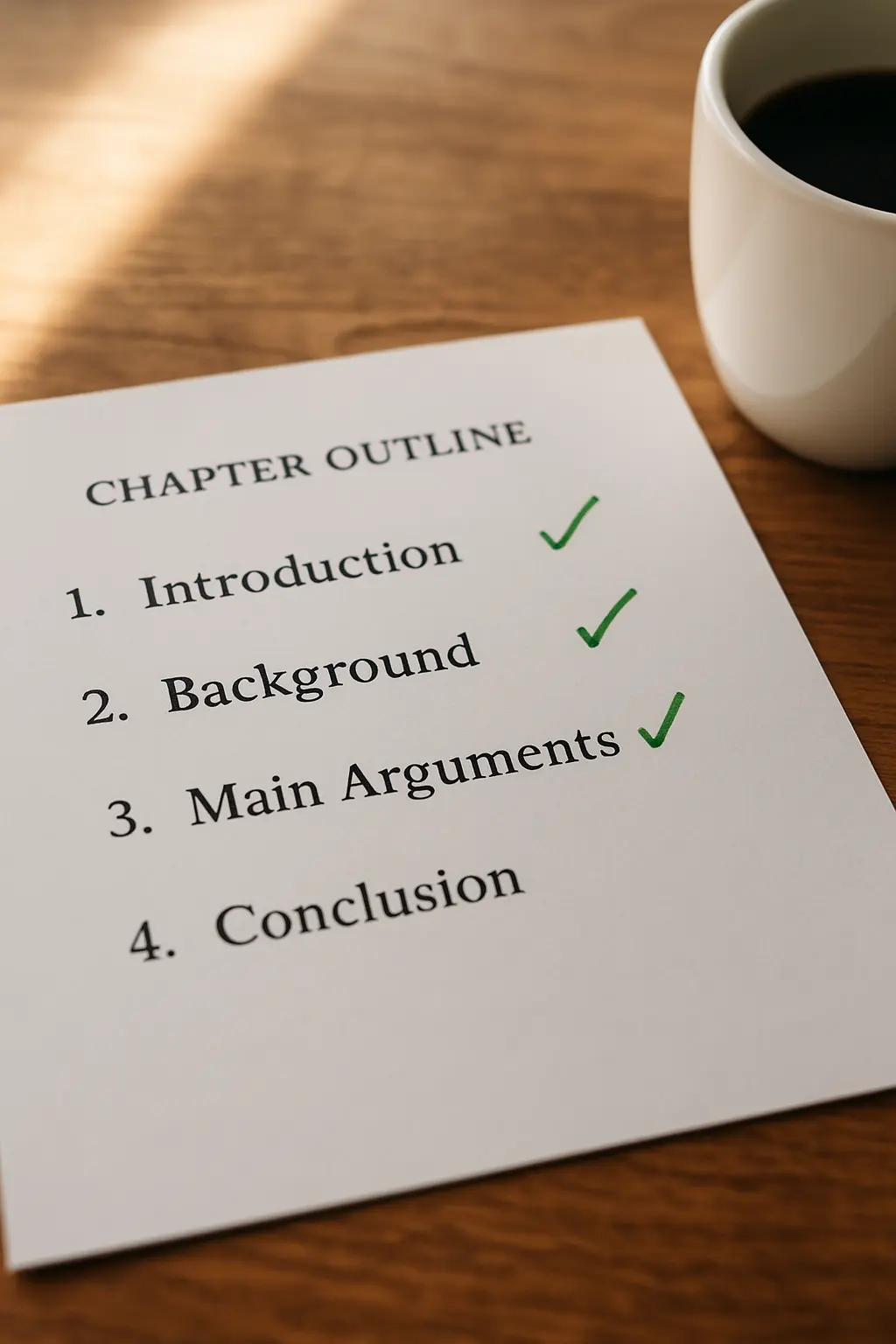
Students in this position rarely lack the ability to write, or the material. What they lack is a structure that converts a pile of reading and results into an ordered sequence of small writing tasks. “Write chapter four” is not a task; it is a fog. “Write 300 words stating what the interviews showed about workload, using the three extracts already chosen” is a task, and you can do it in twenty minutes.
Turning the fog into the task list is mechanical work, entirely legitimate to delegate, and it is the single highest-value thing a tool can do for you. Everything below is built on that.
Chapter by chapter: what you can hand over, and what you cannot
Introduction
Hand over: the conventional shape — context, problem, gap, aims, questions, structure — and a critique of whether your draft actually delivers each. Keep: the claim about why your question matters. Write this chapter last, whatever order the document is in.
Literature review
Hand over: reorganising a review you have drafted, checking whether topic sentences match their paragraphs, and suggesting thematic groupings for studies you have read and summarised. Keep, absolutely: deciding what the literature says, judging quality, choosing what matters, and every citation. Never accept a reference from a tool you have not opened and read. The full boundary, with a model declaration, is in our guide to writing a literature review with AI, honestly.
Methodology
Hand over: the architecture and the prompts — philosophy, approach, design, sampling, instruments, analysis, ethics — and whether you have justified each decision rather than merely described it. Keep: the justifications. Our walkthrough of the methodology chapter has the structure you can lift, and this is often the fastest chapter to finish because you already know what you did.
Results
Hand over: table and figure formatting, and the conventional reporting sentence for a given test — the exact APA construction is set out in our guide to running and reporting a t-test. Keep: the analysis, and every number. Never let a tool near your data values.
Discussion
Hand over: a structural check that each finding is interpreted against the literature and that your limitations are specific rather than boilerplate. Keep: the interpretation itself. This chapter is where the marks concentrate and where delegation is most visible, because generic discussion prose reads as generic immediately.
Bibliography
Hand over the lot. Formatting citations is clerical work nobody awards marks for and everybody deducts marks over. An automatic bibliography that generates from what your text actually cites removes the cited-but-not-listed problem entirely — see our guide to the AI Harvard referencing generator.
The one test that settles every case
Forget “is AI allowed” as your organising question, because the answer varies by institution, by department and sometimes by module. Ask this instead:
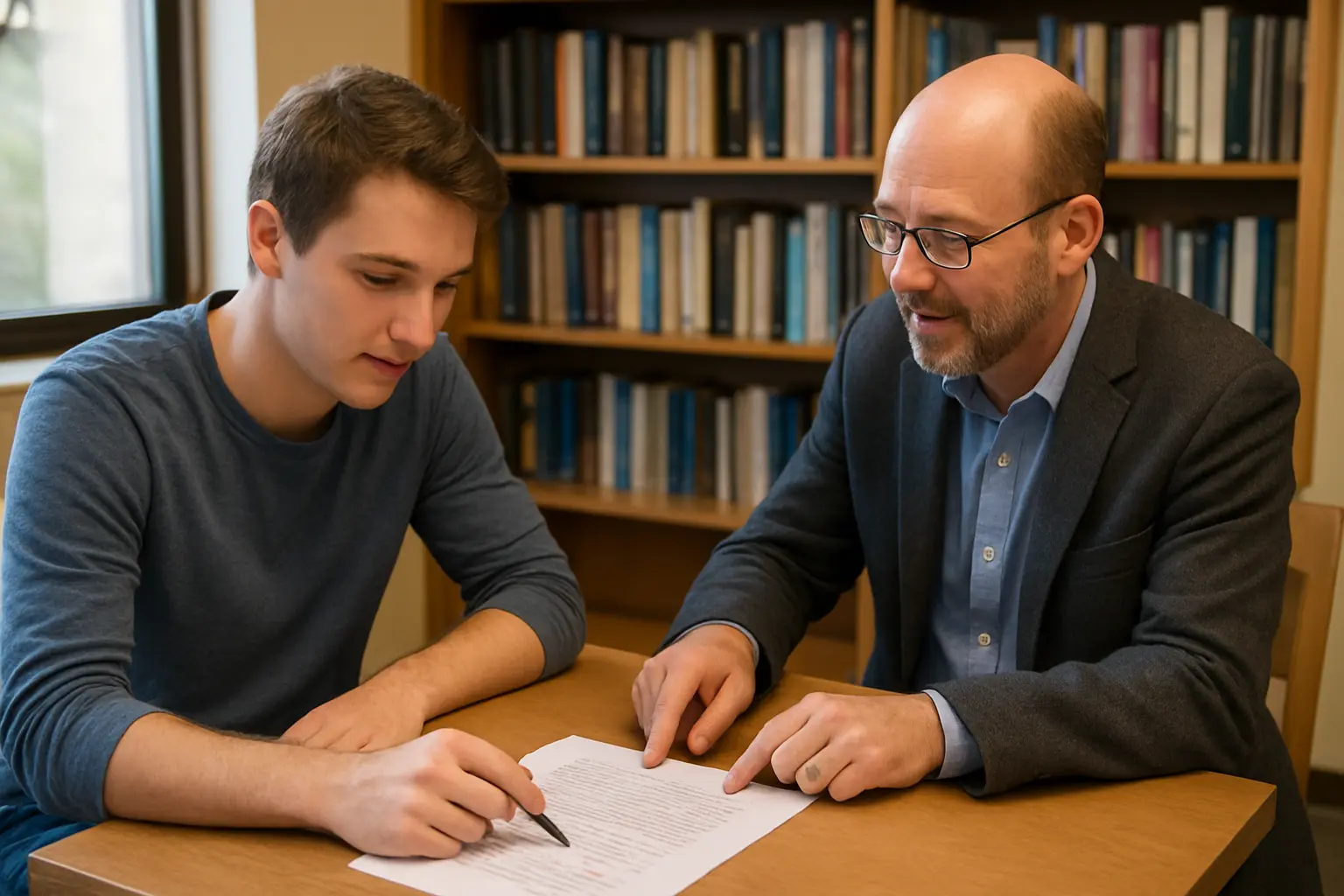
Could you sit with your supervisor, be stopped at any paragraph, and explain why it says what it says?
If yes, you wrote your dissertation, whatever tools were on the desk. If no, you did not, and no policy wording rescues that. This test also happens to be what a marker applies, which is why it is the one worth optimising for.
How Tesify is built for this
Tesify is a dissertation workspace rather than a chatbot, and the difference is that it holds the whole project. It builds the chapter structure for your project, works from your research questions, sources and findings, drafts with you section by section instead of producing a finished essay, maintains the bibliography in your citation style as you cite, and checks your drafts before your university does.
The design commitment is the important part: everything stays 100% written by you. Tesify handles structure, formatting and momentum; the reading, the reasoning and the words are yours, which is the only configuration that survives the supervisor test. More than 9,000 students have used it across more than 15,000 chapters, and you can start free.
It also does not need to be your only tool. A general chatbot is genuinely useful for explanation and critique, and a reference manager holds your library — the sensible combination is set out in our comparison of the best AI tools for dissertation writing.
Tonight, if you are behind
- Build the skeleton. Every chapter, every section, one line saying what each section has to achieve. An hour, and the fog becomes a list.
- Write the methodology. You already know what you did and the structure is conventional. Having one finished chapter changes your relationship to the whole project more than any amount of planning.
- Spend the good hours where the marks are. Analysis and discussion outweigh a perfect introduction. Timebox by weight, not by document order.
- Fix the bibliography once, automatically, instead of five times by hand at 2am.
- Tell your supervisor where you actually are. Being three weeks behind is a solvable problem; being three weeks behind and silent for a month is a worse one.
None of this requires you to be more disciplined than you have been. It requires the work to be broken into pieces small enough to start. Open your dissertation in Tesify and build the skeleton tonight — it is free to start, and the chapter you finish tomorrow is the one that changes the next six weeks.
Frequently asked questions
Can AI write my whole dissertation for me?
It can generate text that looks like a dissertation, and that text will contain invented citations, no engagement with your data, and nothing you can defend in a supervision meeting. It cannot produce work that is honestly yours, which is what you are being assessed on.
Is using AI to write a dissertation cheating?
It depends entirely on what you use it for and what your institution permits. Structure, formatting, referencing and critique of your own writing are widely accepted; submitting generated text as your own work is not. Read your academic integrity policy and the assessment brief, and follow any declaration requirement.
How much does Tesify cost?
You can start free and build real chapters before deciding whether you need anything more. There is no charge to try the workflow on your actual dissertation.
Will my university know I used Tesify?
There is nothing to hide. Tesify supports your writing rather than replacing it, so what you submit is your own work. If your department asks you to declare tool use, declare it — a use you can state openly is a use you have already vetted.
Is my unpublished research safe?
Your work in Tesify is yours: it is not published or shared into any public database, and you can export it. Keep your own exported backup as a habit with any tool you use.
What if I only have three weeks left?
Three weeks of structured, prioritised writing produces far more than most students believe, and far more than any ghost-writer working without your data could. Build the skeleton, write the methodology first, and give the good hours to analysis and discussion.
Can it help if I have not collected my data yet?
Yes — the introduction, literature review and methodology can all be drafted before your results exist, and having them written is what makes the analysis period survivable. Check that your ethics approval is in place before you collect anything.
Does it write in British English?
Yes, and you should check the final draft for consistency regardless of what you write in. UK departments expect British spelling and conventions unless your handbook says otherwise.
What if my supervisor has stopped replying?
Chase once by email, then contact your department’s dissertation coordinator or postgraduate office — supervision is an institutional obligation, not a personal favour. Keep writing while you wait rather than treating silence as permission to stall.
Will using AI make my writing sound generic?
It will if you let a tool generate your prose. It will not if the tool handles structure and formatting while you write the sentences, which is the workflow described here and the reason it survives a supervision meeting.