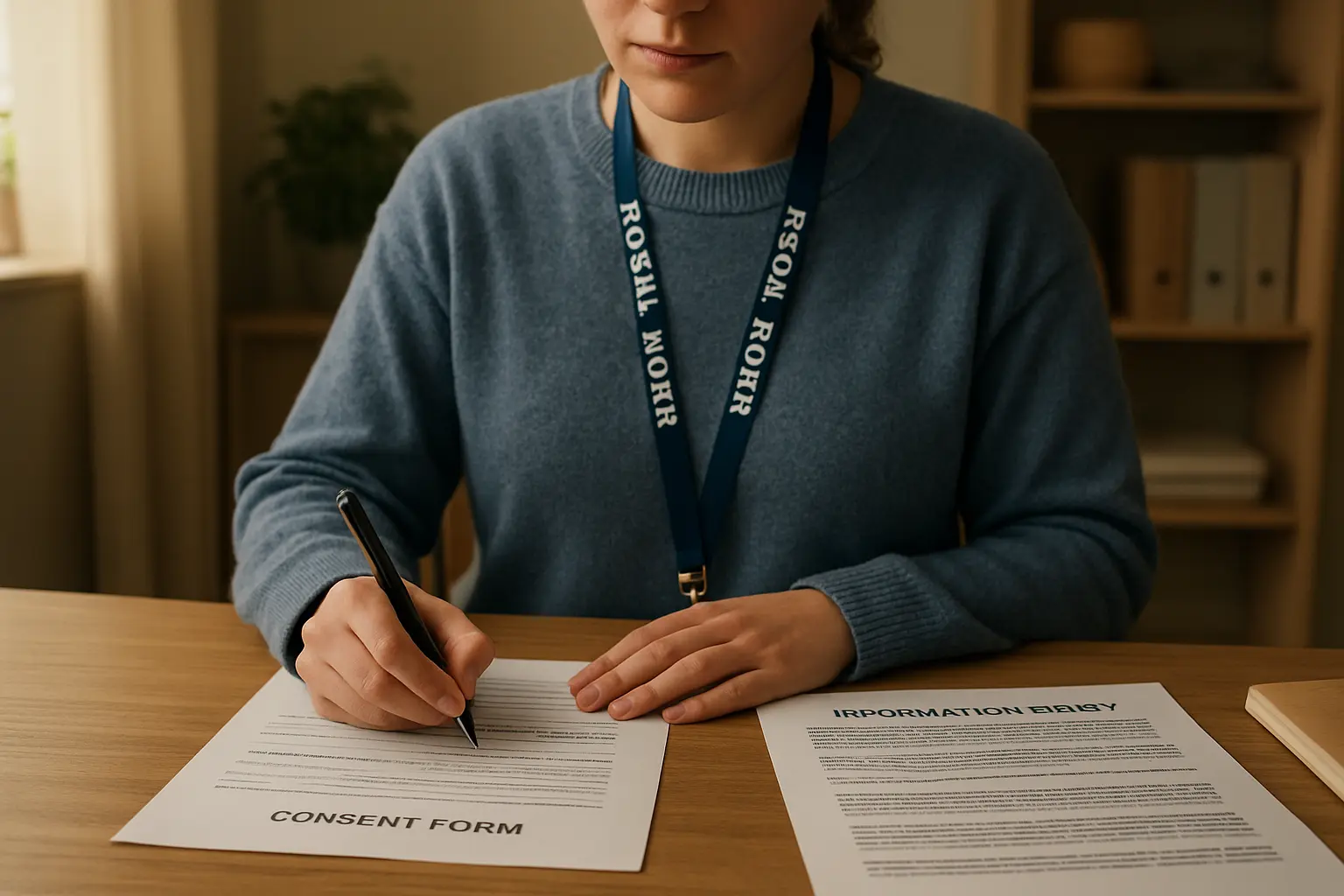
A social work dissertation almost always involves people the field itself defines as needing extra protection — service users, looked-after children, adults with care and support needs, or the practitioners who work with them — so ethics review is stricter and slower than on most other courses, and getting past a gatekeeper organisation is usually the real bottleneck, not the ethics form itself. Build in extra time for both, and expect your committee to ask about consent capacity and disclosure risk specifically, not just standard data protection.
Why does a social work dissertation face tighter ethics scrutiny than most subjects?
Because the population social work studies is, by definition of the profession, disproportionately likely to include people in a position of vulnerability — through age, disability, mental capacity, dependency on services, or an unequal power relationship with the researcher (a student who may one day be a practitioner in the same sector). University ethics committees apply a higher tier of review to any project involving these groups, and most social work programmes route dissertations through this higher tier by default rather than case by case, even where the actual design looks routine (a survey of qualified practitioners, for instance).
What does the BASW Code of Ethics actually require of a student researcher?
The British Association of Social Workers’ Code of Ethics — refreshed in July 2021, first adopted in 1975 — is written for practice, but its principles apply directly to research with the same population. It requires “acting with the informed consent of service users, unless required by law to protect that person or another from risk of serious harm”, and requires social workers (and, by extension, social work students conducting research in the field) to “ascertain and respect each individual’s mental capacity to make his or her own decisions” under the relevant legal framework, involving people who lack full capacity appropriately rather than excluding them by default. On confidentiality, the Code requires you to “explain the nature of that confidentiality to people with whom they work and any circumstances where confidentiality must be waived should be made explicit” — meaning your consent process has to state upfront, not after the fact, the specific situations in which you would break confidentiality.
What does Social Work England add on top of BASW?
Social Work England, the sector’s statutory regulator, sets professional standards that qualified social workers (and social work students on placement) must meet, with a strong emphasis on giving people “enough information in a format, manner and language that helps them to understand” what is happening, and on maintaining professional relationships that respect dignity and privacy. If you are a social work student researching within a practice context — surveying colleagues at your placement agency, for example — both frameworks apply simultaneously: BASW’s ethical principles and Social Work England’s professional standards, and your ethics application should reference both rather than only your university’s generic template.
Who counts as a gatekeeper, and why is this the real bottleneck?
A gatekeeper is whoever controls access to the people or setting you want to research — a local authority’s research governance team, a charity’s safeguarding lead, a care home manager, a school’s designated safeguarding lead, or an NHS trust’s research and development office if your population overlaps with health services. Gatekeepers routinely take far longer to respond than university ethics committees, because they are weighing their duty of care to people already in their service against a student project with no guaranteed benefit to those people — and they can, reasonably, say no. Build a realistic timeline that assumes gatekeeper approval takes four to eight weeks and start those conversations before your university ethics application is even submitted, not after.
How do you actually get through a gatekeeper?
State plainly, in writing, what you are asking for: who you want to contact, how, how many times, what you will ask them, how long it will take, and exactly what happens to their data afterwards. Gatekeepers who see a vague request (“I’d like to speak to some service users about their experiences”) take longer to approve it or decline outright, because they cannot assess the actual burden or risk. A tight, specific request — a named number of semi-structured interviews of a stated length, with a named consent process and a named data-retention period — is both more ethical and more likely to be approved quickly. Route every contact with participants through the gatekeeper’s own preferred channel rather than approaching people directly, even where you happen to already know them through a placement.
What must an informed consent process for this population actually cover?
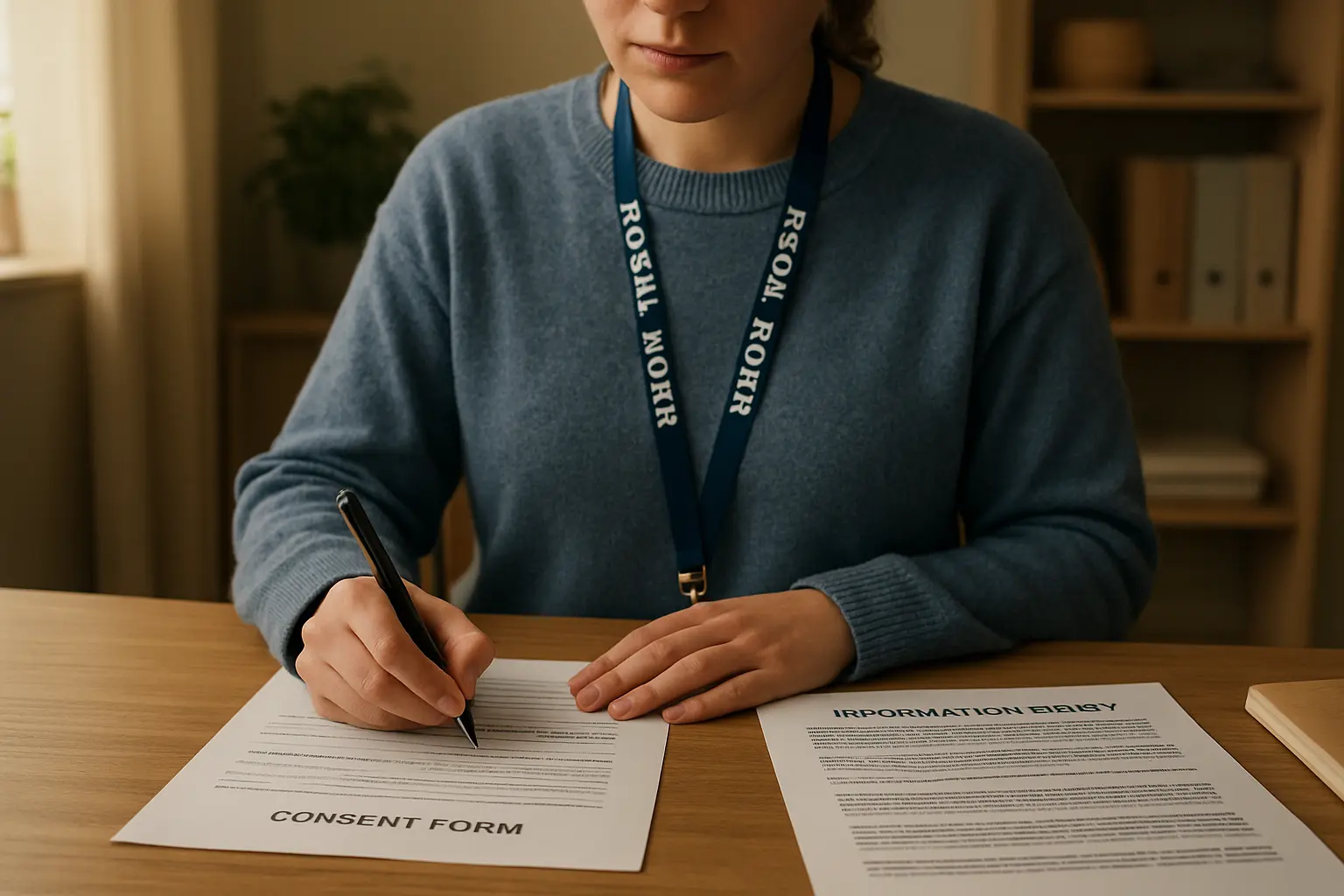
Beyond a standard participant information sheet, a social work dissertation’s consent process needs to state clearly: that participation is voluntary and refusing or withdrawing will not affect any service the person receives (a critical reassurance where the researcher is, or might become, connected to their care); who will see their data and in what identifiable form; and the specific circumstances in which you would break confidentiality — principally, a disclosure of risk of serious harm to the participant or someone else. Where a participant may lack full capacity to consent, your ethics application needs to state how capacity was assessed and, where relevant, how a legally authorised representative was involved — a generic consent form written for a general-population survey will not satisfy a social work ethics committee.

Can you interview service users directly, or only practitioners?
Both are legitimate designs, but interviewing service users directly carries a substantially higher ethics bar and a slower gatekeeper process, which is why many undergraduate social work dissertations focus on practitioners’ perspectives instead — social workers’ experiences of a policy, a service model or a practice dilemma — while reserving direct service-user research for postgraduate or doctoral projects with more time and, often, service-user involvement built into the design from the start. If your question genuinely needs the service-user perspective, discuss with your supervisor early whether a practitioner-perspective proxy (asking social workers how service users respond to X) could answer a similar question with a faster, lower-risk design.
What if a participant discloses a safeguarding concern during your research?
State your disclosure policy in the consent information before anyone agrees to take part, not as an afterthought: if a participant discloses that they or someone else is at risk of serious harm, you will act on it — normally by reporting to your named safeguarding contact or the gatekeeper organisation’s own safeguarding lead, exactly as a practising social worker would. This is not a hypothetical caveat for a social work project; disclosure during an interview about care experiences or practice dilemmas is a real, foreseeable possibility, and an ethics committee will expect to see your specific plan for it, not a generic confidentiality clause borrowed from a different subject’s template.
How does this compare with the generic undergraduate ethics process?
Every UK undergraduate dissertation involving people goes through some form of university ethics review, and the general triggers, tiers and paperwork are the same ones covered in our guide to UK undergraduate ethics approval. What a social work dissertation adds on top is the gatekeeper layer described above, the higher default review tier for vulnerable groups, and the two professional frameworks — BASW and Social Work England — that a generic ethics template does not reference at all. If your project design ends up closer to a standard survey of the general public than to social-work-specific fieldwork, the generic process may be all that applies; the moment a service user, looked-after child or care-dependent adult is involved, expect the fuller version above.
What tool should you use to survey practitioners, and does it change your ethics application?
Whichever platform your ethics committee and gatekeeper actually accept — and the two do not always agree, which is worth checking before you build a survey rather than after. Our guide to survey platforms UK students can actually use covers what ethics committees and data protection rules accept across Jisc Online Surveys, Qualtrics, Microsoft Forms and Google Forms; a local authority gatekeeper may separately insist on a platform that keeps data within a specific hosting region, so confirm both before committing to one tool in your methodology chapter.
Where does this fit in your dissertation proposal?
Your ethics and gatekeeper strategy belongs in the proposal you submit before fieldwork begins, not as an afterthought once your topic is approved — a proposal that names the specific gatekeeper organisation, the population, and the consent and disclosure process in outline is what lets a supervisor flag capacity or timeline problems before they become a missed deadline. See how to write a UK dissertation proposal for what UK departments expect a proposal to contain at that stage, and factor the access timeline into the sample size you propose — a smaller, realistically achievable sample agreed with your gatekeeper in advance is worth more than an ambitious number you cannot actually recruit; our guide to sample size for an undergraduate dissertation covers how to justify a smaller qualitative sample defensibly.
Frequently asked questions
Do you need NHS ethics approval for a social work dissertation?
Only if your research directly involves NHS patients, staff acting in an NHS capacity, or NHS premises — most social work dissertations sit within local authority, charity or university-based settings and go through your university’s own ethics committee plus the relevant gatekeeper, not the NHS Health Research Authority route. If your population does overlap with health and social care jointly, check with your supervisor early, since the two systems have different timelines.
How long does ethics and gatekeeper approval typically take for a social work dissertation?
Allow considerably longer than the university’s own stated ethics turnaround, because gatekeeper approval runs in parallel and is usually the slower of the two — treat eight to twelve weeks from first enquiry to fieldwork start as a realistic planning assumption, not a worst case.
Can you use anonymised case notes or agency records instead of interviewing people?
Sometimes, but this still needs gatekeeper and ethics approval, because the records belong to a service and were not collected for research — you need explicit permission from the data controller (the local authority or agency) and a clear anonymisation plan before any record leaves the building, even in note form.
What should the consent form say about withdrawal?
State a specific, realistic withdrawal window (for example, up to two weeks after an interview, before analysis begins) rather than an open-ended “you can withdraw at any time”, since once data is anonymised and merged into a wider analysis it may not be possible to remove one person’s contribution — being honest about that limit is more ethical than promising something you cannot deliver.
Do you need a Disclosure and Barring Service (DBS) check to research this population?
If your research involves direct, unsupervised contact with children or vulnerable adults in a setting where a DBS check would normally apply, the gatekeeper organisation will usually require one before granting access — check this with them at the first enquiry stage, since arranging a DBS check can itself take several weeks.
Is a documentary or policy-analysis dissertation an easier route in social work?
Yes, in the sense that analysing published policy documents, inspection reports or case law involves no human participants and therefore no gatekeeper process at all — a genuine option worth discussing with your supervisor if ethics and access timelines are a real constraint on your submission date.
What data protection law applies to a social work dissertation?
UK GDPR and the Data Protection Act 2018 apply to any personal data you collect, alongside your university’s own research data policy — your ethics application should name your legal basis for processing (normally consent) and your retention and disposal plan for identifiable data, separately from the consent form itself.
Does your placement agency count as a gatekeeper for research on your own colleagues?
Yes — researching colleagues or service users at your own placement still needs the agency’s formal research governance sign-off, not just informal permission from your practice educator, because the agency remains the data controller for anyone in its service and needs to authorise research activity through its own process, however well you already know the setting.
What happens if your gatekeeper says no?
Have a documentary or practitioner-perspective fallback ready before you need it — a policy or case-law analysis needs no gatekeeper at all, and a survey of qualified practitioners recruited through a professional body or your university’s own alumni network is usually faster to approve than direct service-user access, so treat a refusal as a redesign trigger rather than a dead end this close to your deadline.
Tesify’s dissertation builder can hold your ethics application, gatekeeper correspondence log and consent materials alongside your draft chapters, so the exact wording you promised participants about confidentiality and withdrawal stays consistent with what your methodology chapter later describes. Start your dissertation with Tesify — free to try, and it keeps your ethics commitments and your write-up aligned rather than quietly drifting apart.