| Route | Typical gatekeeper | Access process | Data protection | Realistic for an undergraduate? |
|---|---|---|---|---|
| Police force | Force research/ethics unit, or a named officer sponsor | Formal force-level research application, often several months’ lead time | Strict; data usually cannot leave force premises, DPA compliance mandatory | Difficult within a one-year undergraduate timetable; possible with early contact and a narrow request |
| Courts / court service | HMCTS or the relevant court’s own administration | Formal application; open-court observation is generally more accessible than access to case files | Public hearings are, by definition, public; case files and personal data are heavily restricted | Observation of open, public hearings is realistic; file access rarely is |
| Charity / NGO | Service manager or a named staff contact | The organisation’s own governance process, alongside full university ethics approval | DPA compliance still required; organisation may hold its own data-sharing policy | Most realistic route for an undergraduate dissertation |
The shortlist, ranked
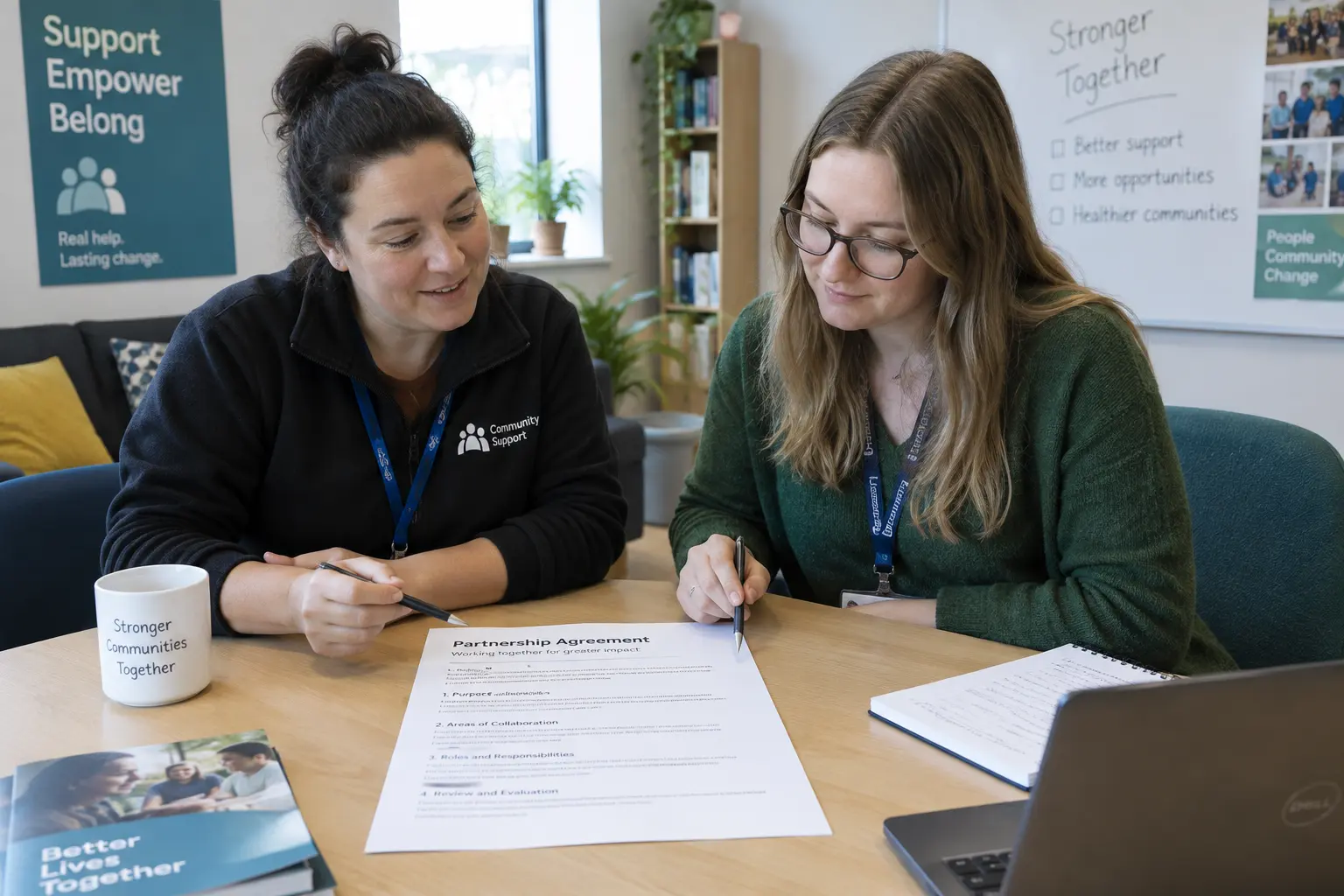
1. Charity or NGO is the most realistic route for most undergraduate criminology dissertations. Organisations working with offenders, victims or vulnerable groups (a victim-support charity, a prisoners’ family support service, a youth-offending voluntary sector partner) often have an established relationship with local universities and a lighter, faster governance process than a statutory body. Access still requires full university ethics approval on top of the organisation’s own process — it is not a shortcut around ethics, just a faster gatekeeper relationship to build.
2. Courts (open-hearing observation) is genuinely accessible without special permission for the specific, narrow purpose of observing public hearings — UK courts are open to the public by default, subject to reporting restrictions and specific closed sessions (family courts, youth courts, and some other categories). Observation-based research does not require the same formal application as access to case files, sentencing data or contact with court staff, which is a much slower and more restricted route.
3. Police force access is the hardest of the three within an undergraduate timetable. Forces run their own formal research application processes, frequently taking months, and typically require a named academic sponsor and a data-handling plan that satisfies the force’s own information security requirements before any access is granted. If your dissertation genuinely needs police data or officer access, start the application in your first term, treat rejection or non-response as a likely outcome, and have a documentary-methods or secondary-data fallback ready.
One clear recommendation
For most undergraduate criminology dissertations, a charity or voluntary-sector partner is the realistic route: identify an organisation whose work connects to your research question, make contact early (first term, not after your proposal is approved), and be explicit from the first conversation about what you are asking for — a set number of staff interviews, access to anonymised case summaries, or observation of a specific service, not open-ended access. Reserve police or court-file access for dissertations with a genuine, narrow, well-justified need and a realistic timeline, and have a documentary or secondary-data fallback (see our guide to documentary methods for a criminology dissertation) ready if the access route does not come through in time.
Matching the route to your research question
| If your dissertation is about… | Best-fit route | Why |
|---|---|---|
| Sentencing patterns, offence trends, or published statistics | Documentary/secondary data | No institutional gatekeeper needed; published court and Ministry of Justice data covers this well |
| How professionals experience a specific practice (e.g. how probation officers assess risk) | Charity or, with enough lead time, a statutory-body staff interview | Staff, not service users, as participants; lower ethics burden than direct offender/victim contact |
| Victim or offender experience of a specific service | Charity/NGO partner with an existing service relationship | Faster governance route; the organisation’s existing safeguarding relationship with service users reduces risk |
| Court process itself (procedure, atmosphere, public access) | Open-hearing observation | No special permission needed for public hearings; direct, first-hand observational data |
| Police operational practice or force data | Police force, with an early, narrow application | Only route that can answer this question directly, but plan for a multi-month process and a fallback |
Choosing the route that actually fits your research question — rather than defaulting to whichever organisation seems most dramatic or headline-worthy — is itself part of a defensible methodology, and stating this match explicitly in your methodology chapter is worth real marks.

What ethics and data protection actually require
The British Society of Criminology’s Statement of Ethics sets out several principles that apply directly to institutional-access dissertations. First, it asks researchers to secure free and informed consent from each individual participant and to avoid group assent given by a gatekeeper wherever possible — a charity manager agreeing to your project does not substitute for each individual participant’s own informed consent, and the Statement is explicit that penal and care institutions cannot be assumed to give informed consent on young people’s behalf. Second, researchers in the UK have no special legal protection requiring them to uphold confidentiality, and their data can be subject to subpoena — you must be clear with participants, upfront, about the limits of what you can keep confidential. Third, the Statement identifies a legal obligation to report information about terrorism (Terrorism Act 2000), notes that the money-laundering reporting rules (Proceeds of Crime Act 2002) could potentially cover researchers, and describes a long-standing convention — though not a legal obligation — that researchers act on information about the abuse or neglect of a child. State these limits explicitly in your consent materials rather than promising blanket confidentiality you cannot actually deliver.
All of this sits alongside full university ethics approval, which our guide to ethics approval for an undergraduate dissertation covers in general, and alongside ordinary Data Protection Act compliance for how you store, anonymise and eventually dispose of any personal data you collect. In practice, this means agreeing with your host organisation, before data collection starts, exactly what will be recorded, where it will be stored (usually your university’s secure, encrypted storage, not a personal device or a general cloud account), who can access it, how long it will be retained, and how it will be destroyed once your dissertation is marked. Writing this into a short data-management plan, even an informal one, before your first interview is a concrete piece of evidence you can point to if your ethics panel or the host organisation asks how their information will be protected.
A worked example (illustrative)
An illustrative, labelled example: a dissertation on the experience of families supporting a relative through the criminal justice system approaches a prisoners’ families support charity in October of the final year. The charity’s own trustees approve the project in November, subject to the student’s university ethics approval, which is granted in December after the charity’s own safeguarding policy is reviewed alongside the university’s. Data collection (four staff interviews and a review of anonymised case-summary themes, with no direct contact with family members’ personal case files) runs in January and February. The consent materials state explicitly, in plain language, the limits of confidentiality — that a disclosure suggesting risk of harm to a child would be passed on under the charity’s safeguarding procedure, regardless of any general confidentiality assurance given. The dissertation’s methodology chapter names the BSC Statement of Ethics as its guiding framework and explains, specifically, why the charity route was chosen over an approach to the prison service directly (timeline, and the charity’s existing, faster-moving relationship with the university).
Common mistakes when seeking organisational access
- Contacting a police force or court service too late. A formal application with a multi-month lead time started in term two cannot support a project due in May.
- Assuming an organisation’s agreement replaces individual consent. A charity manager or force liaison agreeing to your project is not the same as each participant’s own informed consent.
- Promising blanket confidentiality. UK researchers have no special legal confidentiality protection, and legal reporting duties (for example on terrorism) and child-safeguarding conventions can override an assurance you give — state the actual limits upfront.
- Treating documentary methods as a lesser fallback. A well-designed documentary study is a legitimate primary route, not just a backup plan, and our guide to UK data sources for a dissertation by subject covers the published data this can draw on.
- Reinventing gatekeeper and consent procedures from scratch. Social work dissertations face very similar institutional-access questions; our guide to ethics, consent and gatekeeper access for a social work dissertation is worth reading alongside this one for the general principles, even though the settings differ.
Frequently asked questions
How early should I contact a police force for research access?
As early as your first term — formal force research applications commonly take several months, and starting in your final term makes access within your dissertation’s timeline unlikely.
Can I observe a court hearing without special permission?
Yes, for open public hearings, subject to reporting restrictions and the specific categories of closed hearings (family courts, youth courts, and others) — check the specific court’s own rules before attending, since practice varies.
Does a charity’s agreement mean I do not need university ethics approval?
No — full university ethics approval is required regardless of what access an organisation itself grants, and most organisations will ask to see evidence of it before finalising their own agreement.
What if a participant discloses something during an interview that I feel I should report?
Follow your university’s and the host organisation’s safeguarding procedures, and make sure your consent materials stated this limit on confidentiality upfront, consistent with the BSC Statement of Ethics’s guidance on reporting duties and child protection.
Is a charity easier to work with than a statutory body for every criminology topic?
Generally yes for access speed, but check that the specific organisation’s work actually connects to your research question — choosing an organisation for convenience rather than genuine fit weakens your dissertation’s justification.
Can I combine an organisational-access approach with documentary methods?
Yes, and it is often a stronger design — staff interviews or case-summary themes from an organisation, triangulated with published documentary sources, gives you more to discuss than either approach alone.
What should my consent form say about confidentiality limits?
State plainly that you will keep responses confidential except where you would need to pass information on — such as a risk of harm to a child, or information about terrorism, which UK law requires to be reported — rather than promising unconditional confidentiality.
Do I need a data-sharing agreement with the organisation?
For anything beyond published or already-anonymised material, yes — discuss data handling, storage and disposal with the organisation and your university’s data protection office before collection begins, not after.
Can Tesify help me write the ethics and access section of my criminology dissertation?
Tesify is used to write dissertations end to end, including methodology and ethics sections, with every draft 100% written by you through the platform — it does not negotiate organisational access for you, but it can help you structure and write up your access route and ethics reasoning once you have it agreed.
What is the single biggest reason organisational-access dissertations run into trouble?
Starting the access conversation too late for the gatekeeper’s own process — a charity, court or force all move on their own institutional timeline, not the student’s.
Should I approach multiple organisations at once as a backup?
It is reasonable to make initial contact with more than one candidate organisation, but be transparent about doing so rather than committing to two separate full projects — most ethics panels expect a single, clearly identified access route by the time your proposal is approved.
What happens if my access falls through after ethics approval?
Talk to your supervisor immediately — most departments have a process for amending an approved ethics application to a fallback design (documentary methods, a different organisation, or staff-only interviews), which is far better than continuing with access that has not actually materialised.
Tesify has helped over 9,000 students write more than 15,000 dissertation chapters, and every draft is 100% written by you, guided section by section. Start your criminology dissertation with Tesify and work through your methodology chapter with your access route and ethics reasoning mapped out properly from the start.