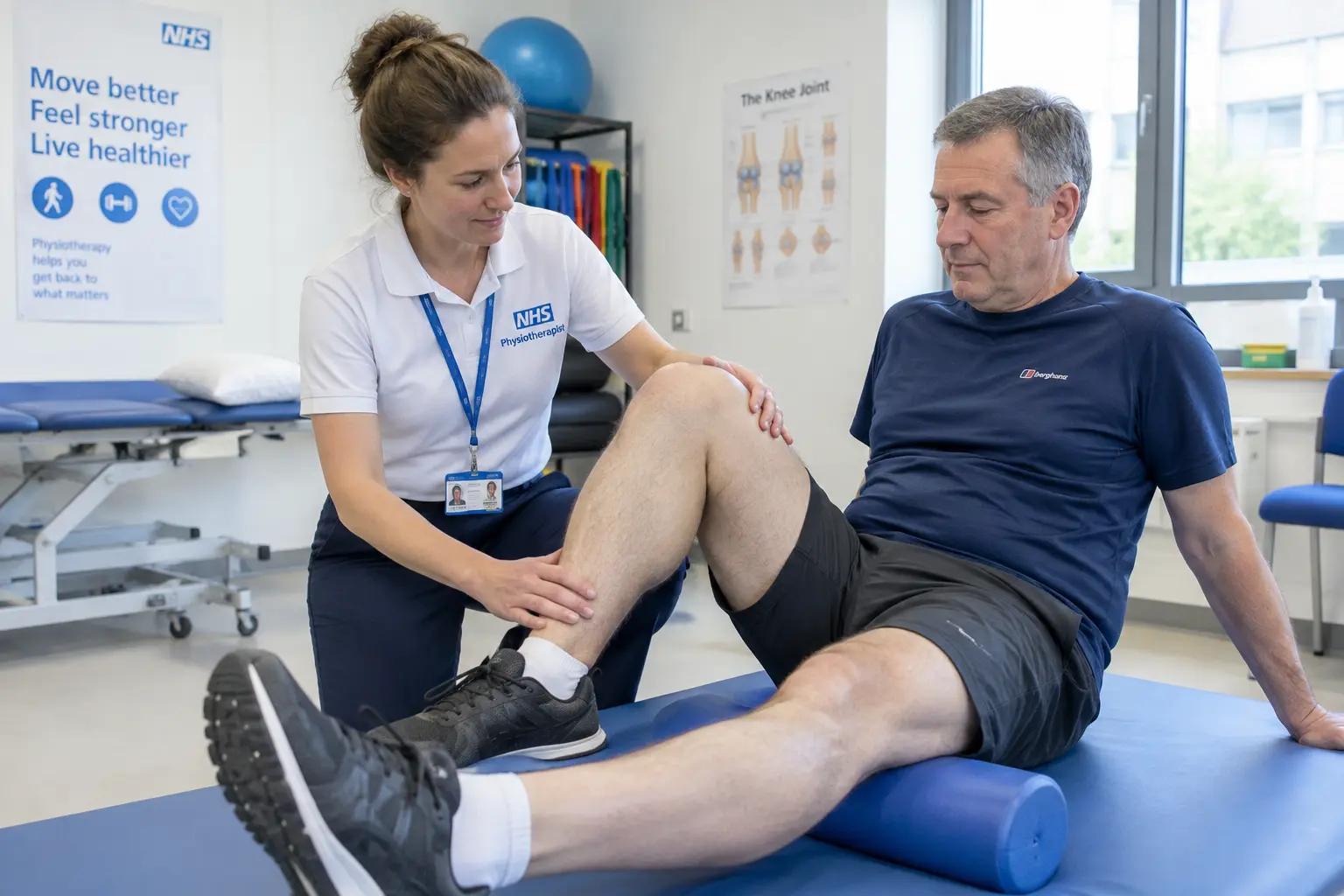
A UK physiotherapy dissertation has fewer single-purpose national datasets than nursing or midwifery, but five sources between them cover most research questions: the HCPC’s own register data, NHS community health services waiting-time statistics, the National Joint Registry, national health surveys reporting musculoskeletal conditions, and workforce data published by the Chartered Society of Physiotherapy. Here is what each holds and which questions it actually answers.
Five UK data sources for a physiotherapy dissertation
| Source | Publisher | What it holds |
|---|---|---|
| HCPC register data | Health and Care Professions Council | Registrant snapshot factsheets published on a regular cycle, breaking down registrants by profession and application route |
| NHS community health services waiting-time statistics | NHS England | Waiting times for community services, which include physiotherapy referral-to-treatment data in most reporting periods |
| National Joint Registry (NJR) | NJR, hosted by the Healthcare Quality Improvement Partnership (HQIP); covers England, Wales, Northern Ireland, the Isle of Man and the Channel Islands (not Scotland) | Hip, knee and other joint replacement procedure data, relevant to post-surgical rehabilitation research |
| Health Survey for England / national health surveys | NHS England (Health Survey for England) and devolved equivalents | Population-level prevalence of musculoskeletal conditions, mobility limitations and related risk factors |
| Chartered Society of Physiotherapy (CSP) workforce and policy publications | Chartered Society of Physiotherapy | Workforce statistics, policy positions and service-pressure reporting for the physiotherapy profession |

What each source actually answers
HCPC register data — for workforce and registration-route questions
If your dissertation asks about the physiotherapy workforce itself — routes into registration, trends in registrant numbers over time — the HCPC’s own published register snapshots are the primary source, since the HCPC is the statutory regulator for physiotherapists in the UK. The HCPC publishes regular “registrant snapshot” factsheets giving a breakdown by profession and application route, released on an ongoing cycle, with archived historical snapshots also available. Check the HCPC’s own insights and data pages for the current release before citing a specific figure, since registrant counts change with each snapshot.
NHS community health services waiting-time statistics — for access and service-pressure questions
For a dissertation about waiting times, access to care, or service capacity, NHS England’s community health services waiting-time statistics are the closest national dataset, since physiotherapy is typically reported within the community services category rather than as a fully standalone series. Check the exact scope of the reporting period and whether physiotherapy is broken out separately or combined with other community therapies before relying on it for a precise comparison.
National Joint Registry — for post-surgical rehabilitation research
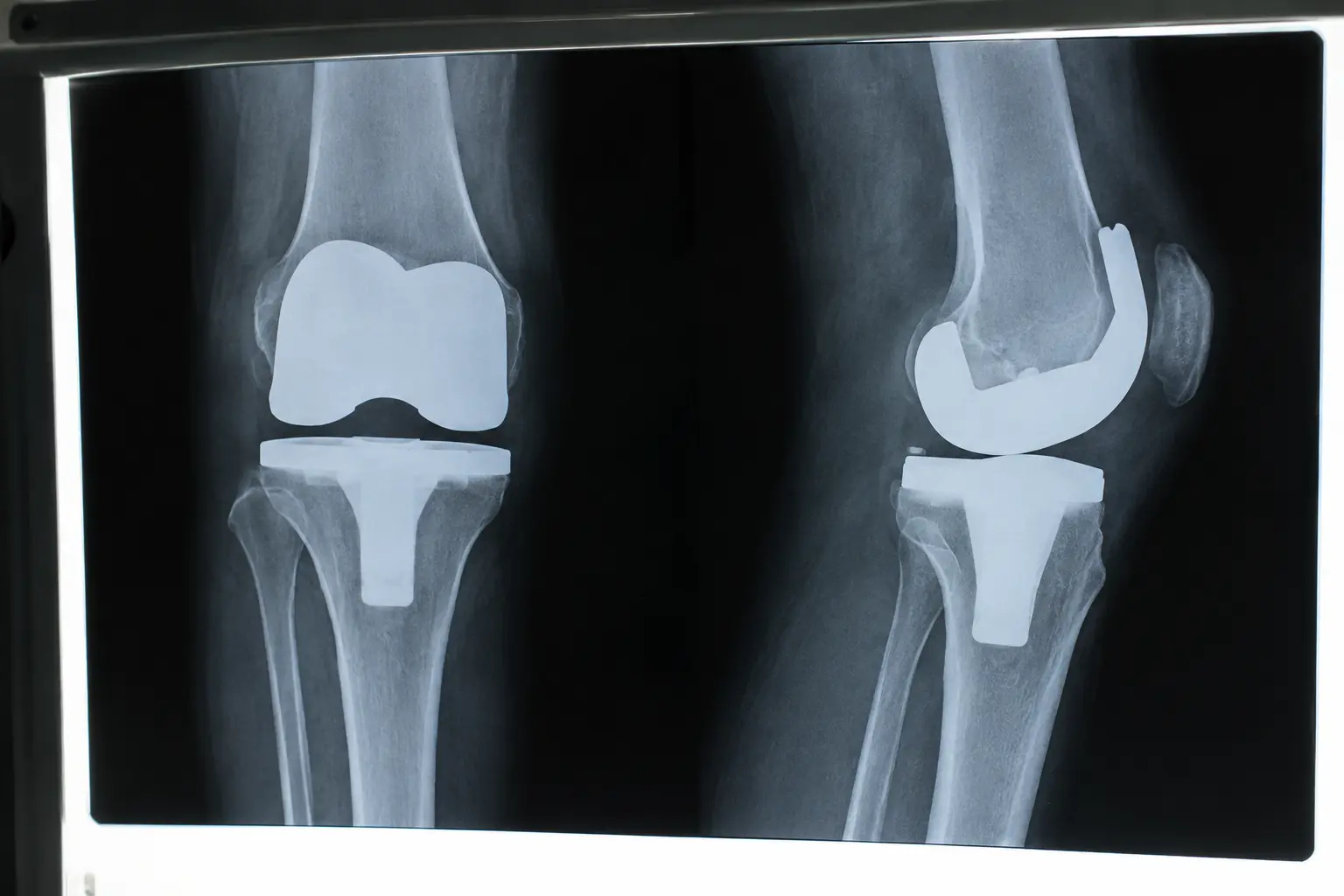
If your dissertation focuses on rehabilitation after joint replacement, the NJR is the authoritative source for procedure volumes and outcomes in the nations it covers, and pairing it with your own literature on post-operative physiotherapy protocols is a well-established design. It does not itself hold physiotherapy treatment or outcome data, so it works best as context (how many procedures, of what type) rather than as your primary outcome measure. If your study population is in Scotland, note that Scotland is outside the NJR and reports joint replacement activity separately.
Health Survey for England and equivalents — for prevalence and risk-factor questions
For a dissertation about who develops musculoskeletal conditions and what risk factors are associated with them at a population level, the Health Survey for England (and its devolved-nation equivalents) is the standard source, since it surveys a representative sample of the population rather than only those already receiving treatment.
CSP workforce and policy publications — for professional and policy questions
If your dissertation is about the physiotherapy profession itself — workforce pressure, scope-of-practice debates, policy positions — the Chartered Society of Physiotherapy’s own published reports and policy statements are the direct source, since it is the profession’s representative body and publishes its own analysis of workforce and service pressures.
Worked example topics using these sources
- How has the physiotherapy workforce changed over recent HCPC reporting periods, and what does this suggest about capacity? (HCPC register data)
- What do NHS community services waiting-time statistics suggest about regional variation in access to physiotherapy? (NHS community health services waiting-time statistics)
- How does National Joint Registry procedure volume for hip and knee replacement relate to demand for post-surgical rehabilitation? (NJR)
- What does Health Survey for England data suggest about the prevalence of musculoskeletal conditions by age group? (Health Survey for England)
- How does CSP’s own workforce reporting compare with HCPC registrant data on the scale of any staffing pressure? (CSP publications and HCPC register data)
- What is the relationship between deprivation and self-reported mobility limitation in national survey data? (Health Survey for England, read alongside ONS deprivation indices)
- How has NJR-recorded joint replacement activity changed over recent years, and what does this imply for future rehabilitation service demand? (NJR)
- What does published policy literature from CSP say about scope-of-practice changes in first-contact physiotherapy roles? (CSP publications, documentary/policy-analysis design)
As with the datasets above, each of these is a starting question rather than a finished proposal — narrow it to a specific reporting period, a specific UK nation or region, and state explicitly whether your design is secondary quantitative analysis or a documentary/policy analysis of published reports.
Combining sources for a stronger design
Several strong physiotherapy dissertation topics combine two of these sources rather than relying on one alone: NJR procedure volumes alongside Health Survey prevalence data to discuss demand; HCPC workforce data alongside CSP’s own workforce reporting to discuss supply; or NHS waiting-time data alongside CSP policy publications to discuss the service-pressure narrative from two different angles (the raw figures and the professional body’s own framing of them). State explicitly in your methodology how the two sources relate and cover different aspects of the same question.
How to cite these sources correctly
Name the specific publication and its release date or reporting period, not just the organisation — “HCPC registrant data” on its own is not specific enough; “the HCPC’s registrant snapshot factsheet for [named month/year]” is. The same applies to NHS waiting-time statistics and NJR data, both of which are published on a regular reporting cycle with a specific period covered by each release. A methodology chapter that names the exact publication, its reporting period and its access date reads as considerably more competent than one that references “NHS data” or “government statistics” in general terms — the same standard applies here as to any other national statistics source you might cite in a dissertation.
Why physiotherapy has fewer dedicated national datasets than nursing or midwifery
Midwifery has MBRRACE-UK as a single high-profile national surveillance programme that most dissertations in that field converge on, and nursing has a comparably central set of NHS-published datasets its dissertations routinely draw on. Physiotherapy’s data landscape is more fragmented across its regulator, NHS operational statistics, a joint-specific clinical registry, and its own professional body, because physiotherapy activity is delivered across a wider range of settings (NHS community services, hospital-based rehabilitation, private practice, sports and occupational contexts) than a single national programme easily captures. This is worth stating explicitly in your own methodology chapter as a limitation of the data landscape itself, not a shortcoming of your search.
Frequently asked questions
Do I need permission to use HCPC register data?
No separate permission is normally required to cite HCPC’s published registrant snapshot factsheets, but cite the specific snapshot date rather than an undated general reference, since the figures change with each release.
Does NHS waiting-time data break out physiotherapy specifically?
This varies by reporting period and dataset — check the specific NHS England publication’s methodology notes to confirm whether physiotherapy is reported separately from other community therapies before building a research question around a precise physiotherapy-specific figure.
Can I use National Joint Registry data without recruiting patients myself?
Yes — the NJR publishes aggregated, published statistics that do not require you to recruit participants directly, making it a realistic secondary-data source for an undergraduate dissertation timeline.
Is the Health Survey for England the right source for a Scotland- or Wales-based dissertation?
Not directly — Scotland, Wales and Northern Ireland each publish their own equivalent health survey, so check the devolved-nation publication that matches your specific study population rather than assuming England-only data applies UK-wide.
Are CSP publications considered an independent or biased source?
As the profession’s representative body, CSP publications should be read as an informed but interested-party source — useful for policy framing and workforce data, but worth triangulating against NHS or HCPC figures where the same claim can be checked against a more neutral source.
Can I combine physiotherapy data with a specific patient group, like older adults or athletes?
Yes, and narrowing to a specific population is usually a stronger design than a general physiotherapy question — check which of the five sources above actually breaks its data down by the population group you want to focus on before committing to that narrower question.
How current is HCPC registrant data typically?
The HCPC releases registrant snapshot factsheets on an ongoing basis, with the most recent one usually only a few months old at any given time — check the HCPC’s own data page for the latest available snapshot before finalising your research question.
Should I use primary data collection instead of these secondary sources?
That depends on your research question and department’s expectations, but for many undergraduate physiotherapy dissertations, working with these established national sources is a realistic alternative to primary data collection with patients, particularly where clinical access, placement time or ethics approval would otherwise limit your project.
Can I use these sources for a dissertation about a specific condition, like lower back pain?
Possibly — the Health Survey for England has included questions on long-standing and musculoskeletal conditions in some survey years, and this can be paired with NHS waiting-time or NJR data where the condition connects to a specific care pathway, but check the exact condition categories in the survey year you plan to use before assuming your specific condition is broken out separately.
What if my dissertation is about private or self-funded physiotherapy rather than NHS care?
Most of the sources above (NHS waiting times, NJR, HCPC register) report NHS-context or profession-wide data rather than private-sector activity specifically — a private-physiotherapy-focused dissertation may need to rely more heavily on CSP’s own workforce commentary or a documentary analysis of sector reporting, since a dedicated national private-sector dataset does not exist in the same way.
Do I need to distinguish between physiotherapists and physiotherapy assistants in HCPC data?
Yes — the HCPC regulates physiotherapists specifically, not physiotherapy assistants (who are not currently subject to the same statutory regulation), so check exactly which role category a given HCPC publication covers before using it as evidence about the wider physiotherapy workforce, including support staff.
Where this fits with the rest of your dissertation
If your topic sits closer to sports and exercise science than clinical physiotherapy, our guide to choosing the right statistical test for a sport science dissertation and our piece on sample size and recruitment for a sports science dissertation cover the adjacent methodological decisions. For the wider landscape of UK health datasets beyond physiotherapy specifically, our guide to NHS and public health datasets for a UK health dissertation covers sources like Hospital Episode Statistics and the GP Patient Survey that sit alongside the physiotherapy-specific sources above. If you are still deciding on a research design rather than a topic, our multi-subject pillar of dissertation topic ideas by subject for UK students is worth reading for the four-test method it sets out for turning any of the topics above into a properly narrowed research question.
Writing this section with Tesify
Tesify helps you cite these sources precisely and helps structure a design that combines two datasets defensibly in your methodology chapter. Over 9,000 students have used Tesify across more than 15,000 dissertation chapters, and every dissertation on the platform is 100% written by you.