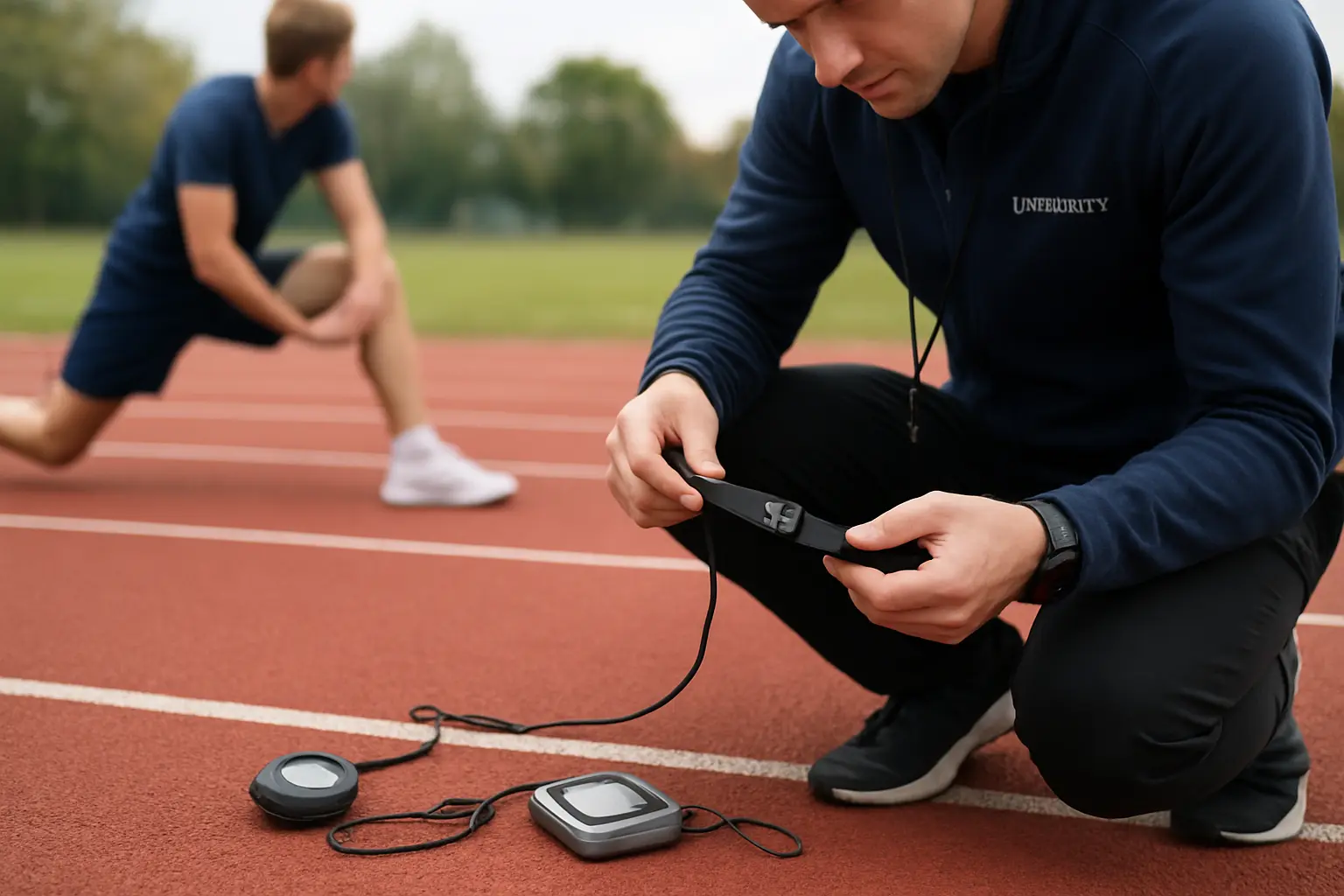
The professional body governing UK sport and exercise science research requires any member conducting a research study to obtain prior ethical approval from a recognised body before recruiting a single participant — and a sports science dissertation’s real sampling constraint is rarely statistical power, it is physical testing burden and access to a club or team willing to host you. Plan your sample around what a coach or club will realistically grant, not around a textbook power calculation you cannot actually deliver on.
| Recruitment route | Typical realistic sample | Main constraint |
|---|---|---|
| University sports team via coach/gatekeeper | 10–25 athletes | Coach access and training-schedule disruption |
| External club or league | 15–40 athletes | Slowest gatekeeper approval; often needs a named contact |
| General student population (recreational exercisers) | 40–100+ | Faster access but less homogeneous for performance questions |
| Online survey of a defined athlete population | 50–200+ | No physical testing possible; self-report only |
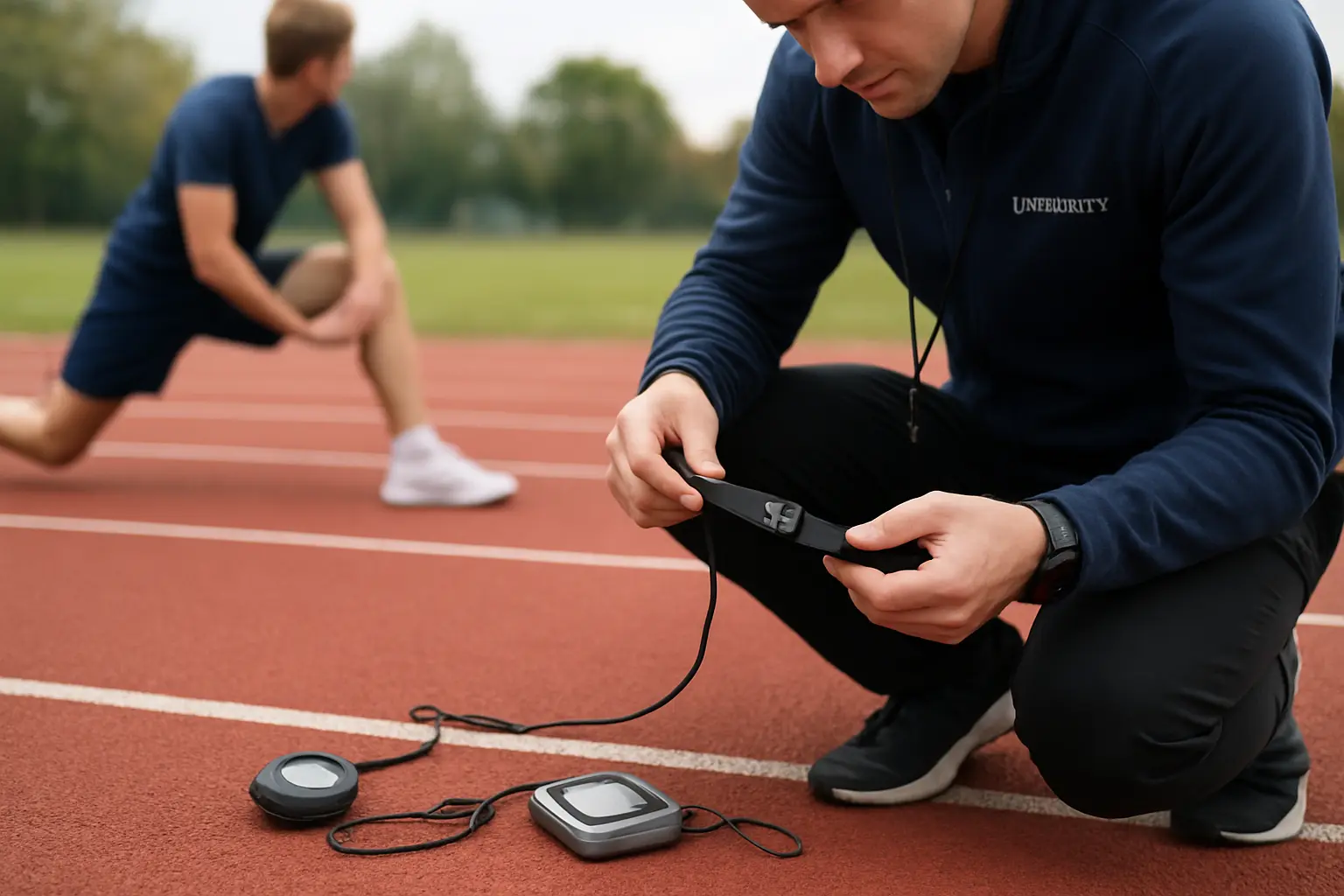
Why sports science sampling is not the same problem as a generic UG dissertation
Most undergraduate dissertation guidance treats sample size as a statistical power question — how many participants a chosen test needs to detect an effect. In sports science, the binding constraint is usually different: physical testing (a VO2 max test, a repeated sprint protocol, a strength assessment) takes real time per participant, needs specific equipment and often a controlled environment, and cannot be scaled up the way an online questionnaire can. A design that would need forty participants on paper may only be able to actually test fifteen in the time and facility access a dissertation allows — which is why sports science dissertations lean heavily on repeated-measures and within-subject designs, testing each participant under multiple conditions rather than recruiting ever more participants for a between-groups comparison. Our general guide to sample size for an undergraduate dissertation covers the underlying power-analysis logic; this piece covers where sports science departs from it in practice.
Ethical clearance comes first, and it is not optional for applied testing
The Chartered Association of Sport and Exercise Sciences — CASES, the body most UK sport and exercise science departments still reference by its former name, BASES, in their own ethics paperwork — states in its Code of Conduct: “Any Member wanting to conduct a research study in relation to their applied work shall seek and obtain prior ethical approval from a recognised body. For the purposes of this clause, recognised bodies will include universities, NHS Research Ethics Committees and the NHS Health Research Authority.” For an undergraduate dissertation, “a recognised body” in practice means your own university ethics committee, and physical testing involving exertion, injury risk or physiological measurement is treated as higher-risk than a questionnaire-only design, so build in longer review time for it. For the standard tiers and triggers of UK undergraduate ethics review generally, see our guide to undergraduate ethics approval; sports science testing usually sits in the higher tier that guide describes.
What informed consent has to cover for a physical testing study
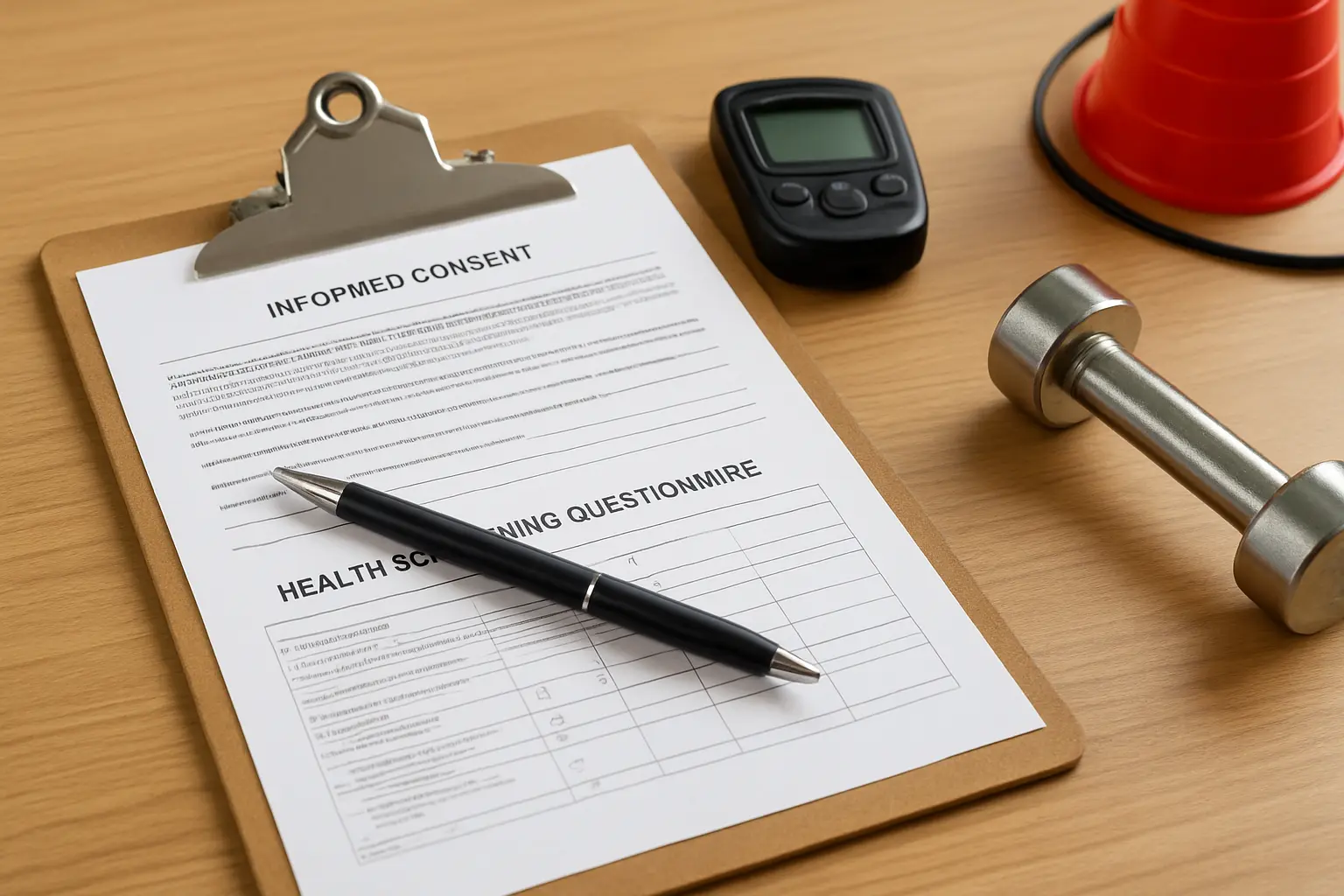
The same Code of Conduct defines informed consent for this context specifically: “the knowing consent of a Client… who is in a position to exercise free power of choice without any undue inducement or element of force, fraud, deceit or coercion”, obtained “by having the client read and sign a document setting out all of the information relevant to the proposed investigation, test or procedure.” For a physical testing dissertation, that document needs to name the specific procedure (what the test involves physically, how long it takes, what equipment touches the participant), the genuine physical risks (exertion, muscle soreness, in rare cases injury), and a clear right to stop the test at any point without needing to justify why — a standard that a generic consent template borrowed from a survey-only study will not meet.
Screening participants for safety before testing, not just for research fit
Beyond inclusion criteria that serve your research question (a defined sport, competitive level, or training age), a physical testing dissertation needs a health-screening step that a purely observational or survey design does not: a pre-activity readiness questionnaire completed before any exertion protocol begins, flagging conditions (cardiovascular symptoms, recent injury, certain medications) that would make a specific test unsafe for that individual. This is a participant-safety requirement, separate from and in addition to your ethics committee’s own approval — your methodology chapter should state explicitly what screening tool was used and what its exclusion criteria were, since “participants were healthy” without a stated screening method is not evidenced.
Getting through a club or team gatekeeper
A coach or club administrator controls access to the athletes you want to test, and — much as with any gatekeeper — a vague request slows the process down. State plainly how many sessions you need, exactly what each session involves physically, how much training time it will take from the athletes, and what the club or coach gets back (often, individual or aggregated performance data as a courtesy, alongside your findings once the dissertation is marked). Build at least four to six weeks into your timeline for this negotiation alone, on top of your university’s own ethics review, and have a lower-N contingency plan (testing fewer athletes across more sessions, or switching to a within-subject design) ready if the club can only offer partial access. A written agreement, even a short email confirming dates, session length and what data will be shared back, protects both sides if a coaching staff change or a competitive schedule clash threatens access midway through data collection — verbal permission from one coach does not automatically survive a change of staff.
Reporting your realised sample honestly
State your intended sample, your actual recruited sample, and your final analysed sample separately, with reasons for each gap — a dissertation that recruited eighteen athletes, lost three to injury during the study period, and analysed fifteen is reporting a completely normal sports science attrition pattern, and naming it explicitly reads as rigorous rather than as a flaw to hide. Markers specifically look for whether a small final N is acknowledged as a limitation with a stated reason, rather than left unexplained alongside an overreaching conclusion the sample cannot actually support.
Homogeneity often matters more than headcount
A sports science research question is frequently about a specific population — sub-elite endurance runners, academy footballers at a defined age group, recreational strength trainers with at least six months’ consistent training — and mixing that population with less comparable participants to inflate a headcount usually weakens a dissertation rather than strengthening it. Ten well-matched, homogeneous participants who share the training background your question actually concerns is normally a stronger design than thirty participants drawn from mixed sporting backgrounds with wildly different training histories, because physiological and performance measures are highly sensitive to training status. State your inclusion criteria precisely — sport, competitive level, training age, injury-free status over a stated period — and treat a smaller, tightly-defined sample as a design decision to defend, not an apology to make.
Justifying a small sample without pretending it is something it is not
Where a formal power calculation is not realistic given testing constraints, sports science dissertations more often justify sample size through precedent (citing the sample sizes used in comparable published studies with a similar design and population) or through an information-power argument — the idea that a smaller, highly relevant, information-rich sample can answer a narrow research question adequately even without meeting a classical power threshold. Whichever justification you use, state it explicitly in the methodology chapter as a deliberate choice tied to your specific constraints, rather than leaving the sample size unjustified and hoping a marker does not ask why.
Frequently asked questions
How many participants does a typical undergraduate sports science dissertation recruit?
There is no fixed national figure, and it depends heavily on the design — a repeated-measures physiological testing study might involve as few as ten to fifteen participants tested under multiple conditions, while a questionnaire-based study of a broader athlete population can recruit fifty or more. Report your own reasoning rather than aiming for a number seen in an unrelated study.
Do you need NHS ethics approval to test athletes?
Almost never, unless your testing takes place through an NHS service or involves NHS patients specifically — most university-based sports science testing goes through the university’s own ethics committee, not the NHS Health Research Authority route.
Can you test participants under 18?
This raises the ethics tier considerably and needs parental or guardian consent alongside the young person’s own assent, plus (for unsupervised contact) a DBS check for the researcher — discuss this with your supervisor early if your population includes junior athletes, since the approval timeline is meaningfully longer.
What if your club gatekeeper only allows a smaller sample than you planned?
Redesign around it rather than treating it as a failure — a smaller sample analysed with a design suited to low N (a single-case or small-N repeated-measures approach, properly justified) is a legitimate methodological choice, and many published sports science studies work exactly this way for the same access reasons you are facing.
Which statistical test fits a small sports science sample?
This depends on your specific design and data, not on sample size alone — see our guide to choosing a statistical test for a sport science dissertation for the decision procedure, including the reliability statistics (typical error, ICC, limits of agreement) that matter more than significance testing alone in small samples.
Do you need a control group?
Not always — many sports science dissertations use a within-subject, repeated-measures design instead, comparing each participant against their own baseline rather than against a separate control group, which needs fewer total participants for the same statistical power.
How far in advance should you contact a club or team?
As early as your proposal stage — gatekeeper negotiation and university ethics review can run in parallel, but both take weeks, and starting the club conversation only after ethics approval lands is a common, avoidable cause of a compressed data-collection window. See our guide to writing a UK dissertation proposal for what to include about access at the proposal stage.
What happens if a participant is injured during testing?
Your ethics application and consent process need a stated protocol for this before testing begins — who is responsible for first aid, when testing stops, and how the incident is recorded and reported to your supervisor and ethics committee, not improvised in the moment.
Can you recruit participants through social media or a public post?
Only if your ethics committee has approved that specific recruitment route in advance — a public call for participants still needs the same consent and screening process as any other route, and posting in a club’s private group without the club’s own permission bypasses the gatekeeper process rather than replacing it.
Should you offer participants an incentive to take part?
Be cautious — the same Code of Conduct that governs informed consent explicitly rules out consent obtained through “undue inducement”, so a token thank-you (a summary of their own results, for instance) is safer than a cash or prize incentive that could be read as pressuring participation, particularly with athletes who may feel obligated through their relationship with a coach who granted access.
Tesify’s dissertation builder can hold your ethics application, gatekeeper correspondence and screening records alongside your draft methodology chapter, so the consent and safety process you actually followed matches what your write-up describes. Start your dissertation with Tesify — free to try.