
| Source | Access tier | What it holds | Best for |
|---|---|---|---|
| BNF / BNF for Children | Universities license it through MedicinesComplete; the NICE BNF website is for NHS users and members of the public in the UK, for personal reference | Current UK dosing, indications, interactions, cautions | Verifying any drug-specific clinical fact in your dissertation |
| Cochrane Library | Free to NHS staff, patients and the public in the UK | Systematic reviews, the CENTRAL trials register | High-quality evidence synthesis on a treatment question |
| PubMed / MEDLINE | Free, no institutional login needed | Biomedical and pharmacy literature indexing, many with free full text | Broad literature searching and citation tracking |
| Embase | Subscription, via your university library login | Pharmacology and drug-therapy literature, strong European and conference coverage | A pharmacy-specific search that MEDLINE alone misses |
| International Journal of Pharmacy Practice | Subscription, via your university library (Oxford University Press) | Peer-reviewed pharmacy practice research | Practice literature, not just clinical pharmacology |
| Royal College of Pharmacy resources (formerly the Royal Pharmaceutical Society) | Membership/institutional access varies | Professional standards and practice guidance documents | Professional-standards citations, not primary research evidence |
The shortlist, ranked
1. BNF/BNFC is the first place to verify any drug-specific fact your dissertation states — dosing, contraindications, interactions. For academic use, universities license the BNF through MedicinesComplete, so check whether your library provides access that way. The NICE BNF website looks similar, but its terms describe it as available within the UK to NHS users and to members of the public for personal reference, and point universities to a MedicinesComplete licence instead — so check the right access route with your library before assuming you are locked out.
2. Cochrane Library is where you go for the strongest available evidence on whether a treatment works — systematic reviews and the CENTRAL trials register, free to NHS staff, patients and the public in the UK. If your dissertation asks “does X work for Y condition”, start here before a broader database search, since a relevant Cochrane review will often summarise the primary literature you would otherwise need to search for individually.
3. PubMed/MEDLINE is the broadest, most accessible starting point for a literature search, and its free access (no institutional login required) makes it the database you can keep using after graduation. Its weakness for a pharmacy-specific dissertation is that it is a general biomedical index, not pharmacy-specialised — a search here should usually be paired with Embase for genuinely comprehensive coverage.
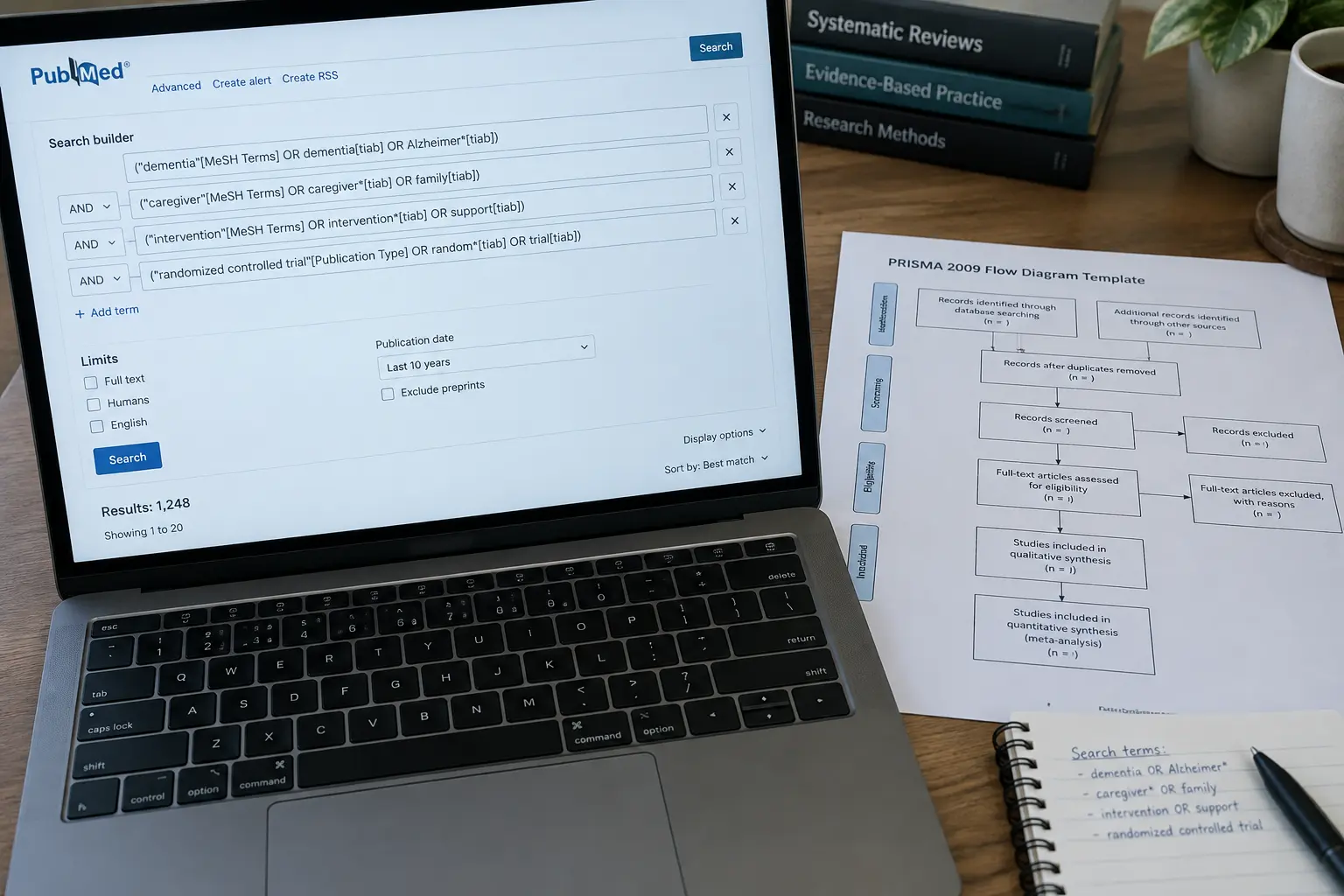
4. Embase indexes pharmacology and drug-therapy literature more thoroughly than MEDLINE alone, with stronger European and conference-proceedings coverage — genuinely useful for a dissertation that needs to show a systematic, reproducible search strategy, since examiners increasingly expect more than one database searched. Access is via your university library, not freely public. Our broader guide to where to actually search for dissertation literature compares database access routes across disciplines if your project also draws on non-pharmacy sources.
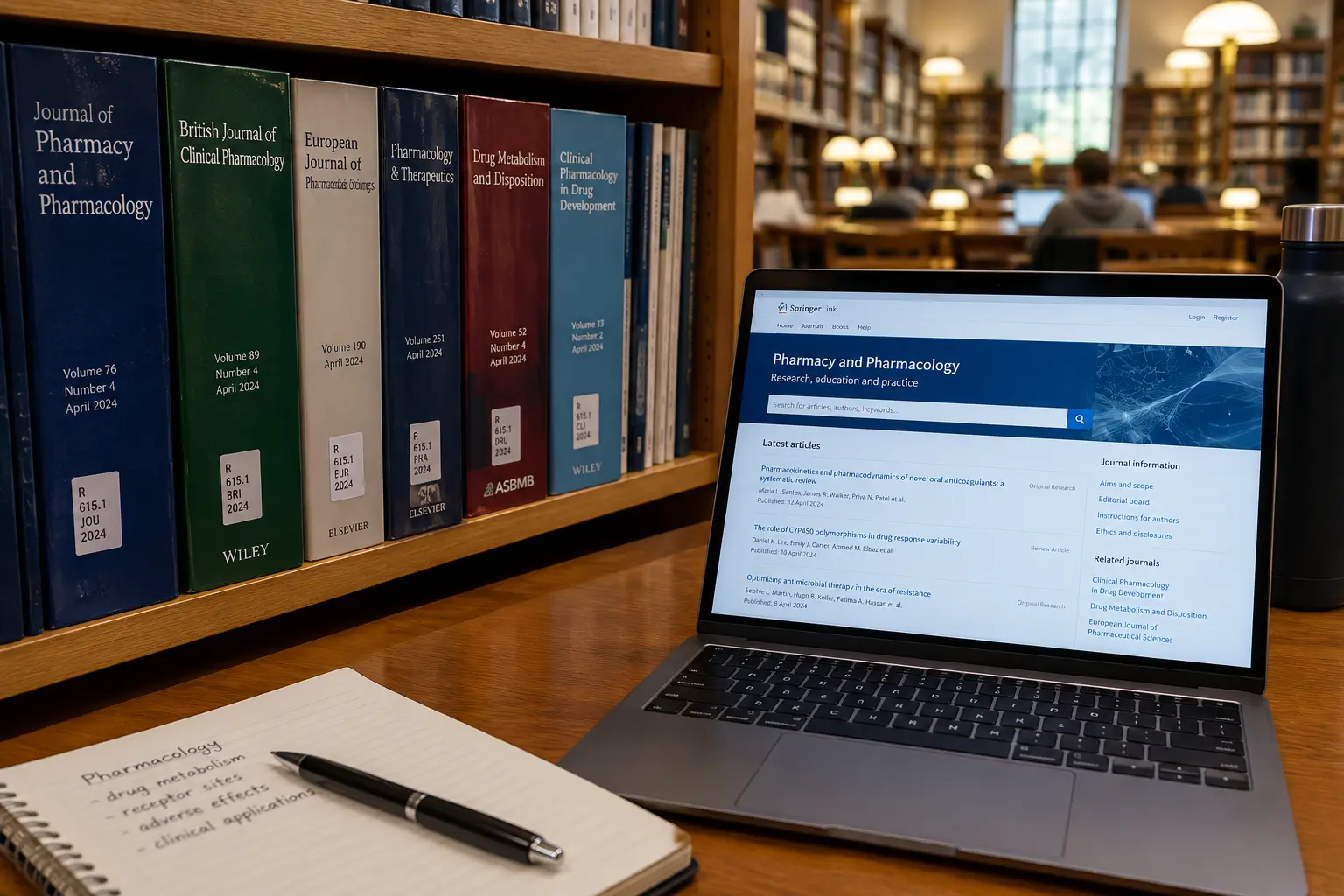
5. International Journal of Pharmacy Practice is the source to use when your dissertation is about practice (adherence, community pharmacy service delivery, prescribing behaviour) rather than pure clinical pharmacology — a dedicated peer-reviewed practice journal, published by Oxford University Press, covering a distinct literature from what BNF, Cochrane or Embase cover.
6. Royal College of Pharmacy resources — the professional body formerly known as the Royal Pharmaceutical Society, renamed in 2026 — are professional-standards documents, not primary research evidence. Cite them when your dissertation discusses professional practice standards or ethics, not as a substitute for peer-reviewed evidence on a clinical question, and use the body’s current name for documents published under it. If your dissertation also draws on population-level prescribing or medicines-use data rather than only published studies, our guide to NHS and public health datasets for a UK health dissertation covers NHSBSA prescribing data and related sources.
One clear recommendation
Start with Cochrane for the evidence-synthesis question your dissertation is actually asking, verify every drug-specific fact against the BNF, then run a combined PubMed/MEDLINE and Embase search for anything Cochrane has not already reviewed — and add the International Journal of Pharmacy Practice specifically if your dissertation touches practice rather than pure pharmacology. Most UK undergraduate pharmacy dissertations that lose marks on their literature review have searched only one general database and missed the pharmacy-specific literature Embase or IJPP would have surfaced.
Once you have a candidate reference list, appraise it before you rely on it — not every peer-reviewed paper carries equal weight. A Cochrane systematic review sits above a single small trial in the evidence hierarchy; a peer-reviewed IJPP practice study sits above a conference abstract Embase has indexed but which has not yet been through full peer review. Note the study design and sample size of each key source in your working notes as you go, not retrospectively when you come to write the discussion chapter — it is far easier to weigh evidence appropriately while the detail is fresh than to reconstruct it later from a reference list alone.
Setting up access to each source, step by step
- BNF/BNFC: at the start of the year, check your library’s database list for MedicinesComplete and set up access through your institutional login — do not wait until you need a specific drug fact mid-dissertation.
- Cochrane Library: free to the public in the UK; you can search it from any device on a UK connection.
- PubMed/MEDLINE: no registration needed; optionally, create a free NCBI account to save searches and set up alerts for new literature on your topic.
- Embase: access through your university library’s database list, using your institutional single sign-on — check with your library if you cannot find it listed, since some universities license it under a consortium name.
- International Journal of Pharmacy Practice: usually accessible via your university library’s journal subscriptions on Oxford Academic — search your library catalogue by journal title if a direct link is not obvious.
- Royal College of Pharmacy resources: some guidance documents are openly published; others require membership, which your university may hold institutionally — check with your course lead before assuming a document is inaccessible.
A worked example of a documented search strategy (illustrative)
An illustrative, labelled example of how a methodology chapter might document this: “Literature was searched across MEDLINE (via PubMed), Embase and the Cochrane Library for records published between January 2016 and March 2026. Search terms combined the intervention (e.g. ‘adherence intervention’ OR ‘concordance’) with the population (e.g. ‘type 2 diabetes’) using the Boolean operator AND, with MeSH terms used in PubMed and the equivalent Emtree terms used in Embase. Inclusion criteria were: peer-reviewed, English language, published within the last ten years, UK or comparable healthcare system. Records were screened by title and abstract, then full text, against these criteria; a PRISMA-style flow diagram recorded the number of records identified, screened, excluded and included at each stage.” This level of detail — dates, terms, Boolean logic, inclusion criteria, screening process — is what turns a reference list into a defensible, reproducible search strategy a marker can actually evaluate.
Building a defensible, reproducible search strategy
Markers increasingly expect a documented search strategy, not just a reference list — state which databases you searched, your search terms (including any MeSH/Emtree subject headings used), your date range, and your inclusion/exclusion criteria, in your methodology chapter. A search run across only one database, with no stated terms or date range, reads as incomplete even if the resulting reference list looks reasonable. Our guide to writing the search strategy section of a dissertation (written for nursing, but the structure transfers directly) covers exactly this documentation, database by database.
Common mistakes when choosing sources
- Searching only one database. Even a strong search in PubMed alone misses pharmacy-specific literature that Embase or IJPP would surface.
- Using the wrong BNF access route. For dissertation work, check whether your library provides the BNF through MedicinesComplete; the NICE BNF website is intended for NHS users and members of the public for personal reference.
- Treating professional-body documents as research evidence. Royal College of Pharmacy guidance is a different source type from peer-reviewed research — cite each for what it actually is.
- Not documenting the search strategy. A reference list without a stated search methodology looks like convenience sampling of the literature, not a systematic review of it.
- Not checking access before your search day arrives. Registration-gated sources take time to set up — our guide to registering for UK Data Service access shows the kind of lead time a registration-based source can need, and MedicinesComplete and Embase are no different; sort access in your first week, not the week your literature review is due.
Frequently asked questions
Is the BNF free for pharmacy students?
The NICE BNF website is available within the UK to NHS users and to members of the public for personal reference. For academic use, universities license the BNF and BNFC through MedicinesComplete, so check whether your library provides access that way.
Do I need Cochrane Library access set up separately?
No — it is free to NHS staff, patients and the public in the UK, so you can search it the same way you would any open website.
What is the difference between PubMed and MEDLINE?
MEDLINE is the underlying database; PubMed is the free search interface the US National Library of Medicine provides to search it, alongside some additional content — for most student purposes, searching PubMed is searching MEDLINE.
Why would I need Embase if I already have PubMed?
Embase’s pharmacology and drug-therapy indexing, plus its European and conference-proceedings coverage, catches literature MEDLINE alone misses — a dissertation citing only PubMed searches is not demonstrating comprehensive coverage of the pharmacy literature.
Where do I find pharmacy practice research?
The International Journal of Pharmacy Practice, published by Oxford University Press, is a dedicated peer-reviewed journal for practice research (adherence, service delivery, prescribing behaviour), as distinct from clinical pharmacology literature.
Can I cite the Royal College of Pharmacy as a research source?
Cite Royal College of Pharmacy documents (the body was the Royal Pharmaceutical Society until 2026) when discussing professional standards or practice guidance, not as primary research evidence — they are a different source type from peer-reviewed studies.
How many databases should I search for a dissertation literature review?
At least two, documented explicitly with your search terms and date range — a single-database search is the most common reason a literature review reads as incomplete to a marker.
Is MeSH the same across all these databases?
No — PubMed/MEDLINE uses MeSH (Medical Subject Headings); Embase uses its own thesaurus, Emtree. A search strategy that only uses MeSH terms in Embase will under-perform — translate your terms for each database.
Can Tesify help me build my literature search strategy?
Tesify is used to write dissertations end to end, including literature review and methodology sections, with every draft 100% written by you through the platform — it does not run the database searches for you, but it can help you structure and write up a search strategy once you have run it.
What is the single biggest mistake in a pharmacy dissertation’s source list?
Relying on one general database and missing the pharmacy-specific literature that Embase, the BNF or the International Journal of Pharmacy Practice would have surfaced.
Should I use reference management software to keep track of everything?
Yes — searching six different sources produces enough records that a reference manager (Zotero, Mendeley or EndNote) quickly becomes necessary to avoid duplicate entries and lost citations; set this up alongside your database access in week one.
Can I use Google Scholar instead of these databases?
Google Scholar is a useful supplementary tool for finding a specific known paper quickly, but it does not offer the systematic, reproducible search functionality (saved search strings, exact field searching, export of a documented strategy) that a dissertation’s methodology chapter needs — use it alongside, not instead of, the databases above.
Do all UK pharmacy schools give the same database access?
No — check your own university library’s subject guide for pharmacy, since institutional subscriptions to Embase and specific journals vary, and a source freely available at one university may require a different access route or simply not be subscribed to at another.
Tesify has helped over 9,000 students write more than 15,000 dissertation chapters, and every draft is 100% written by you, guided section by section. Start your pharmacy dissertation with Tesify and work through your literature review with a properly documented, defensible search strategy from the start.