
No UK regulator requires your dissertation to be marked twice, or requires an external examiner to see it at all. The UK Standing Committee for Quality Assessment’s external examining principles state that they “are not mandatory under any of the UK regulatory systems”, and add that the Office for Students “does not impose any particular requirements in relation to external examining arrangements”.
What governs your mark is your own institution’s marking and moderation policy. Those policies are published, they are readable, and on the questions students most want answered they contradict one another. Below are the rules three named UK universities actually publish, quoted, with the scope of each stated so you can judge whether it resembles your own.
The published rules, side by side
| Question | Institution and scope | What the policy says |
|---|---|---|
| Must a dissertation be second-marked? | UCL, Academic Manual Chapter 4, taught programmes, 2025-26 | “All dissertations / research projects must be subject to Full, Independent, second-marking” (4.5.1) |
| Must a dissertation be second-marked? | Oxford Brookes, Quality and Standards Handbook, all Schools and delivery locations | “Dissertations should always be ‘blind’ second marked” |
| Must a dissertation be second-marked? | Durham University, Common Awards programmes | “Double-marking is to be applied to all dissertations and major projects” |
| Must second marking be blind? | Durham, Common Awards | “Where double marking is used, there is no University requirement that it must be carried out blind or unseen” |
| What if my supervisor marks it? | UCL, taught programmes | Where the supervisor acts as a marker, “the assessment must be subject to full, independent and anonymous second-marking” (4.3.7) |
| Moderation sample size | UCL, taught programmes | “at least 10% of assessments, or at least five assessments”, plus “All Fails”, “Mid-class examples for each class” and “all upper borderlines (39, 49, 59, 69)” (4.5.3.2) |
| Moderation sample size | Oxford Brookes | “10%, whole cohort if it is less than 10” |
| Moderation sample size | Durham, Common Awards | “the approved minimum sample size is 6 pieces of work or 10% of the pieces of work in a run (whichever is greater)” |
| Is marking anonymous? | UCL, taught programmes | “All summative assessments should be carried out anonymously unless the nature of assessment makes this impossible” (4.3.1) |
| Can an external examiner change my mark? | UKSCQA External Examining Principles, August 2022 | Student engagement with examiners must protect “the impartiality of the examiner” while “ensuring individual students’ marks remain unaffected” |
Double marking and moderation are not the same thing
Durham’s policy opens by making the distinction that most confusion rests on: “Double-marking and moderation are two distinct mechanisms.”
Double marking means a second marker reads and marks your work. Moderation means a moderator looks at a sample of the cohort’s work to check that the marking as a whole was applied consistently. Durham states the consequence explicitly: moderation “does not involve the moderator agreeing a revised mark for each individual piece of work”.
The rule that follows from that is the most useful single fact in this article, and almost no student knows it. At Durham, “individual marks awarded by the first marker cannot be changed unless the second marker has marked all the other scripts in a run”. A moderator who reads your dissertation as part of a sample and disagrees with the mark cannot simply adjust yours. Either the whole run is remarked or nothing individual moves — because changing one sampled mark and not the unsampled ones would make the cohort’s marks incomparable.
So if your dissertation was double-marked, two people formed a view of it. If it was moderated, it may well have been read by nobody but the first marker, and the second pair of eyes was checking the marking standard rather than your work.
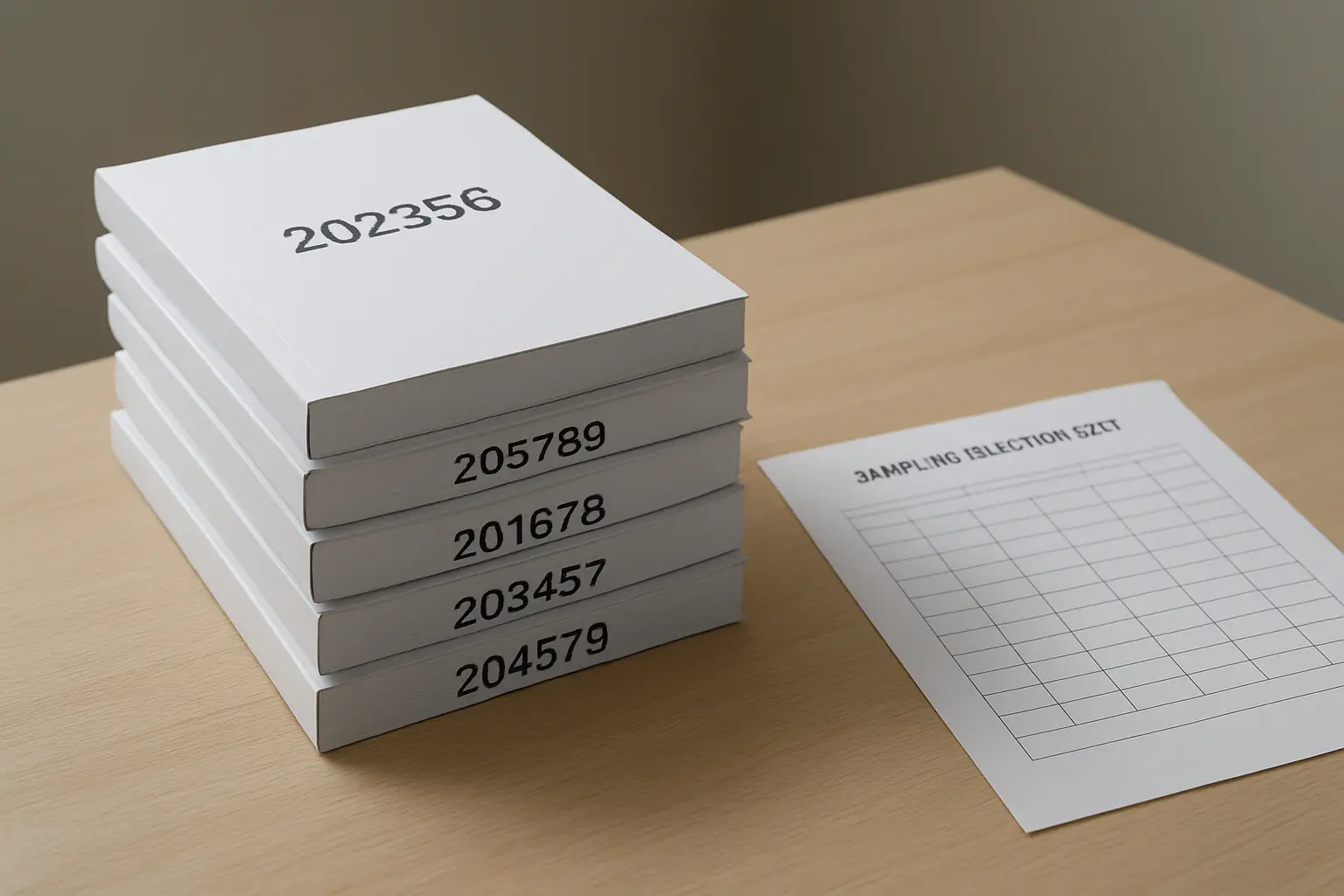
How the sample is chosen — and why it is not random
A moderation sample is deliberately stratified. UCL’s minimum requires “All Fails”, “Mid-class examples for each class”, and “all upper borderlines (39, 49, 59, 69)” alongside the 10% floor. Durham adds a safeguard against a self-serving sample: the selection “should not depend entirely on the first marker’s identification of work which seems to them to be problematic”, and should include work from across the range.
Two practical consequences for you. If your mark is 39, 49, 59 or 69 at UCL, your dissertation is in the sample by rule — borderlines are always looked at, which is a better answer than the folklore that borderline marks are quietly rounded. And if you failed, your work is looked at again by rule at that institution, before any of the machinery in our guide to what happens if you fail your dissertation is engaged.
What happens when the two markers disagree?
UCL sets a threshold and then bans the obvious shortcut. Where marks differ by 10% or more, or where they fall either side of a class boundary, “marks must be reconciled through discussion” and “mathematical averaging should not be used” (4.5.4.1). Smaller differences may be resolved “by discussion or by mathematical averaging” (4.5.4.2).
That is a more consequential rule than it looks. A 58 and a 68 do not become a 63 by arithmetic; two academics have to talk until they agree what the piece is worth against the criteria. Oxford Brookes requires each department to have such a mechanism in place, stating that internal moderation policies “must be clear about the procedure to be followed in order to resolve any disagreement between first and second markers and assign a final mark”.
Where discussion fails, a third marker may be used. UCL notes that externals do not third-mark to break deadlocks, but that “bringing third-marked work to the attention of the External Examiner is good practice” (4.5.5.2).
What does the external examiner actually do?
Less than students imagine, and something more important than remarking. The UKSCQA principles describe external examiners as assuring “the degree-awarding body that the qualifications it awards are comparable to those at other institutions”, which they do “by commenting impartially and informatively on academic standards, student achievement and assessment processes in the institution and their consistency with others”.
They see samples, not cohorts. Durham requires that “raw marks, as well as reconciled marks, should be made available to external examiners” — so an external can see where two markers disagreed and how it was settled. Oxford Brookes states that where the external’s sample differs from the internal one, examiners “should be provided with additional information about the internal moderation process that has been followed”.
And the limit is explicit in the principles: arrangements for students to engage with external examiners must ensure that “individual students’ marks remain unaffected”. An external examiner is not an appeal route and cannot lift your mark.
The sector-level context is worth holding alongside this, because it is genuinely surprising: the principles themselves say they “are not mandatory under any of the UK regulatory systems”, and the footnote records that in England, “for the avoidance of doubt, the OfS does not impose any particular requirements in relation to external examining arrangements”. External examining is a 200-year-old sector convention operated voluntarily by autonomous institutions, not a statutory guarantee.

Why your mark is provisional until the board meets
The number your supervisor mentions, and often the number in the virtual learning environment, is a marker’s recommendation. It becomes your mark when a board of examiners ratifies it, in the presence of the external examiner’s report, alongside every other mark on the module.
This is why a mark can move without anyone having reread your dissertation: a scaling decision applied to a whole run, a reconciliation after moderation showed the cohort was marked harshly, or a regulation about borderline classification. It is also why chasing an individual mark before the board is usually futile, while asking how the moderation and reconciliation process was applied is a legitimate question — and, at most institutions, a procedural ground for an appeal in a way that disagreement with academic judgement is not, as our guide to university procedures and appeal grounds sets out.
What this means for how you write
Three of these rules have a direct effect on your drafting, and it is not the effect students expect.
Write for a reader who does not know you. UCL’s default is anonymity and Brookes requires blind second marking of dissertations, so at least one assessor is reading your work with no memory of your tutorials, your earlier drafts or the conversation in which you explained what you meant. Anything that depends on that context is not on the page.
Write for a reader working against criteria. Moderation is a check that the criteria were applied consistently, which means the criteria really are the operative document. Marking descriptors reward synthesis over summary rather than counting sources — the evidence for that is in our guide to how many references a dissertation should have.
Write to the length and the specification. Two markers applying the same criteria to a piece that breaches its word limit or omits a required page are both applying the same penalty. The published variation in limits and inclusion rules is set out in our survey of undergraduate dissertation word counts, and the classification arithmetic that eventually consumes your mark is in our degree classification statistics.
If the structure is what is stopping the argument reaching a marker who cannot ask you what you meant, you can build the chapters out in Tesify from your own material — 100% written by you, and free to start.
How to cite these rules
Cite the institution, the document and its scope, and never generalise from one to the sector. “UCL requires full independent second marking of all dissertations on taught programmes (Academic Manual, Chapter 4, 2025-26)” is defensible; “UK universities double-mark dissertations” is not, because Durham’s Common Awards policy explicitly declines to require blind marking that Oxford Brookes requires. Where you need a sector-level statement, the UKSCQA principles are the right source, and their own non-mandatory status is part of what they say.
Frequently asked questions
Is my dissertation double-marked?
It depends on your institution. UCL requires that “all dissertations / research projects must be subject to Full, Independent, second-marking”, Oxford Brookes says dissertations “should always be ‘blind’ second marked”, and Durham applies double-marking “to all dissertations and major projects” on its Common Awards programmes. No UK-wide rule requires it, so check your own assessment regulations.
What is the difference between double marking and moderation?
Durham states that they “are two distinct mechanisms”. Double marking means a second marker marks your work. Moderation means a moderator samples the cohort to check the marking standard, and “does not involve the moderator agreeing a revised mark for each individual piece of work”.
How big is a moderation sample?
Commonly a tenth, with a floor. UCL requires “at least 10% of assessments, or at least five assessments” plus all fails and all upper borderlines; Oxford Brookes uses “10%, whole cohort if it is less than 10”; Durham’s Common Awards minimum is “6 pieces of work or 10% of the pieces of work in a run (whichever is greater)”.
Can a moderator change just my mark?
Not at Durham, which states that “individual marks awarded by the first marker cannot be changed unless the second marker has marked all the other scripts in a run”. Changing one sampled mark while leaving unsampled ones alone would make the cohort’s marks incomparable.
Does my supervisor mark my dissertation?
Often, and where they do a safeguard applies. UCL requires that where the supervisor acts as a marker, the assessment “must be subject to full, independent and anonymous second-marking”.
Is dissertation marking anonymous?
Usually by default. UCL states that “all summative assessments should be carried out anonymously unless the nature of assessment makes this impossible”, with coursework marked by candidate number. Supervision inevitably erodes anonymity for the first marker, which is one reason the independent second marker matters.
What happens if two markers give very different marks?
At UCL, where marks differ by 10% or more or sit either side of a class boundary, “marks must be reconciled through discussion” and “mathematical averaging should not be used”. Smaller gaps may be averaged.
Does the external examiner read my dissertation?
Only if it is in the sample. Externals comment on standards, comparability and assessment processes rather than marking individual students, and the UKSCQA principles require that engagement with them leaves “individual students’ marks remain unaffected”.
Is external examining legally required?
No. The UKSCQA principles state that they “are not mandatory under any of the UK regulatory systems”, and note that the Office for Students “does not impose any particular requirements in relation to external examining arrangements”. It is a sector convention that institutions commit to voluntarily.
Why did my mark change after I was told it?
Because marks are provisional until an examination board ratifies them. Scaling across a run, reconciliation following moderation, and classification regulations can all move a number without anyone rereading your work.
Can I ask who marked my dissertation?
You can ask how it was marked and moderated, and that is the more useful question. Institutions publish their marking and moderation policies, and a request that references the relevant clause — how the sample was selected, whether reconciliation was required — will get a more precise answer than asking for a name.