Tag: dissertation help

  • Write My Dissertation With AI: What That Can Honestly Mean in 2026

    Write My Dissertation With AI: What That Can Honestly Mean in 2026

    You have a research question, a folder of sources, possibly a spreadsheet of results, and a document that is still mostly headings. Six weeks left, or three, and every writing session ends with the same two paragraphs rewritten. That is the search behind “write my dissertation with AI”, and it deserves a straight answer rather than a sales page.

    The straight answer: nothing can write it for you and leave you with a degree you can keep. Something can get it written far faster than you are managing alone. The difference between those two sentences is the whole subject, and it is worth ten minutes before you type your question into anything. If you want to start now, Tesify is free to begin — but read the workflow first, because using it well is what makes the difference.

    What “write it for me” actually costs

    Two options sit behind that phrase and both fail, for different reasons.

    Paying a person. Selling, arranging or advertising these services to students in England has been a criminal offence since 2022 — and yet, as of December 2025, the Crown Prosecution Service and the Department for Education both confirmed no offence had reached a first hearing in a magistrates’ court. The enforcement record is empty, which tells you the industry is not going anywhere and that the risk sits entirely on your side. The seller risks a fine that has never yet been imposed; you risk the degree. The full map is in our guide to legitimate and criminal dissertation help.

    Pasting a chatbot’s output. This fails on the product, not just the ethics. A general model has never read your sources, does not know what your data showed, cannot see your supervisor’s feedback, and invents citations that look flawless and do not exist. A marker’s first move with an unfamiliar reference is to look it up, and a fabricated one is found in about thirty seconds. Beyond that, you cannot discuss work you did not think through — and being able to explain your own argument is what every conversation with your supervisor tests.

    The reframe that actually helps

    Students in this position rarely lack the ability to write, or the material. What they lack is a structure that converts a pile of reading and results into an ordered sequence of small writing tasks. “Write chapter four” is not a task; it is a fog. “Write 300 words stating what the interviews showed about workload, using the three extracts already chosen” is a task, and you can do it in twenty minutes.

    Turning the fog into the task list is mechanical work, entirely legitimate to delegate, and it is the single highest-value thing a tool can do for you. Everything below is built on that.
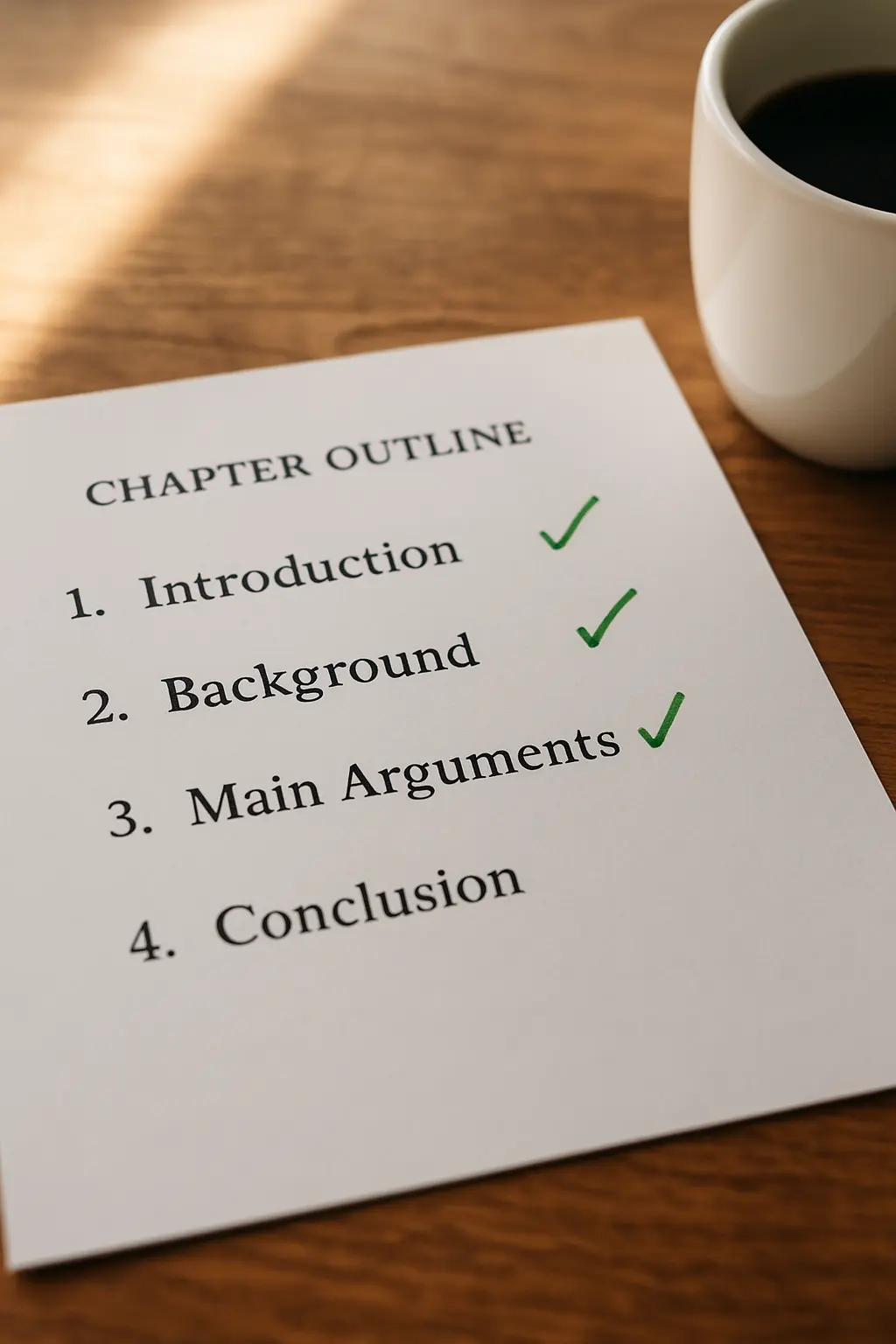
    A dissertation broken into a numbered chapter skeleton with each section's job noted
    Every section with a one-line statement of its job. This page is what turns six weeks of dread into thirty finishable pieces of work.

    Chapter by chapter: what you can hand over, and what you cannot

    Introduction

    Hand over: the conventional shape — context, problem, gap, aims, questions, structure — and a critique of whether your draft actually delivers each. Keep: the claim about why your question matters. Write this chapter last, whatever order the document is in.

    Literature review

    Hand over: reorganising a review you have drafted, checking whether topic sentences match their paragraphs, and suggesting thematic groupings for studies you have read and summarised. Keep, absolutely: deciding what the literature says, judging quality, choosing what matters, and every citation. Never accept a reference from a tool you have not opened and read. The full boundary, with a model declaration, is in our guide to writing a literature review with AI, honestly.

    Methodology

    Hand over: the architecture and the prompts — philosophy, approach, design, sampling, instruments, analysis, ethics — and whether you have justified each decision rather than merely described it. Keep: the justifications. Our walkthrough of the methodology chapter has the structure you can lift, and this is often the fastest chapter to finish because you already know what you did.

    Results

    Hand over: table and figure formatting, and the conventional reporting sentence for a given test — the exact APA construction is set out in our guide to running and reporting a t-test. Keep: the analysis, and every number. Never let a tool near your data values.

    Discussion

    Hand over: a structural check that each finding is interpreted against the literature and that your limitations are specific rather than boilerplate. Keep: the interpretation itself. This chapter is where the marks concentrate and where delegation is most visible, because generic discussion prose reads as generic immediately.

    Bibliography

    Hand over the lot. Formatting citations is clerical work nobody awards marks for and everybody deducts marks over. An automatic bibliography that generates from what your text actually cites removes the cited-but-not-listed problem entirely — see our guide to the AI Harvard referencing generator.

    The one test that settles every case

    Forget “is AI allowed” as your organising question, because the answer varies by institution, by department and sometimes by module. Ask this instead:

    Could you sit with your supervisor, be stopped at any paragraph, and explain why it says what it says?

    If yes, you wrote your dissertation, whatever tools were on the desk. If no, you did not, and no policy wording rescues that. This test also happens to be what a marker applies, which is why it is the one worth optimising for.
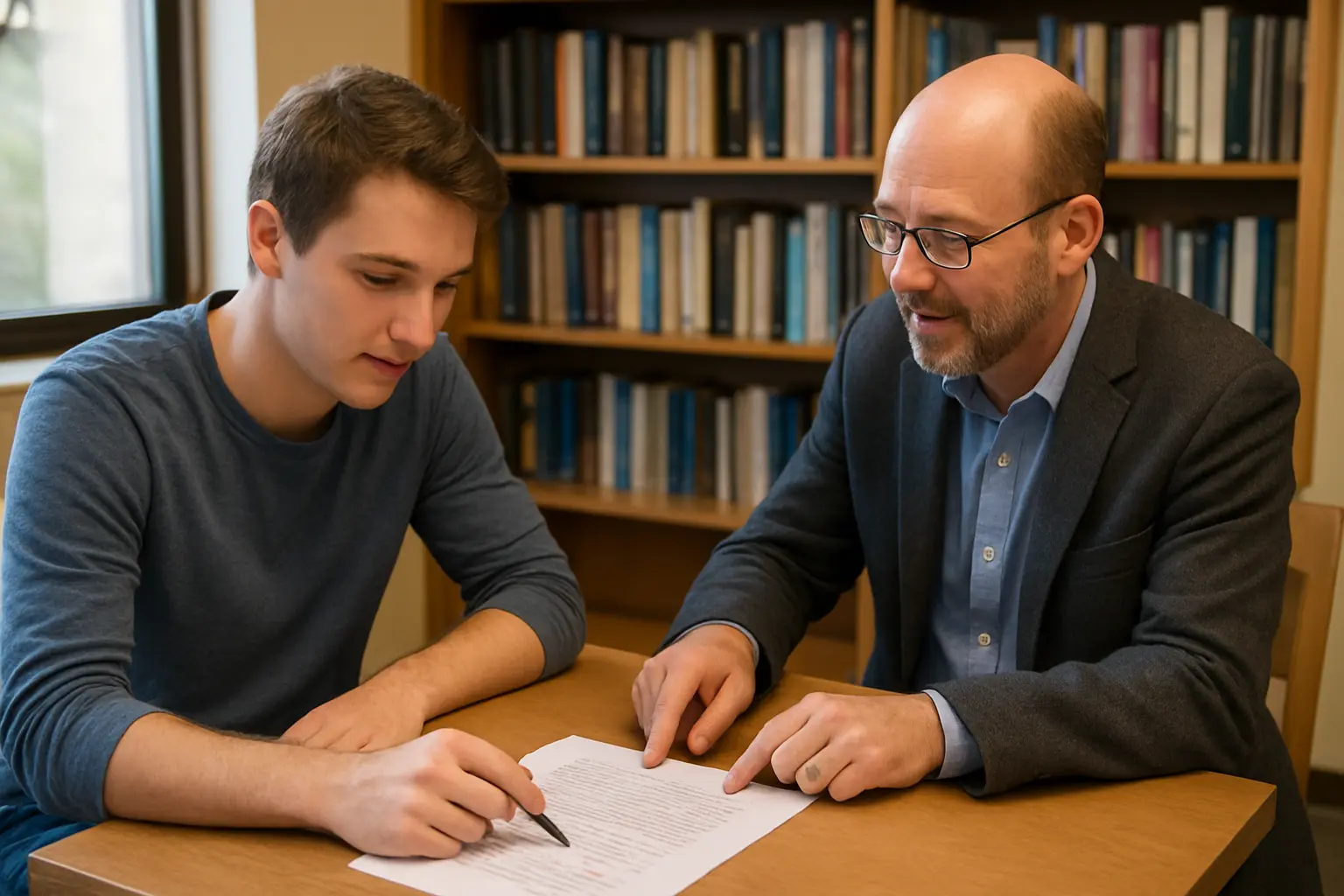
    A supervision meeting discussing a draft the student can explain and defend
    This meeting is the real assessment of authorship. Everything else is administration.

    How Tesify is built for this

    Tesify is a dissertation workspace rather than a chatbot, and the difference is that it holds the whole project. It builds the chapter structure for your project, works from your research questions, sources and findings, drafts with you section by section instead of producing a finished essay, maintains the bibliography in your citation style as you cite, and checks your drafts before your university does.

    The design commitment is the important part: everything stays 100% written by you. Tesify handles structure, formatting and momentum; the reading, the reasoning and the words are yours, which is the only configuration that survives the supervisor test. More than 9,000 students have used it across more than 15,000 chapters, and you can start free.

    It also does not need to be your only tool. A general chatbot is genuinely useful for explanation and critique, and a reference manager holds your library — the sensible combination is set out in our comparison of the best AI tools for dissertation writing.

    Tonight, if you are behind

    1. Build the skeleton. Every chapter, every section, one line saying what each section has to achieve. An hour, and the fog becomes a list.
    2. Write the methodology. You already know what you did and the structure is conventional. Having one finished chapter changes your relationship to the whole project more than any amount of planning.
    3. Spend the good hours where the marks are. Analysis and discussion outweigh a perfect introduction. Timebox by weight, not by document order.
    4. Fix the bibliography once, automatically, instead of five times by hand at 2am.
    5. Tell your supervisor where you actually are. Being three weeks behind is a solvable problem; being three weeks behind and silent for a month is a worse one.

    None of this requires you to be more disciplined than you have been. It requires the work to be broken into pieces small enough to start. Open your dissertation in Tesify and build the skeleton tonight — it is free to start, and the chapter you finish tomorrow is the one that changes the next six weeks.

    Frequently asked questions

    Can AI write my whole dissertation for me?

    It can generate text that looks like a dissertation, and that text will contain invented citations, no engagement with your data, and nothing you can defend in a supervision meeting. It cannot produce work that is honestly yours, which is what you are being assessed on.

    Is using AI to write a dissertation cheating?

    It depends entirely on what you use it for and what your institution permits. Structure, formatting, referencing and critique of your own writing are widely accepted; submitting generated text as your own work is not. Read your academic integrity policy and the assessment brief, and follow any declaration requirement.

    How much does Tesify cost?

    You can start free and build real chapters before deciding whether you need anything more. There is no charge to try the workflow on your actual dissertation.

    Will my university know I used Tesify?

    There is nothing to hide. Tesify supports your writing rather than replacing it, so what you submit is your own work. If your department asks you to declare tool use, declare it — a use you can state openly is a use you have already vetted.

    Is my unpublished research safe?

    Your work in Tesify is yours: it is not published or shared into any public database, and you can export it. Keep your own exported backup as a habit with any tool you use.

    What if I only have three weeks left?

    Three weeks of structured, prioritised writing produces far more than most students believe, and far more than any ghost-writer working without your data could. Build the skeleton, write the methodology first, and give the good hours to analysis and discussion.

    Can it help if I have not collected my data yet?

    Yes — the introduction, literature review and methodology can all be drafted before your results exist, and having them written is what makes the analysis period survivable. Check that your ethics approval is in place before you collect anything.

    Does it write in British English?

    Yes, and you should check the final draft for consistency regardless of what you write in. UK departments expect British spelling and conventions unless your handbook says otherwise.

    What if my supervisor has stopped replying?

    Chase once by email, then contact your department’s dissertation coordinator or postgraduate office — supervision is an institutional obligation, not a personal favour. Keep writing while you wait rather than treating silence as permission to stall.

    Will using AI make my writing sound generic?

    It will if you let a tool generate your prose. It will not if the tool handles structure and formatting while you write the sentences, which is the workflow described here and the reason it survives a supervision meeting.

  • Dissertation Help UK Online: What Is Legitimate, What Is Criminal, and What Actually Works (2026)

    Dissertation Help UK Online: What Is Legitimate, What Is Criminal, and What Actually Works (2026)

    Three weeks from the deadline, chapter two is a heading, and your search history has started to fill with “dissertation help UK online”. You are not lazy and you are not alone — this is the most predictable crisis in higher education, and an entire industry exists to monetise exactly this moment. Some of that industry is legitimate and useful. Some of it will take your money and hand you a misconduct case. And one slice of it is, in England, literally criminal to operate. The legitimate route — structuring and drafting your own dissertation in Tesify — starts free; here is the honest map of everything else.

    The law changed, and most students still do not know

    Since 2022, providing or arranging contract cheating services for students in England has been a criminal offence. The Skills and Post-16 Education Act 2022 — Part 4, Chapter 1 — defines a “relevant service” as completing all or part of an assignment on behalf of a student where the result could not reasonably be considered the student’s own work (section 26), makes it an offence to provide or arrange such a service in commercial circumstances (section 27), and separately criminalises advertising it (section 28). The provisions cover students at higher education providers, and the penalty on conviction is a fine.

    Notice what the law targets: the seller, not the buyer. Section 27(6) is explicit that a student does not commit the offence merely by using such a service. Before you exhale — that is not a safe harbour. It simply means Parliament left the student’s side of the transaction to the university, and the university’s tools are the ones that actually reach you: misconduct panels, capped or voided marks, suspension, expulsion, and in regulated professions a fitness-to-practise record. The essay mill risks a fine; you risk the degree the essay mill was supposed to save.

    Why ghost-written work fails even when nobody catches it

    Set integrity aside for one paragraph and look at the product. A ghost-writer working from your title in five days produces generic text with fabricated familiarity: no access to your data, your module’s marking criteria, your supervisor’s feedback or your previous chapters. Markers who have read your coursework all year notice voltage drops in voice immediately, and a viva-style conversation about “your” methods ends the question fast. Add the practical failure modes — blackmail by the service itself, recycled text that fails similarity checks, missed deadlines with no recourse, since the contract was for something no court will enforce sympathetically — and the commercial ghost-writing option is bad even on its own cynical terms. The economics of the panic purchase only work for the seller.

    Symbolic image of a contract cheating service offering ghost-written work
    The seller commits the offence; the student carries the academic risk. Both sides of that trade are bad.

    The spectrum of online help, sorted honestly

    Always legitimate: your supervisor and department writing support, university study-skills services, librarian help with searching, and software that does clerical work — reference managers, bibliography generators, spelling and grammar checking, structural templates. Nobody has ever faced a panel for using a citation tool.

    Legitimate with rules: proofreading — most universities permit a third party to suggest minor corrections but not rewrite your text, and policies differ enough that you should read yours first. AI assistance sits here too: increasingly permitted for structuring, feedback and study support, but governed by module-level rules and usually a disclosure requirement. The workable line, which we develop in our guide to honest AI use in a literature review, is authorship — tools may scaffold, check and organise; the intellectual work and the words must remain yours.

    Never legitimate: buying written-to-order chapters or “model answers” you then submit, having someone sit your work for you, or “guaranteed 2:1” services of any description. This is the s.26 territory — services producing work that cannot reasonably be considered completed personally by you — and no amount of “for reference only” small print changes what happens when you submit it.

    What the panic actually needs: structure, not a ghost-writer

    Here is the thing about the three-weeks-left crisis: the students in it rarely lack ability or material. They lack a structure that turns notes, half-read PDFs and a supervisor’s cryptic comments into an ordered sequence of writing tasks. That is a solvable, mechanical problem — and solving it is legitimate help.

    The rescue sequence that works: first, fix the skeleton — chapters, sections, and the one-sentence job of each section, so the remaining work becomes a list rather than a fog. Second, write the methods chapter tonight, because you already know what you did and its structure is conventional — a finished chapter by tomorrow changes your psychology more than any pep talk. Third, timebox the rest by marks: the analysis and discussion earn more than a perfect introduction, so they get the good hours. Fourth, run your similarity self-check while there is still time to fix what surfaces — our plagiarism checker comparison covers what a self-check can and cannot tell you.

    This is precisely the shape of help Tesify sells, which is why we can describe it without euphemism: it structures your dissertation chapter by chapter, keeps the bibliography formatted automatically as you cite, checks your drafts, and leaves every word yours — 100% written by you. More than 9,000 students have used it across more than 15,000 chapters, and the account is free to start, which matters at 1am three weeks out: open your dissertation in Tesify now and turn the fog into a task list tonight.

    How to vet any service in sixty seconds

    Four questions separate the legitimate from the dangerous faster than any review site. Who is named as the author of the work at the end — you, genuinely, or them? Would you show your supervisor the service openly — legitimate tools survive daylight; ghost-writers advertise discretion for a reason. What exactly are you paying for — a capability you use, or a deliverable someone produces? And does it promise outcomes — “guaranteed first”, “plagiarism-free, written for you” — that no honest party can guarantee? Any service that fails the daylight test fails, full stop.

    Frequently asked questions

    Is buying a dissertation illegal in the UK?

    Selling or arranging it is a criminal offence in England under the Skills and Post-16 Education Act 2022 (sections 26–28), which also bans advertising such services. The student buyer commits no criminal offence under section 27(6) — but faces the university’s misconduct machinery, which can cost the degree itself.

    Does the essay mill law cover university students or just colleges?

    It covers post-16 education in England including higher education providers within the meaning of the Higher Education and Research Act 2017 — so yes, university students’ assignments are squarely in scope.

    Is using Tesify considered contract cheating?

    No. Contract cheating means someone else completes your assignment. Tesify structures your dissertation, formats your bibliography and checks your drafts while you write every word — the authorship stays yours, which is the line that matters both legally and academically. If your course requires disclosure of AI-assisted tools, disclose it; it survives daylight.

    How much does legitimate dissertation help cost?

    Your supervisor, library and study-skills service are free. Tesify is free to start. Paid proofreading is legitimate within your university’s rules. If someone quotes you hundreds of pounds per chapter, you are no longer shopping for help; you are shopping for a misconduct case.

    Is paying a proofreader allowed?

    At most UK universities, yes, within written limits: correction of spelling, grammar and punctuation, not rewriting, restructuring or fixing your arguments. Policies differ by institution and some require you to declare it — read yours before engaging anyone.

    What happens if my university finds out I bought work?

    A misconduct investigation, typically with the submission voided and penalties up to exclusion, recorded on your file. In nursing, law, medicine and other regulated routes it can also reach fitness-to-practise. Services sometimes threaten exposure to extract further payments — a documented pattern worth knowing before you ever hand one your name.

    Can my university tell if a human ghost-writer wrote my dissertation?

    Often, yes — not only through software but through voice discontinuity with your marked coursework, your inability to discuss the work, and drafts you cannot produce. Detection does not require a detector.

    Is my dissertation private if I write it in Tesify?

    Yes — your work is yours, it is not published or shared into any public database, and you can export it. Keep your own backups as a habit with any tool.

    I have three weeks and 2,000 words written. Is it recoverable?

    Usually, yes — three weeks of structured, prioritised writing produces more than most students believe, and far more than a ghost-writer with none of your material could. Fix the skeleton, write methods first, spend the good hours where the marks are, and check similarity before submission. Start tonight rather than Thursday.

    Where do I report an essay mill?

    Tell your university’s academic integrity team — institutions collate and escalate reports, and advertising these services to students in England is itself an offence under section 28. Reporting also protects the coursemates the service will target next.

  • AI Harvard Referencing Generator: Fix Your Bibliography Before It Costs You Marks (2026)

    AI Harvard Referencing Generator: Fix Your Bibliography Before It Costs You Marks (2026)

    It is midnight, the chapter is done, and the bibliography still does not match the handbook: half the entries have the date in the wrong place, three are missing publishers, and you are no longer sure whether your department’s “Harvard” wants italics on the journal or the article. Referencing is where tired students bleed marks that have nothing to do with the quality of their thinking — and it is the most automatable problem in the entire dissertation. Tesify’s editor builds your bibliography automatically as you write, and you can start free.

    The real cost of a broken bibliography

    Markers meet your reference list twice: once as a formality check and once as evidence. As a formality, inconsistent referencing signals rushed work and invites the marker to look for other carelessness. As evidence, a reference list that omits sources you clearly used raises a far worse question than formatting ever could. Between those sits the time cost: students routinely spend the final days before a deadline hand-fixing citation punctuation — the exact days that should go on the conclusion and proofread. The bibliography is a solved problem in 2026, and solving it any other way than automatically is a choice to spend deadline-week hours on comma placement.

    Why “Harvard” is harder than it looks

    Because Harvard is not one style. It is a family of author–date conventions, and your department’s version — usually derived from Cite Them Right or a house style guide — differs in small, markable ways from the next university’s: where the date sits, how many authors before “et al.”, whether the accessed date is required for web sources. This is why a generic generator’s output can be simultaneously “Harvard” and wrong for your handbook. Whatever tool you use, the rule is the same one we give for reference managers in our Zotero vs Mendeley vs EndNote comparison: select your institution’s exact variant where it exists, and check a sample of output against the handbook once, early.

    A worked example: one source, four common errors

    Take a single journal article and the entry many tired students produce for it:

    Craig P, Theory and Values in Public Law, 2005, Public Law, p440

    In a typical Cite Them Right-flavoured Harvard, the same source should look closer to: Craig, P. (2005) ‘Theory and values in public law’, Public Law, pp. 440–447. Four separate errors were hiding in the first version: the date was not in brackets after the author, the article title was not in quotation marks, the journal name was not italicised, and the page range was truncated to the first page. None of these reflects the student’s understanding of public law — and all four are exactly the class of mechanical error a generator applies consistently so you never think about them again. (If your department is a law school, stop here: it almost certainly wants footnoted OSCOLA rather than any Harvard, and the formats are entirely different.)

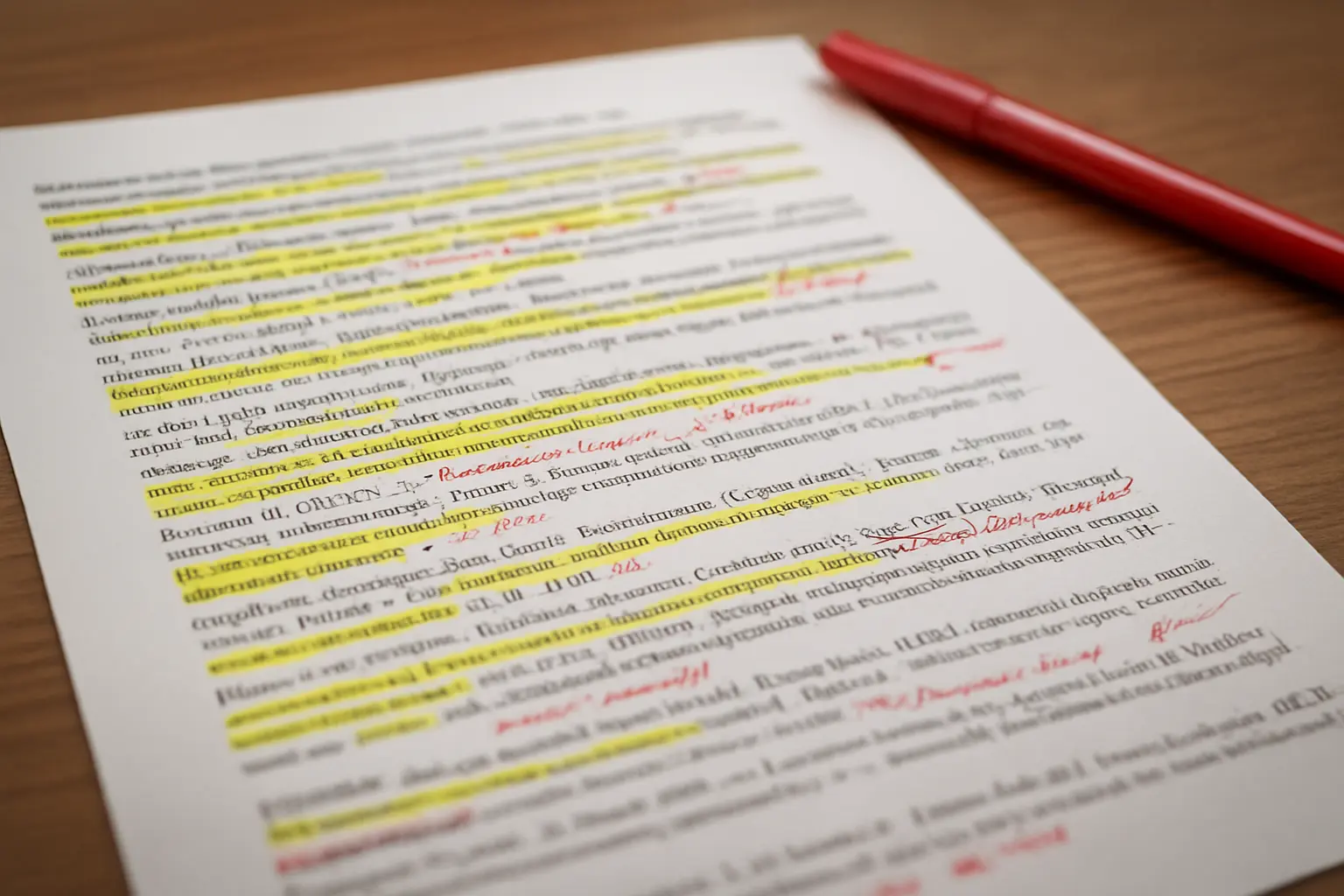
    A reference list marked up with corrections before submission
    Every red mark here is automatable — and none of them is about the quality of your research.

    What an AI referencing generator actually does

    Three things, when it is working properly. It extracts metadata — paste a DOI, a URL or a title and it identifies the source and pulls the structured details, which is where AI genuinely improves on the older form-filling generators. It formats — applying your chosen Harvard variant’s punctuation, order and italics consistently across every entry, which is the part humans do worst at midnight. And it synchronises — keeping the reference list matched to what you actually cited in the text, so nothing cited is missing and nothing uncited pads the list.

    What no generator does is read for you. The entry it produces is only as true as the metadata it found: publisher pages mis-capitalise titles, preprint versions masquerade as published articles, and a source you never opened remains a source you never opened however beautifully it is formatted. Citing sources you have not read is a misrepresentation problem, not a formatting one — the same honesty line we draw in our guide to using AI in a literature review.

    The free options, honestly

    ZoteroBib is a genuinely free, no-account bibliography generator from the Zotero team that supports Harvard styles — for a short essay it may be all you need. Full reference managers such as Zotero handle bigger projects free as well. Ad-supported web generators also exist; they work, but watch for paywalled exports and check their output more carefully. The gap all of them share is workflow: they format references, but they do not live inside your drafting, so keeping text and list synchronised across a 10,000-word dissertation remains your manual job — and that synchronisation is precisely where deadline-week errors breed.

    How it works in Tesify

    Tesify treats the bibliography as a by-product of writing rather than a separate chore. You draft your chapters in the editor; when you cite a source, the automatic bibliography records it, formats it in your citation style, and keeps the list synchronised as you edit — add a citation and it appears, delete the paragraph and it goes. Because the list is generated from what your text actually cites, the classic failure modes — cited-but-not-listed, listed-but-not-cited — stop being possible. Everything stays 100% written by you: Tesify structures and formats; the reading, the argument and the words are yours. That is the same division of labour more than 9,000 students use it for, across more than 15,000 chapters.

    The practical workflow: set your citation style once at the start; cite as you draft rather than leaving markers like “(REF)” to resolve later; and run one final pass against your department’s handbook — the twenty-minute check that catches the variant quirks no tool can know about. Law students should start with our OSCOLA guide instead, because footnote styles change the workflow itself.

    What stays your job

    Three checks, none of them long. Verify against the handbook, not against what looks right — your department’s variant is the marking criterion, and if the handbook is ambiguous, whether references count toward the word limit is worth checking at the same time, because inclusion rules differ sharply between universities. Verify the sources are real and read — every entry should correspond to something you opened. And verify the details on the handful of odd sources — old reports, translated books, grey literature — where metadata extraction is most likely to have guessed.

    Do those three and the bibliography stops being a midnight problem. Start your dissertation in Tesify free, set your Harvard variant once, and spend deadline week on the chapters that carry the marks.

    Frequently asked questions

    Is using a referencing generator cheating?

    No. Formatting citations is clerical work, and universities do not award marks for typing punctuation by hand. What academic integrity requires is that the sources are real, that you actually used them, and that the ideas you took from them are attributed — a generator changes none of those duties.

    Do I have to declare that I used a referencing tool?

    Almost never for pure citation formatting — declaration requirements target content generation, not formatting. If your department requires an AI-use statement, follow its wording; listing a formatting tool costs you nothing.

    How much does Tesify cost?

    You can start free and build real chapters with the automatic bibliography before deciding whether you need more. There is no charge to try the workflow on your actual dissertation.

    Is my dissertation safe if I write it in an online tool?

    Your work in Tesify is yours: it is not shared, published or added to any public database, and you can export your text. For any tool you use, the sensible habit is the same — keep your own exported backup of the current draft.

    Will the generated references match my university’s Harvard exactly?

    Choose your institution’s variant where available and the output will be close; the final authority is your handbook, and one sample check early in the project tells you whether anything needs adjusting. No tool can know an unwritten departmental preference.

    Can it reference websites, reports and lecture slides, not just journals?

    Yes — author–date styles have formats for grey literature, and the generator applies them. These are also exactly the source types where you should double-check the extracted details, because their metadata is the least standardised.

    What is the difference between a reference generator and a reference manager?

    A generator formats citations you feed it; a manager also stores your library, PDFs and notes across the whole project. For a dissertation you want managed references and generated formatting — Tesify does the second inside your draft, and pairs happily with a library in Zotero.

    My references are done but the chapters are not. Can Tesify help with those?

    Yes — that is the main job. It structures your dissertation chapter by chapter and helps you draft around your own research, with the bibliography maintained automatically as you go. Everything remains 100% written by you.