
UK engineering students have more free, public data available than most realise: national government open data, the national mapping agency, the energy system operator, the environment regulator and the national geological survey all publish datasets engineering dissertations can use directly. This is a source-by-source guide to what exists, what it actually holds, and which sub-field it fits. Compared with disciplines that rely heavily on paid commercial databases, engineering has an unusually strong open-data base to draw on, precisely because so much of the underlying infrastructure — the grid, the roads, the rivers, the ground itself — is publicly regulated and reported on as a matter of statutory duty. For a wider cross-subject catalogue of free UK data, see where to find UK data for your dissertation.
| Source | Holds | Best sub-field fit | Access |
|---|---|---|---|
| data.gov.uk | Aggregated catalogue across all UK public bodies | Any — use as a first search | Free, Open Government Licence |
| Ordnance Survey (OS Data Hub) | Mapping, topography, boundaries, addresses | Civil, structural, transport, geotechnical | Free OpenData tier; premium via university licence |
| ONS | Construction output, manufacturing production indices | Industry-trend dissertations | Free |
| DESNZ | National energy statistics, generation mix, emissions | Energy, electrical, environmental engineering | Free, Open Government Licence |
| NESO | Real-time/historical electricity system data | Electrical, energy systems engineering | Free via NESO data portal |
| Environment Agency | River flow, rainfall, flood warnings | Civil, environmental, hydrology | Free, open API |
| British Geological Survey | Borehole records, geological mapping | Geotechnical, structural, civil | Largely free; some records restricted |
| National Highways / WebTRIS | Traffic flow, speed, journey time | Transport, traffic engineering | Free, open data portal |
| IEEE DataPort / Zenodo | Research datasets with DOIs, code and data archives | Electrical, electronic, software-adjacent, general | Zenodo free; IEEE DataPort open-access datasets free, others by subscription |

data.gov.uk — the general starting point
data.gov.uk is the UK government’s central open-data catalogue, published under the Open Government Licence, which means free reuse for research including dissertations, with attribution. It aggregates datasets across transport, environment, infrastructure, energy and the built environment from dozens of individual government bodies and local authorities, so it is the right first search even when your real source turns out to be one of the more specialist bodies below — searching data.gov.uk often surfaces the specific agency dataset faster than searching that agency’s own site.
Ordnance Survey — mapping and geospatial data
Ordnance Survey is Great Britain’s national mapping agency, and its OS Data Hub provides both a free OpenData tier (basic mapping, boundaries, points of interest) and licensed premium products (detailed topography, building outlines, address data) that many universities provide free access to through an educational licence. This is the standard source for civil, structural and geotechnical dissertations needing site-context mapping, and for transport-planning dissertations needing road-network geometry — check your own university’s GIS/library service for what premium tier you already have access to before assuming you need to pay.
ONS — construction and manufacturing statistics
The Office for National Statistics publishes regular construction output statistics, manufacturing production indices and infrastructure investment data, which are the standard secondary-data source for dissertations analysing industry trends (construction output by region, manufacturing sector performance) rather than a single project’s own engineering performance data.
DESNZ and NESO — energy system data
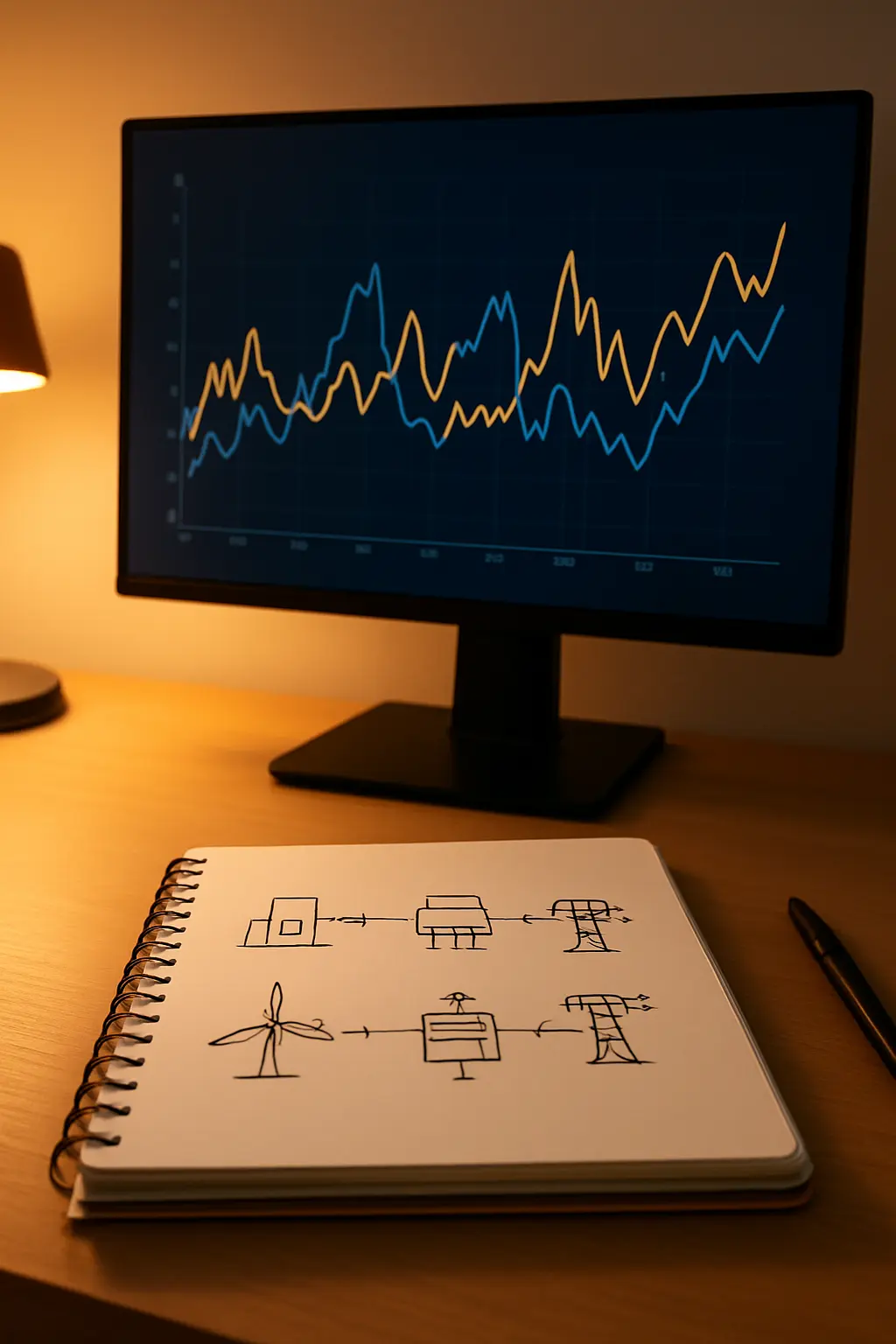
The Department for Energy Security and Net Zero (DESNZ) publishes national energy statistics (generation mix, consumption, emissions by sector), and the National Energy System Operator (NESO, the successor to National Grid ESO’s system-operation role) publishes real-time and historical electricity system data through its own data portal — generation by fuel type, demand, and grid frequency at fine time resolution. Together these are the core dataset pair for energy and electrical engineering dissertations on grid decarbonisation, renewable integration or demand forecasting.
Environment Agency — hydrology and flood data
The Environment Agency publishes real-time and historical river-flow, rainfall and flood-warning data through its hydrology data explorer and flood-monitoring API, free to use under open licence. This is the primary dataset for civil and environmental engineering dissertations on flood risk, drainage design, or catchment hydrology — a genuinely strong open dataset for a subject area that often gets treated as needing expensive proprietary data.
British Geological Survey — ground conditions and geotechnical data
The British Geological Survey (BGS) holds the UK’s national archive of borehole records and geological mapping, with substantial free access through its online map viewer and borehole scans database. Geotechnical and structural engineering dissertations analysing ground conditions for a named site or region are the natural fit; note that some individual borehole records carry access restrictions from the original site owner even where BGS holds the record, so check availability for your specific site early rather than assuming full access.
National Highways / WebTRIS — traffic and transport data
National Highways (the operator of England’s motorways and major A-roads) publishes traffic flow, speed and journey-time data through its WebTRIS system and open-data portal, drawn from its network of roadside monitoring sites. This is the standard dataset for transport-engineering dissertations on congestion, traffic modelling or the effect of infrastructure changes on flow, without needing to run your own traffic counts.
IEEE DataPort and Zenodo — datasets for computing-adjacent and general engineering research
For electrical, electronic and software-adjacent engineering dissertations, IEEE DataPort hosts research datasets (signal processing, power systems, communications and more); its open-access datasets are free to download with a free IEEE account, while the rest need an individual or institutional subscription (free for IEEE Society members). Zenodo, run by CERN and used across all engineering disciplines, hosts open research data and code with a permanent DOI for citation — useful both for finding existing datasets and for depositing your own project’s data if your dissertation produces something worth archiving.
Standards bodies: BSI and IET, for context rather than raw data
The British Standards Institution (BSI) and the Institution of Engineering and Technology (IET) are not data sources in the dataset sense, but a design or evaluation dissertation should still engage with the relevant British/ISO standard for its topic (structural loading, electrical safety, materials testing) as a normative reference — most UK universities provide free student access to BSI standards through their library, since individual standards documents are otherwise a paid purchase. If your programme’s own submission requirements reference a specific institutional handbook rather than a general standard, check it directly — Imperial College London engineering dissertation requirements is a worked example of how one department’s handbook sets its own page-range, sustainability-section and citation requirements on top of the general disciplinary norms.
Three worked scenarios
A civil engineering dissertation modelling flood risk for a named town centre combines Environment Agency river-flow and flood-warning data with Ordnance Survey topography for the catchment, plus BGS ground data if infiltration or groundwater is relevant. An electrical engineering dissertation forecasting local demand response to increased electric-vehicle charging combines NESO’s historical demand and generation data with the Department for Transport’s vehicle licensing statistics on electric-vehicle uptake for context. A transport-engineering dissertation evaluating whether a specific road scheme reduced congestion combines National Highways’ before/after traffic-flow data from WebTRIS with ONS regional economic data to control for background demand growth over the same period.
How do you choose between these for your own project?
Match the dataset to your dissertation’s shape, not the other way round. A design-and-build project (see undergraduate dissertation structure by subject for how this shape compares with others) mostly needs data as context and validation — site mapping from Ordnance Survey, ground conditions from BGS, a relevant standard from BSI — rather than as the object of study itself. A data-analysis dissertation (trend, forecasting, or system-performance questions) makes one of the named datasets above the core object of study, and your methodology chapter should justify that specific choice against the alternatives on this list.
What should you check before committing to a dataset?
Three things: the actual date range and update frequency available (some real-time feeds only retain a limited historical window through the free API, with a longer archive available only on request); whether the geographic or sectoral coverage genuinely matches your research question (national energy data will not answer a question about one specific local grid without a lot more work); and whether your university already provides a licensed tier of a nominally “paid” source (Ordnance Survey premium, some IEEE content) before you assume something is unavailable.
A related check specific to engineering dissertations: whether the data resolution matches your design tolerance. A national energy dataset reported at half-hourly resolution is fine for demand-trend analysis, but useless for a control-systems dissertation needing sub-second response data — if your question genuinely needs finer resolution than any public dataset offers, that is itself a legitimate reason to fall back on your own instrumented measurement or a simulation-based design, and it is worth stating that reasoning explicitly in your methodology rather than silently working around a data gap.
How does Tesify help with the data sources chapter?
Tesify can help you write up your data-sources justification and methodology once you have identified which of these datasets fits your project, turning a list of sources into a properly argued methodology section.
Frequently asked questions
Is UK government engineering data genuinely free to use in a dissertation?
Yes — data.gov.uk, DESNZ, NESO, the Environment Agency and National Highways all publish under open licences (typically the Open Government Licence) that explicitly permit academic and research reuse, including dissertations, with attribution.
Do I need to request special access to BGS borehole data?
Much of BGS’s borehole archive is freely viewable through its online map service, but some records held on behalf of third parties carry access restrictions — check the specific record’s status before assuming full access for your site.
Can I use Ordnance Survey premium data for free as a student?
Often yes, through your university’s educational licence arrangement rather than a personal OS Data Hub account — check with your library or GIS support service, since access is usually set up institutionally rather than per student.
What is the difference between DESNZ and NESO data?
DESNZ publishes national energy statistics and policy-level reporting; NESO publishes operational, near-real-time electricity system data (generation, demand, frequency) — use DESNZ for national trend context and NESO for granular system-operation analysis.
Is there a UK-specific dataset for structural or materials engineering specifically?
No single dedicated open dataset covers structural testing data the way BGS covers geology — structural and materials dissertations more often generate their own lab data, or use published datasets from specific research papers via Zenodo, rather than a single national repository.
Do I need to cite the licence, not just the data source?
Yes — most UK open-data licences (particularly the Open Government Licence) require attribution as a condition of reuse, so your reference list and any figures reproduced from the data should note the licence alongside the source.
Can I combine several of these datasets in one dissertation?
Yes, and the three worked scenarios above are typical of how real engineering dissertations do it — just state clearly in your methodology how each dataset was combined or cross-referenced (matched by date, location or another key), since a marker will want to see that the combination is methodologically sound, not just convenient.
What if the dataset I need does not have UK coverage?
Check whether an international equivalent exists (IEEE DataPort and Zenodo both host non-UK datasets) and be explicit in your dissertation about the limitation this creates for any UK-specific conclusion you try to draw from non-UK data.
Should I generate my own lab or field data instead of using a public dataset?
Only where your research question genuinely requires it — a public dataset that already answers your question at adequate resolution is normally the lower-risk, lower-time-cost route, and your supervisor is likely to ask why you generated new data if an existing open dataset would have done the same job.
Should I mention my data source in my dissertation proposal?
Yes — naming a specific, genuinely accessible dataset at proposal stage is one of the clearest signals to a supervisor that your project is feasible within the time available, rather than dependent on data you have not yet confirmed you can actually obtain.