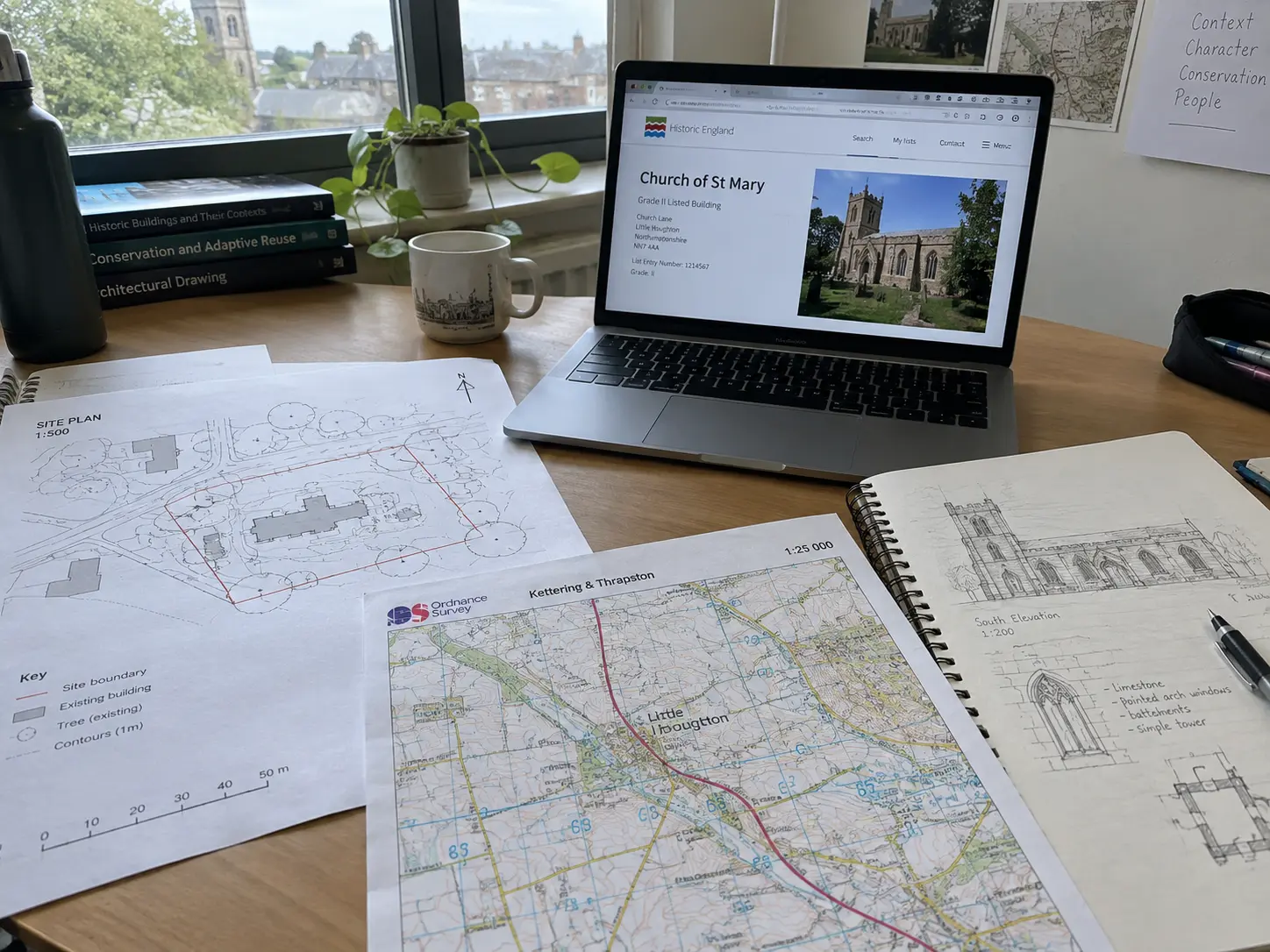
Choosing a population, site or case study is the decision that shapes everything else in an architecture dissertation — your research question, your access route, and how much of your written dissertation you can actually evidence. Work through these steps in order, because each one narrows what the next step can realistically be.
Step 1: Decide what kind of architecture dissertation you are writing
UK architecture programmes at RIBA Part 2 level (the MArch stage) typically pair a design thesis with a substantial written dissertation or thesis, whose length and format vary from school to school, and the two usually form an integrated project: research informs the design, and the design work in turn informs the research. RIBA’s validation procedures require at least 50% of all assessed work at Part 1 and Part 2 to be undertaken as design studio projects, so your “population or case study” decision is really two decisions in one — who or what your design project serves, and what your written research investigates. Some programmes structure the MArch as two separate year-long studio projects; others run one design thesis project across both years. Check which structure your own programme uses before finalising a site, since it changes how much continuity your case study needs to have across the two years.
Step 2: Choose your site or case study
A “site” in architecture research usually means one of three things, and your dissertation should be explicit about which:
- A physical site — a plot, building or urban area your design project responds to.
- A case-study building or precedent — an existing building or scheme you analyse in depth, often alongside two or three comparator precedents.
- A typology or user group across multiple sites — for example, comparing how three different community centres serve the same population need, rather than focusing on one building.
Narrow your site selection with three practical tests: can you visit it (or find enough published drawings, photographs and planning documents if not); is there enough publicly available information to analyse it properly, in the way our guide to UK data sources for a dissertation by subject covers for other disciplines; and does it genuinely let you investigate your research question, rather than being chosen because it looks impressive in a portfolio.
Step 3: Decide your population — who is your design or research actually for?
Architecture dissertations often skip this step, treating “population” as something only social-science dissertations need. But a design thesis that claims to serve “the local community” without naming who that is — families with young children, older residents, students, a specific faith community, wheelchair users — is exactly the kind of vague population statement examiners flag. Name your population as precisely as your site: not “residents”, but “residents of the adjacent 1960s social housing estate, approximately 400 households, with a notably higher-than-average proportion of residents over 65 according to the most recent census output area data.”
Step 4: Check access, consent and heritage or planning constraints
Before committing to a site, check three things that can derail a project mid-way through the year:
- Physical access — can you actually visit, photograph and survey the site, or will you need to work from published material only?
- Heritage and conservation status — is the building or area listed, in a conservation area, or a scheduled monument? This affects both what interventions your design can propose and what planning history is publicly documented about it.
- If your dissertation involves talking to people — local residents, building users, a planning officer — you need full university ethics approval for an undergraduate dissertation before any primary data collection, exactly as any other undergraduate or postgraduate dissertation would.
Step 5: Use the National Heritage List for England to check heritage status
The National Heritage List for England (NHLE), maintained by Historic England, is the official register of listed buildings, scheduled monuments, protected wrecks, registered parks and gardens, and registered battlefields in England, with more than 401,000 individually listed properties as of 2024. It is searchable online. Conservation areas are not on the NHLE, because local planning authorities designate them, so check the council’s records for those separately (see below). Before you commit to a site, check the NHLE: a listed building carries planning constraints and a documented history that should shape both your design proposal and your written analysis, and citing the listing entry itself (grade, list entry number, date first listed) is a concrete, verifiable primary source your dissertation can point to.
Step 6: Document your site selection criteria
Write a short, explicit paragraph in your methodology section stating why this site and this population, not a competing candidate you considered and rejected. Markers reward a demonstrated selection process — “I considered three sites (A, B, C) against these four criteria and chose B because…” — over a site that simply appears without explanation in Chapter 3. Our guide to dissertation structure by subject shows where a site-selection rationale typically sits in a design-and-build project’s chapter sequence.
A worked example (illustrative)
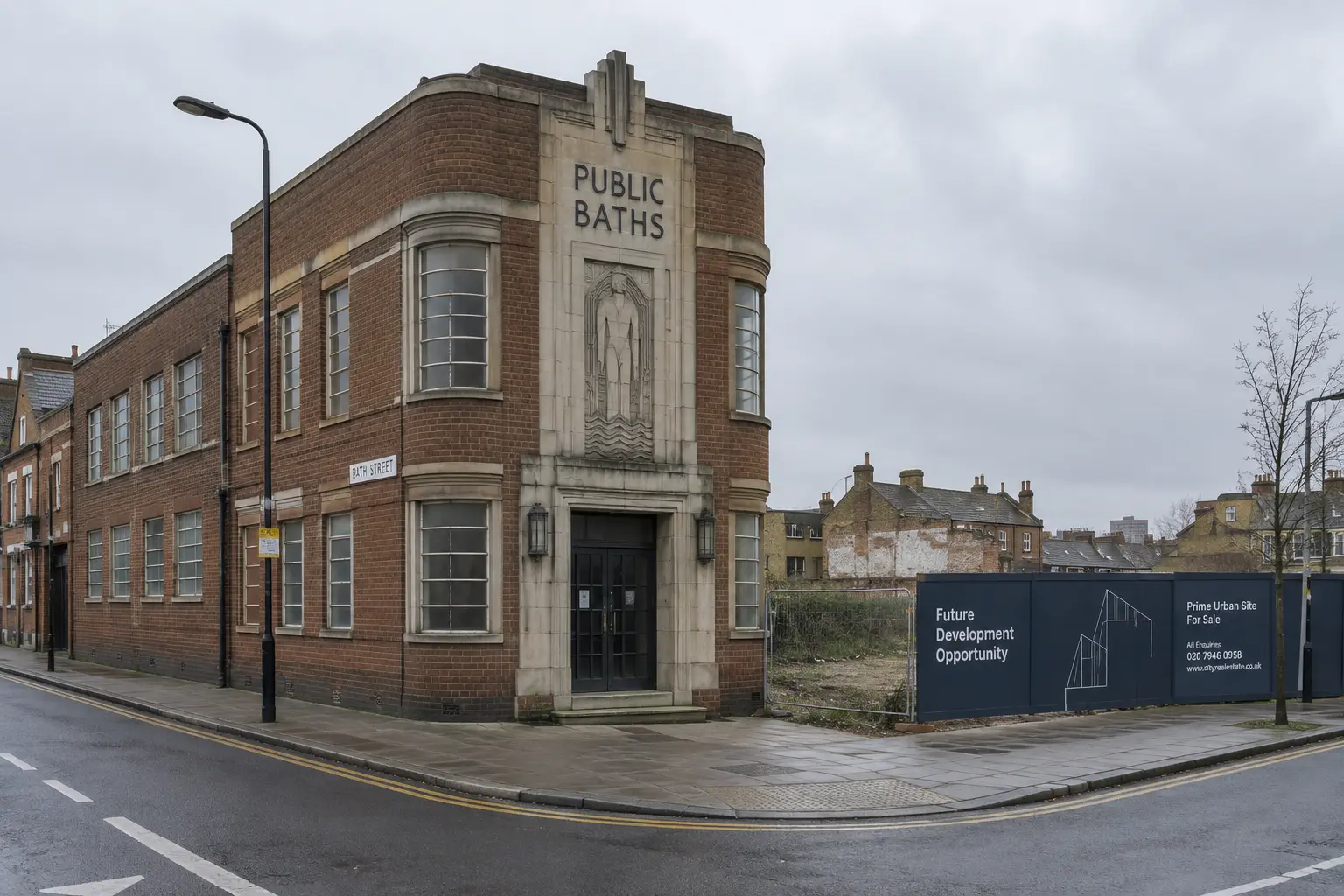
An illustrative, labelled example: a student proposes a design thesis for a community hub on a site adjacent to a 1930s former public baths building. Step 1: the programme runs one design thesis across both years, so the site needs to support two years of connected work. Step 2: the site is a physical plot with an existing case-study precedent (the former baths itself). Step 3: the population is defined as “residents within a 15-minute walk of the site, with particular attention to the estate’s above-average proportion of residents aged 65+ and to a nearby primary school’s catchment families”, not “the local community” in the abstract. Step 4: the former baths building is checked against the NHLE and found to be Grade II listed, which the design proposal must now work within rather than around. Step 5: the NHLE listing entry (list entry number, date first listed, list description) is cited directly in the site-analysis chapter. Step 6: the methodology section explains that two comparator sites were considered and rejected — one lacked comparable heritage constraints to analyse, the other had no viable access for survey work.
Citing an NHLE listing entry (worked example)
Historic England, National Heritage List for England: cite the specific list entry, not just the database generally. An illustrative Harvard-style reference reads: Historic England (2026) National Heritage List for England. Available at: historicengland.org.uk/listing/the-list/ (Accessed: 1 October 2026). Use the date you actually consulted the entry. In-text, name the specific building and its list entry number the first time you refer to it, so a reader can independently verify the listing. See our full guide to referencing in Harvard style for how to handle organisational authors and accessed-online sources more generally.
Checking planning history alongside heritage status
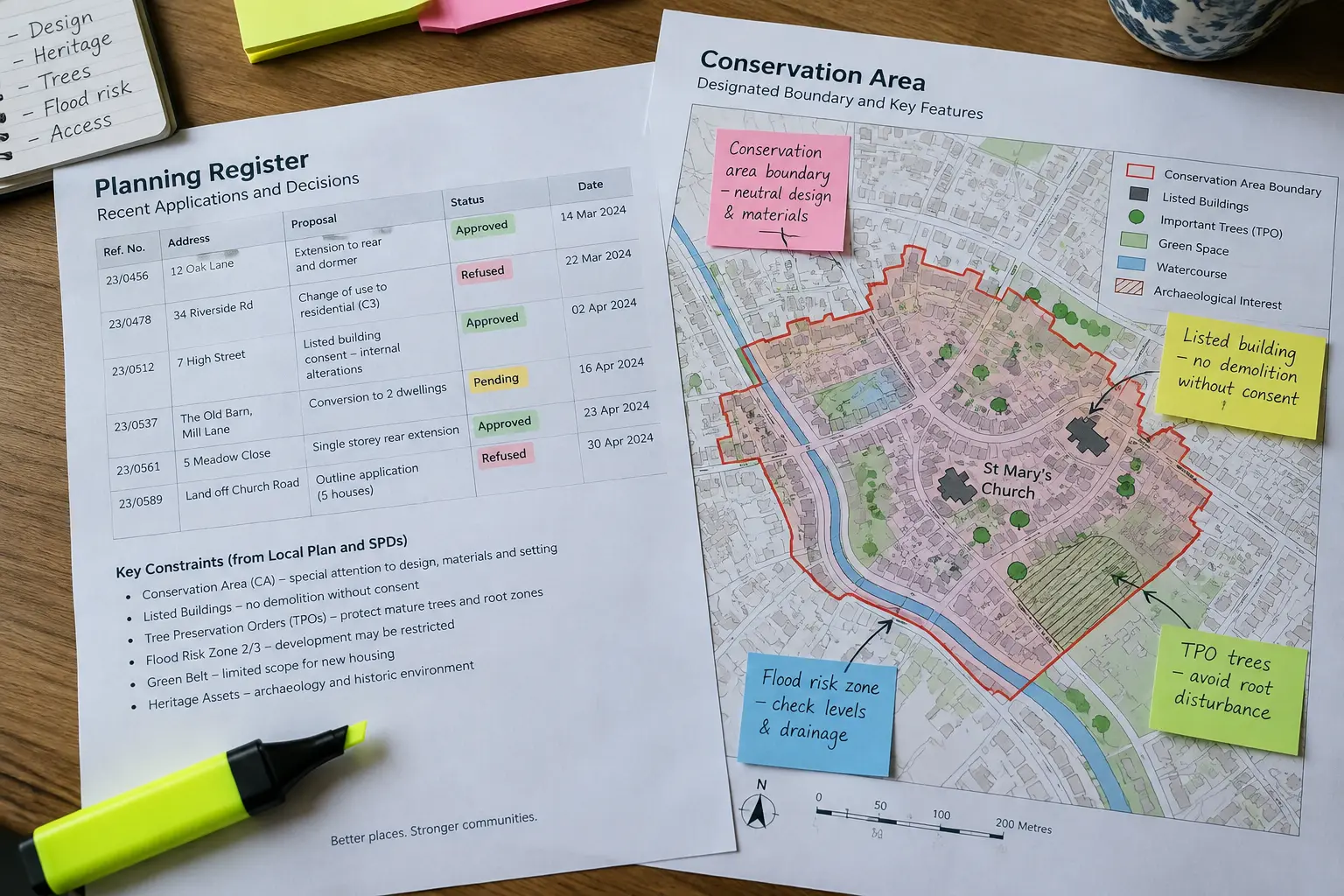
Heritage listing is only one constraint — your local planning authority’s own records are a second, equally important source. Most UK councils publish a searchable online planning register covering applications, decisions and any conservation area designations for a given address, usually free to search without registration. For a site inside a conservation area but not itself individually listed, the conservation area appraisal document (also usually published by the council) sets out what character the area is protected for, which matters just as much for a design proposal as an individual listing does. Checking both sources — the NHLE for individual listing status and the council’s planning register for conservation area status and application history — before finalising a site avoids the single most disruptive discovery a design thesis can make mid-year: that the site carries a constraint nobody checked for in week one.
Common mistakes when choosing a site or population
- Choosing a site for its visual appeal rather than its research fit. An impressive-looking building is not automatically a good case study if it does not actually let you investigate your research question.
- Naming a population in the abstract. “The local community” or “users” is not a population; naming a specific, bounded group is.
- Skipping the heritage check. Discovering a listing constraint in term two, after your design proposal is already developed, forces a costly redesign that an NHLE search in week one would have avoided.
- Not documenting why this site, not another. A selection process shown in the methodology chapter is worth real marks and costs very little time to write up.
Frequently asked questions
Do I need a real site, or can I design for a fictional one?
Check your own programme’s requirements — most UK Part 2 design theses use a real, named site so that context, planning history and population analysis are grounded in verifiable evidence, but a small number of speculative or theoretical projects do permit invented sites. Ask your studio tutor before committing.
How do I check if a building is listed?
Search the National Heritage List for England directly on Historic England’s website — each entry gives you the grade, list entry number and date first listed for a listed building in England.
What if my site is in Scotland, Wales or Northern Ireland?
The NHLE covers England only. Scotland’s equivalent is Historic Environment Scotland’s designations register, Wales uses Cadw’s register, and Northern Ireland uses the Department for Communities’ Northern Ireland Buildings Database — check the correct national register for your site’s location.
Can I use a site I cannot physically visit?
Yes, if enough published drawings, photographs, planning applications and heritage documentation exist to support real analysis — but say explicitly in your methodology that the analysis is based on published material, not a site visit, and why.
How specific does my population need to be?
Specific enough that a reader could picture who you mean without further explanation — an age range, a housing tenure, a catchment boundary, or a named user group, not a general label like “the community”.
Do I need ethics approval to survey a building?
Surveying, photographing and measuring a building itself does not usually require ethics approval; approval is required once you involve people — interviewing residents, surveying users, or observing behaviour in a space.
What if my chosen site turns out to be listed after I have started?
Treat it as a finding, not a setback: discuss the listing constraint explicitly in your site-analysis chapter and adjust your design proposal to work within it — this is exactly the kind of real-world constraint a strong dissertation is expected to navigate.
Can my case study be a building type rather than one specific building?
Yes — a typology-based comparison across two or three sites is a valid case-study structure, provided you are explicit that your unit of analysis is the typology, not a single building.
Can Tesify help me write the site-selection section of my architecture dissertation?
Tesify is used to write dissertations end to end, including methodology and site-analysis sections, with every draft 100% written by you through the platform — it does not check a specific site’s heritage status for you, but it can help you structure your selection criteria and site-analysis writing once you have the facts from the NHLE and your own site visit.
What is the single biggest reason site-selection sections lose marks?
Presenting the chosen site as a given, with no evidence of a selection process against stated criteria — markers are checking your judgement, not just your final choice.
Should I contact the local planning authority before choosing my site?
It is worth checking the council’s published online planning register yourself first — it is usually free and does not require registration — before deciding whether direct contact with a planning officer is necessary, since that would count as primary data collection requiring ethics approval.
Tesify has helped over 9,000 students write more than 15,000 dissertation chapters, and every draft is 100% written by you, guided section by section. Start your architecture dissertation with Tesify and work through your site-analysis chapter with your population and selection criteria mapped out properly from the start.