
Tag: dissertation research

  • Where Should You Actually Search for Your Dissertation Literature? Databases Compared (2026)

    Where Should You Actually Search for Your Dissertation Literature? Databases Compared (2026)

    “I searched Google Scholar” is the sentence that costs marks in a methods chapter. Not because Google Scholar is bad, but because a literature search a marker cannot reproduce is not a method. Here is the comparison first, then the verdict, then the mechanics that make any of these tools work properly.

    Google Scholar Your library discovery service Scopus / Web of Science Subject databases
    Cost to you Free Free with your login Free if your university subscribes Free if your university subscribes
    What it covers Very broad, undisclosed scope; journals, books, theses, preprints, grey literature Everything your library holds or licenses, plus its e-book and repository content Curated, selective citation indexes of peer-reviewed literature One discipline in depth
    Controlled vocabulary None Limited Some Yes — MeSH, CINAHL Headings, APA Thesaurus, ERIC Descriptors
    Boolean and field searching Basic; long queries are truncated Good Excellent, with proximity operators Excellent
    Reproducible result set No — results vary and cannot be reliably re-run Largely Yes Yes
    Full-text access Patchy; hits paywalls constantly Best — routed through your subscriptions Links out to full text Often full text within the platform
    Quality filtering None — indexes predatory journals alongside everything else Library-curated Selective inclusion criteria Selective
    Best for Scoping, chasing citations, finding a known paper Getting the full text of anything A defensible, documented search Depth and precision in your field

    The shortlist, ranked for a dissertation

    1. Your subject database — where the marks are

    For a dissertation literature search, the discipline-specific database beats everything else, because it indexes its field with a controlled vocabulary: an agreed set of subject headings applied by humans to every record. That is what lets you find the papers whose authors used a different word from yours. A search for “teenagers” misses every paper that said “adolescents”; a search on the subject heading finds both.

    The relevant one depends on your field — health and nursing students work in CINAHL and PubMed, psychology in PsycINFO, education in ERIC, business in the major business databases, law in Westlaw and LexisNexis. Your library’s subject guide names yours. Where it falls short: coverage stops at the discipline boundary, which is a real problem for genuinely interdisciplinary topics, and each platform’s syntax differs slightly.

    2. Your library discovery service — the access layer

    The single search box on your library homepage searches across most of what your institution holds and licenses, and its decisive advantage is that everything it returns, you can actually read. No paywalls, no hunting for a PDF, no emailing authors.

    Use it as your access route and for finding books, which the citation indexes handle poorly. Where it falls short: precision. It is built for breadth and convenience, so a well-constructed query returns thousands of loosely relevant results. It is not the right instrument for a documented, systematic search.

    3. Scopus or Web of Science — the defensible search

    These are curated citation indexes with selective inclusion criteria, strong field-level searching and proper proximity operators, and they let you move through the literature by citation: find one central paper, then see everything that has cited it since. That is the fastest legitimate way to bring an older reading list up to date.

    Where they fall short: your university may subscribe to one, both or neither, and their selectivity cuts both ways — the curation that keeps rubbish out also keeps out smaller journals, non-English scholarship and most grey literature.

    4. Google Scholar — start here, never finish here

    It is genuinely excellent at three jobs: finding a paper you already know exists, discovering what has cited it, and getting a rough sense of a new field in twenty minutes. Its coverage is enormous and it surfaces theses and reports the subscription databases ignore.

    Where it falls short, and why it cannot be your only source: its scope is undisclosed, so you cannot state what you searched; results are not stable, so your search cannot be reproduced; its Boolean support is limited and long queries get truncated; and it applies no quality filter whatsoever, indexing predatory journals beside the Lancet. A methods chapter that names only Google Scholar is describing a browse, not a search.
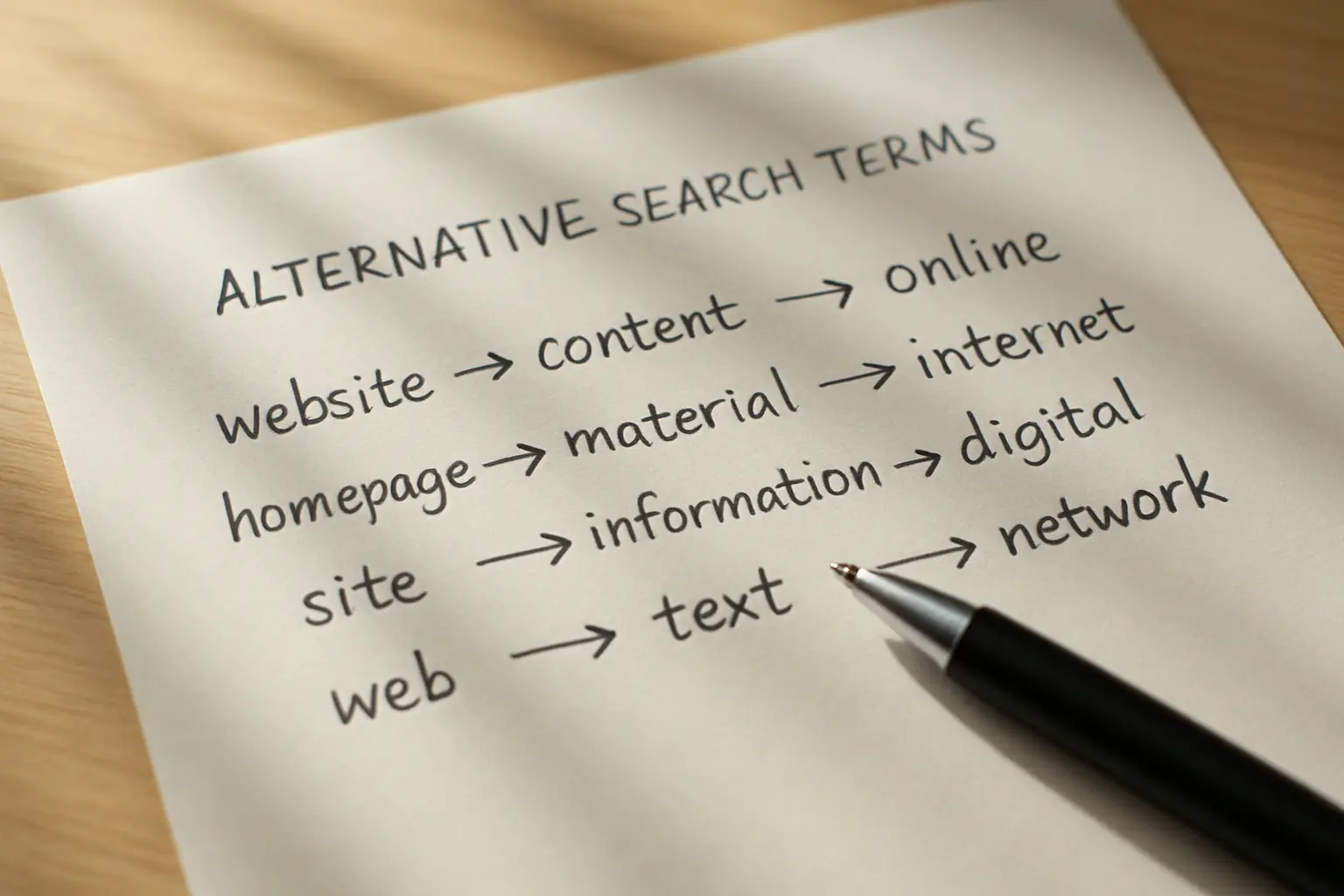
    A search strategy planned out as concept columns with alternative terms
    Concepts across, synonyms down: OR within each column, AND between them. Build this on paper before you touch a database.

    The recommendation

    Use your main subject database as the search you document, your library discovery service to obtain the full text, and Google Scholar for citation chasing and scoping. Two databases plus one supplementary route is plenty for an undergraduate dissertation, and it is far more defensible than five superficial searches. Name them all in your methods, with the date you searched.

    The mechanics that make any database work

    Most students’ searches fail on construction, not on platform choice. Five techniques do nearly all the work.

    1. Break the question into concepts. Two or three, no more. “Does peer mentoring reduce anxiety in first-year students?” is peer mentoring, anxiety, university students.
    2. List synonyms down each concept. Anxiety, stress, worry, psychological distress. Include British and American spellings — behaviour and behavior — and the terms older papers used.
    3. Combine with OR inside a concept and AND between concepts. (anxiety OR stress OR "psychological distress") AND ("peer mentoring" OR "peer support") AND (undergraduate* OR "first year"). OR widens, AND narrows: that one sentence is most of Boolean searching.
    4. Truncate and phrase-search. An asterisk catches word endings, so adolescen* returns adolescent, adolescents and adolescence. Quotation marks hold a phrase together, so “peer mentoring” is not treated as two loose words.
    5. Add the subject headings. Find one paper that is exactly right, open its record, see which headings it was indexed under, and add those to your search. This one habit lifts more searches than any other.

    Then apply limits deliberately — date range, peer-reviewed, English language, human participants — and be ready to justify each one, because every limit is an inclusion decision your marker may ask about.

    Two UK-specific routes worth knowing

    EThOS is back. The British Library’s E-Theses Online Service, offline for a long period after the library’s cyber-attack, is available again following restoration work, and holds metadata for over 650,000 UK doctoral theses from the 1700s onwards. Its shape has changed: it is now a discovery platform, so records carry an “Access thesis from university” button that links to the university repository where the full text may be downloadable, rather than serving the file itself. The British Library notes a backlog still being worked through and that not every thesis is available from its repository.

    For an undergraduate the value is indirect and considerable: find a doctoral thesis on your topic, and you have a literature review written by someone who spent three years on it, with a reference list you can mine. Read it as a map, cite the primary sources it points you to, and never cite a paper you found in its bibliography without reading that paper yourself.

    Institutional repositories and open-access aggregators fill the gaps left by subscription databases, and are where you will find UK reports, working papers and policy documents that never reach a journal. If your project needs data rather than literature, that is a different search entirely, mapped in our guide to UK data sources by subject.
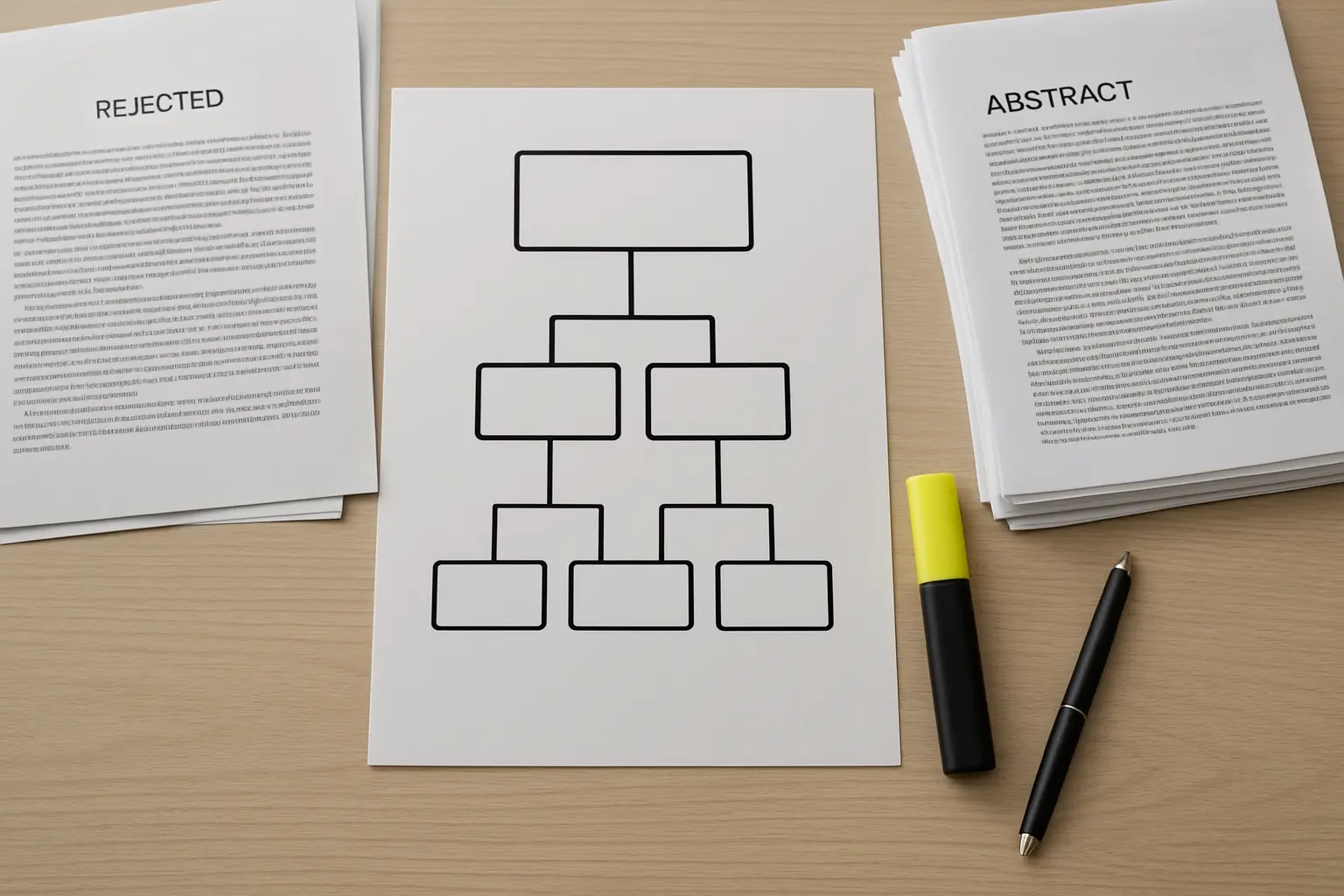
    Screening records from search results down to included studies
    Record the numbers as you go. Reconstructing them in submission week is the single most avoidable job in a review-based dissertation.

    Keep a search log from the first search

    Open a table now and fill in a row every time you search: database, exact search string, limits applied, date searched, results returned, results kept. It takes thirty seconds per search and it is the difference between a methods chapter you write in an hour and one you reconstruct over a miserable weekend.

    If your dissertation is a structured or systematic review rather than an empirical study, this log is not optional — it becomes your screening figures, and the whole reason to record numbers at each stage is that you cannot recover them later. Which kind of review your department expects is worth settling before you search at all; see literature review versus systematic review. If yours is a health review, the appraisal stage that follows is covered in our guide to CASP checklists.

    Everything you keep should go straight into a reference manager as you find it, not in a panic at the end — the trade-offs are in our comparison of Zotero, Mendeley and EndNote. And the synthesis that follows, including where AI assistance is legitimate and where it is not, is set out in our guide to writing a literature review with AI, honestly.

    When the reading is done and the chapter has to be written, Tesify can structure and draft it around your own sources — 100% written by you, with the bibliography maintained as you cite.

    Frequently asked questions

    Is it acceptable to use Google Scholar for a dissertation?

    As one route among several, yes — for scoping and citation chasing it is excellent. As your only named source it is a weakness, because its coverage is undisclosed and its results are not reproducible, so no marker can verify what you searched.

    How many databases should I search?

    Two well-chosen databases plus a supplementary route is normally sufficient for an undergraduate dissertation. A full systematic review requires more and a documented rationale for each. Depth of search construction matters more than breadth of platform.

    What is a controlled vocabulary and why does it matter?

    It is a standardised set of subject headings applied by indexers to every record, such as MeSH in PubMed or CINAHL Headings. It finds papers whose authors used different words from yours, which free-text searching cannot do.

    How do I know when to stop searching?

    When new searches return papers you have already seen, and when the reference lists of your key papers point back into your existing set. That saturation point is a reasonable stopping rule for a narrative review, and you should state it.

    Should I limit my search to the last ten years?

    Only if you can justify it. Date limits make sense where a field has changed rapidly or a policy shifted, and they are indefensible where a seminal paper sits outside the window. Either way, state the limit and the reason.

    Can I include grey literature?

    Yes, and for policy-facing topics you should — government reports, statistics and charity research are often the best available evidence. Appraise them as carefully as journal articles, and say in your methods that you included them.

    What do I do when I cannot access a paper?

    Try your library discovery service first, then your library’s inter-library loan service, then look for an author-deposited version in an institutional repository. Never cite an abstract as though you had read the paper.

    Is EThOS working again?

    Yes. It is available again after restoration work and holds metadata for over 650,000 UK doctoral theses. It now links out to the university repository for the full text rather than serving the file itself, and the British Library notes there is still a backlog and that not every thesis will be available.

    How do I write the search up in my methods?

    Name each database, give the full search string, list your limits and inclusion criteria, give the date searched and report how many results each search returned. If you kept a log from the start this is a twenty-minute job.

    Can I use AI tools to find sources?

    Treat anything a general-purpose tool suggests as a lead, never as a citation — fabricated references that look entirely plausible are a known failure mode. Verify every source in a real database and read it before it enters your chapter.

  • Where to Find UK Data for Your Dissertation: Free Sources by Subject (2026)

    Where to Find UK Data for Your Dissertation: Free Sources by Subject (2026)

    Secondary data analysis is the most underused route through a UK undergraduate dissertation. It removes the recruitment problem, removes most of the ethics burden, and gives you sample sizes no student survey will ever reach. The obstacle is not availability — it is knowing which sources an undergraduate can actually get into.

    That is the organising principle here. Every source below is real, currently live, and free at the point of use. What differs is the access tier, and one of those tiers is effectively closed to you.

    First, understand the three access tiers

    The UK Data Service — the UK’s largest collection of economic, population and social research data, funded by UKRI through the Economic and Social Research Council — operates a three-tier model that most other UK data holders mirror in some form.

    • Open. Neither login nor registration is required. Published under the Open Government Licence or Creative Commons. Download and go.
    • Safeguarded. You register and accept an End User Licence, agreeing not to share the data with unregistered users, not to attempt to identify individuals, and to cite the data correctly. This is the undergraduate route, and for students at UK institutions registration usually runs through your university login.
    • Controlled. Accessed only in a secure environment, requiring a detailed project application, accredited researcher status, training and an institutional legal agreement. The UK Data Service states directly that these data “are not suitable for use by inexperienced researchers, such as undergraduates, and should only be used if absolutely necessary.”

    Read that last line before you build a project around a controlled dataset. Students lose weeks discovering this at the application stage. Plan for open and safeguarded data, and treat anything controlled as out of scope.

    A related trap: the Office for National Statistics Secure Research Service provides access to de-identified unpublished data under the Five Safes framework, but full accredited researcher status requires an undergraduate degree or higher including a significant proportion of maths or statistics, or several years of quantitative research experience. It is not an undergraduate route either.

    Psychology, sociology and social policy

    UK Data Service is your first stop. It holds the major UK social surveys, and its safeguarded tier is designed for exactly the kind of secondary analysis an undergraduate project needs. Register through your institution, accept the End User Licence, and you have access to survey data with sample sizes in the thousands.

    UK Data Archive, based at the University of Essex, is the lead partner of the UK Data Service and has curated the UK’s social, economic and population data for over fifty years. It was the first academic department in a university to be awarded ISO 27001 certification, and was accredited in 2020 by the UK Statistics Authority under the Digital Economy Act 2017. In practice you will usually arrive at its holdings through the UK Data Service catalogue.

    Office for National Statistics publishes population, labour market, wellbeing and social survey outputs, all under the Open Government Licence v3.0. No registration, no licence negotiation.

    Politics and international relations

    The British Election Study has been explaining Britain’s electoral behaviour for sixty years and releases its data openly to researchers. Its two main strands are a large internet panel, currently released through Wave 30, and a random probability survey following the 2024 general election. For a dissertation on voting behaviour, partisanship or turnout, this is the field’s standard evidence base, and using it puts you on the same data as published political science.

    Check the study’s own data pages for the current registration requirements before planning around it, as access conditions differ between the panel and the probability survey.

    Criminology

    data.police.uk publishes street-level crime data, outcome data, and stop and search records, alongside police force and neighbourhood-level information and the Police Annual Data Requirement covering matters such as arrests and 101 call handling. It is released under the Open Government Licence v3.0 and offers an API as well as bulk downloads.

    For a criminology dissertation this is unusually good material: it is geographically granular, it is longitudinal, and it needs no ethical approval because it concerns recorded incidents rather than identifiable individuals. Be careful with the well-known limitation, though — recorded crime measures what was reported and recorded, not what occurred, and your analysis should say so.

    Education

    Explore Education Statistics, operated by the Department for Education and regulated by the Office for Statistics Regulation, is the single best entry point. It provides statistical summaries, an open data catalogue, a custom table builder and an API. The table builder matters for undergraduates: it lets you construct exactly the extract you need without writing code.

    This is also the appropriate source for attainment, absence, workforce and school-characteristics data — figures that circulate widely in secondary form but should be cited from the publisher.

    Health and nursing

    NHS England is now the custodian of England’s national health and social care datasets. Note the organisational change, because citing the wrong body dates your work immediately: NHS Digital legally merged into NHS England on 1 February 2023, and the regulations that effected the merger transferred NHS Digital’s functions to NHS England and abolished NHS Digital. The digital.nhs.uk domain still resolves, now branded NHS England Digital, which is why the old name persists in student bibliographies.

    A hard constraint sits alongside this for health students. The Health Research Authority states that standalone research at undergraduate level requiring ethics review or HRA approval cannot take place, and that undergraduate applications are no longer accepted for Research Ethics Committee review. Published aggregate NHS statistics are unaffected — you can analyse them freely — but a project involving NHS patients or staff as participants is not available to you. Secondary analysis is the HRA’s own suggested alternative, which makes this section the pragmatic route rather than the consolation prize. Our guide to choosing a survey platform and getting ethics right sets out that restriction in full.

    Economics, business and geography

    Nomis, a service provided by the Office for National Statistics, is the specialist labour market and census portal. It holds census data from 1921 onwards, labour market profiles, employment figures, population estimates and claimant counts, and most of the site can be used without registering. For any dissertation with a local or regional dimension — comparing labour markets across local authorities, mapping deprivation, tracking employment change — Nomis will do in minutes what would otherwise take days.

    data.gov.uk is the general catalogue of UK public data, published under the Open Government Licence v3.0. It is broad rather than deep: use it to discover that a dataset exists, then go to the publishing body for the authoritative version and the documentation.

    How to choose a dataset without wasting a fortnight

    Work in this order.

    1. Find the documentation before the data. Read the user guide and the questionnaire. If you cannot tell from the documentation which variable answers your research question, the dataset is not the right one.
    2. Check the access tier immediately. Open or safeguarded means you can proceed. Controlled means choose a different dataset.
    3. Check the unit of analysis. Individuals, households, schools, police force areas and local authorities are not interchangeable, and a mismatch between your research question and the unit will not be fixable later.
    4. Check the years available. A question about change over time needs comparable measures across waves, and survey questions get reworded more often than students expect.
    5. Download and open it before committing. Confirm the file format works with your software and that the variables you need are actually populated rather than missing for most respondents.

    Whichever package you plan to use, check it can read the file format — most UK archives distribute in formats that all the mainstream options handle, but confirming early avoids an unpleasant surprise. Our comparison of SPSS, R and jamovi covers the trade-offs if you have not settled on one.

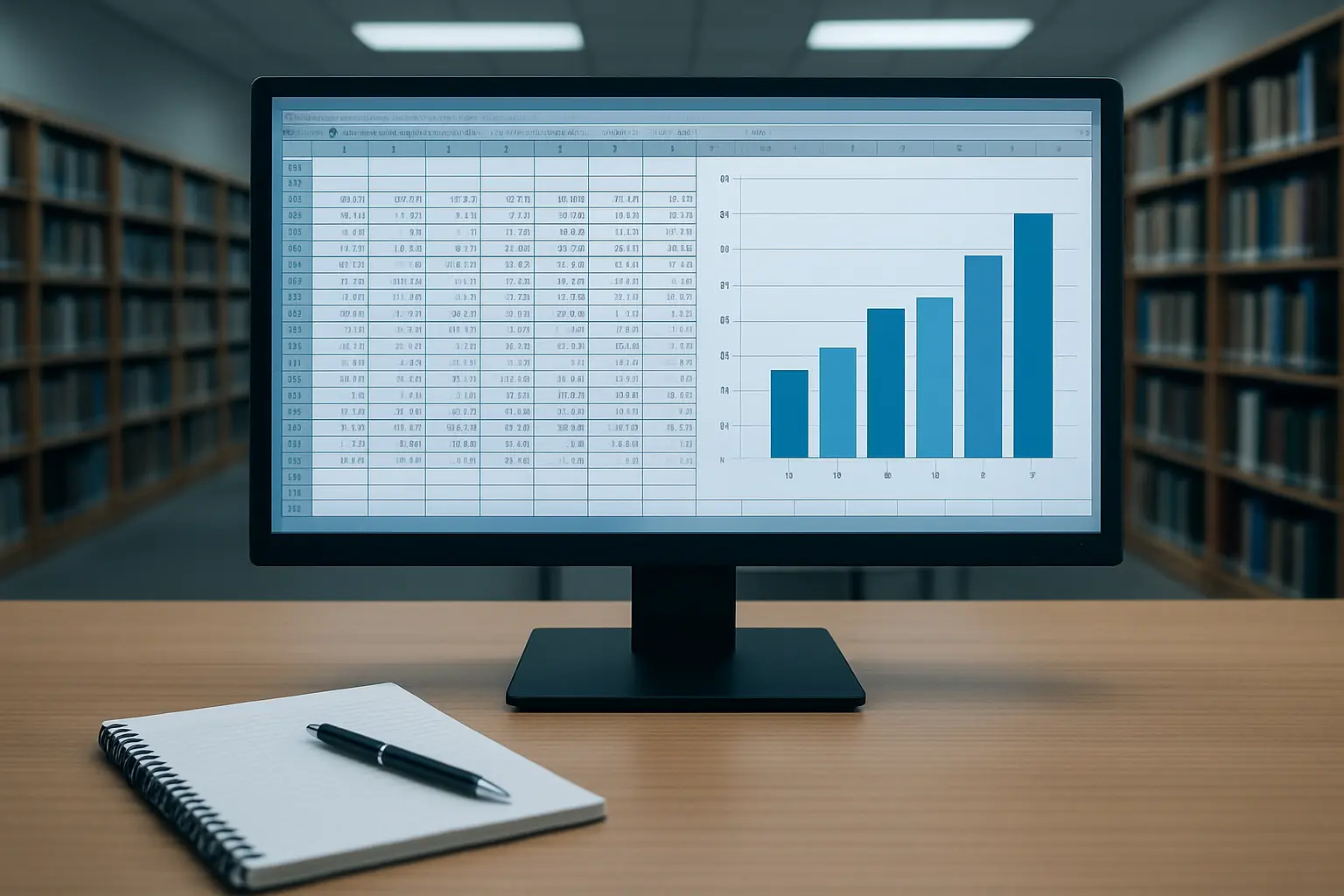
    Open government datasets displayed as tables and charts on a monitor
    Read the documentation before the data — the variable list decides whether a dataset can answer your question.

    The advantage nobody mentions: your sample size problem disappears

    A student survey that reaches sixty people is powered to detect only large effects. A national social survey gives you thousands of cases, which means your project can address questions a primary-data undergraduate study genuinely cannot.

    That changes what you should write in your methods chapter. With secondary data you are not justifying a small convenience sample; you are justifying your analytic sample — the cases you retained after applying inclusion criteria and handling missing data — and explaining any weighting the survey requires. Our guide to sample size for an undergraduate dissertation covers how to frame that argument, and the same chapter-level discipline described in our guide to writing a methodology chapter applies: describe the decision, then defend it.

    Cite the data properly

    Datasets are citable objects with their own reference formats, and the End User Licences you accept normally require correct citation as a condition of access. Cite the data creator, the year, the title, the edition or wave, the distributor and the persistent identifier. Most archives publish the exact citation string on the dataset’s landing page — use theirs rather than composing your own.

    Also cite the version. Survey datasets are revised, and a reader who cannot tell which edition you analysed cannot reproduce your results.

    Once the data are in hand, the remaining work is writing the analysis up so the argument is legible. If that is where you are stuck, you can draft those chapters in Tesify from your own output and your own interpretation — 100% written by you.

    Frequently asked questions

    Do I need ethical approval for secondary data analysis?

    Usually a lighter process rather than none. Many departments require a short ethics form even for anonymised secondary data, and analysing existing data does not exempt you from your institution’s review procedures. Ask your supervisor before assuming you are exempt.

    Can undergraduates register with the UK Data Service?

    Yes, for open and safeguarded data, normally through your institutional login. Controlled data is a different matter — the service states explicitly that it is unsuitable for inexperienced researchers such as undergraduates.

    Is secondary data analysis seen as an easier dissertation?

    No, and it is marked on the same criteria. What you save in recruitment you spend on data management: understanding a complex dataset, handling missing values, deriving variables and applying weights correctly are substantial analytical tasks in their own right.

    Should I cite NHS Digital or NHS England?

    NHS England, for anything current. NHS Digital was abolished when it merged into NHS England on 1 February 2023. Cite NHS Digital only for material it published before that date, under the name it carried at the time.

    What does the Open Government Licence let me do?

    Broadly, it permits you to copy, adapt and use the information, including commercially, provided you acknowledge the source with the required attribution statement. For a dissertation this means you can analyse and reproduce the data freely as long as you cite it.

    Can I combine two different datasets?

    Sometimes, and it can produce a genuinely original project — for example joining local-authority-level crime and education data. Check that the geography, time period and definitions genuinely match, and note that some licences restrict linking datasets, so read the terms before you merge.

    What if the dataset I want is controlled?

    Redesign around an open or safeguarded alternative. Applications for controlled access involve accreditation, training and institutional agreements on timescales that do not fit an undergraduate project, and the holders themselves advise against it at this level.