Tag: bibliography

  • How Many References Should a Dissertation Have?

    How Many References Should a Dissertation Have?

    There is no required number. No UK university publishes one, no national standard exists, and undergraduate marking criteria describe reading in terms of breadth, range and synthesis rather than count. As a working heuristic, a 10,000-word empirical dissertation typically cites somewhere around 40 to 60 sources — but the count is a symptom of adequate reading, never the target.

    Why does no one give you a number?

    Because the number is not what is being assessed, and any figure would be wrong for most dissertations that used it. A literature-based dissertation in history cites far more than a lab-based project in chemistry that reports original data. A systematic review cites everything that met its inclusion criteria, which might be nine studies or ninety. A dissertation with a narrow, well-defined question cites less than one surveying a broad field — and is often the better piece of work.

    The absence is deliberate rather than an oversight. Departments set word limits precisely and reference counts not at all, because a word limit constrains scope while a reference count would reward padding. Any figure circulating online as “the standard number of references for a dissertation” is somebody’s estimate assembled from experience, not a rule you can cite.

    What do UK marking criteria actually say?

    They talk about reading constantly and never count it. Two named institutions show the pattern.

    The London School of Economics Sociology undergraduate mark frame builds its whole ladder out of engagement with literature. First Class Honours (70–100%) requires “an outstanding breadth and depth of reading”, with answers above 80% “outstanding in terms of originality, sophistication and breadth of understanding of relevant themes and material”. An Upper Second (60–69%) “draws on a good range of relevant literature”. A Lower Second (50–59%) “demonstrates some engagement with relevant literature” and “may rely more heavily on description than on independent analysis”. A Third (40–49%) “demonstrates limited knowledge of the relevant literature”. A Fail “may be based entirely on lecture material” and “fail to demonstrate knowledge of the relevant literature”, while a Bad Fail is “likely to be poorly presented with little or no referencing”.

    The University of Edinburgh‘s School of Social and Political Science undergraduate marking descriptors draw the same ladder with different words. A-grade work “critically engages with diverse literatures in crafting an original and academically robust argument” and is “grounded in an exceptionally insightful reading of relevant literature”, where “the literature is synthesised in illuminating and creative ways”. Descending the bands, work is “grounded in some engagement with relevant academic literature, although the range may be limited and engagement more in the form of descriptive summaries”, and lower still “the range of reading may, however, be quite limited”.

    Read the two frames together and the criterion becomes explicit. The distinction between bands is synthesis versus descriptive summary, and diverse literatures versus a limited range. Neither of those is a number, and neither can be improved by adding entries to a bibliography.
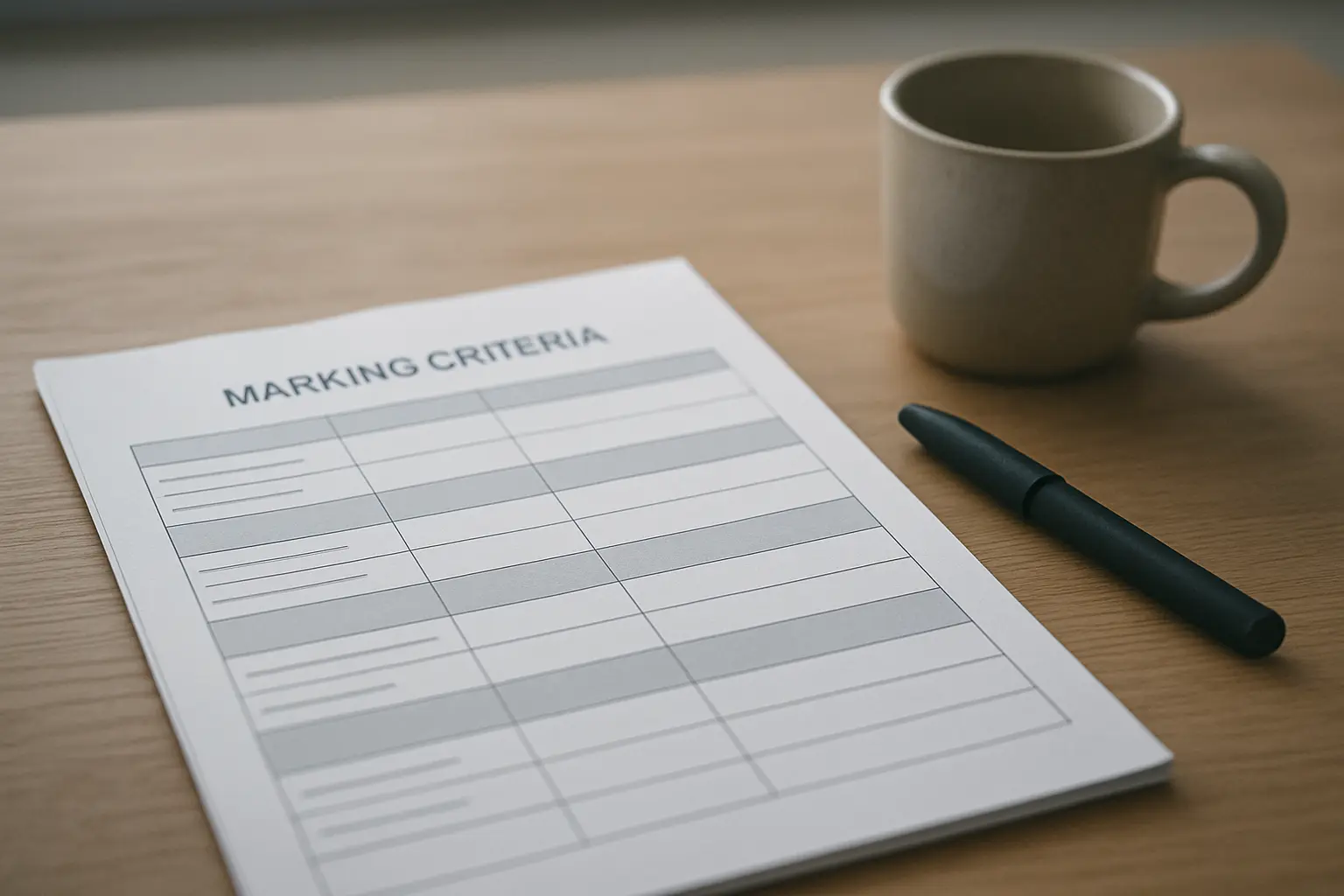
    An undergraduate marking criteria grid describing what each classification band expects of reading
    Every band on the ladder is defined by how the literature is used. None of them is defined by how much of it there is.

    So is there a useful rule of thumb?

    Yes, provided you treat it as a diagnostic rather than a target. Sources tend to scale with the length of the argument, and roughly one source per 150 to 250 words of a typical empirical dissertation is a pattern many supervisors would recognise. On the common UK undergraduate word limits that produces:

    Dissertation length Rough working range Weighted towards
    6,000–8,000 words 25–40 sources Literature review and discussion
    8,000–10,000 words 35–55 sources Literature review and discussion
    10,000–12,000 words 45–70 sources Literature review and discussion
    Literature-based or review dissertation Substantially higher The review is the whole study

    This is a heuristic, not a source. Its only real use is as an alarm: if you are at 10,000 words with twelve references, something is wrong, and if you are at 6,000 words with 180, something else is. Neither number tells you what to fix — the sections below do.

    One structural note that changes the arithmetic entirely: a literature-based dissertation redistributes its word budget so that the review and analysis absorb what methodology and results would otherwise take, which is one of the reasons the choice matters at planning stage, as our comparison of a literature review and a systematic review sets out.

    Where should the references actually sit?

    Not evenly. In a conventional empirical dissertation the density varies sharply by chapter, and markers read the distribution as evidence of whether you understood each chapter’s job.

    The literature review carries the most, by a wide margin — it is the chapter whose entire purpose is engagement with other people’s work. The introduction cites lightly, enough to establish that the problem is real. The methodology cites methods literature, not topic literature: the sources justifying your design, your instrument and your analysis. The results chapter often cites almost nothing, because it reports what you found. The discussion is the second densest chapter, because interpreting findings means putting them back into conversation with the literature — and a discussion with no citations is the single clearest sign of a dissertation that stopped at description.

    If your reference list looks adequate overall but your discussion cites three sources, the count is hiding the problem rather than revealing it.

    What counts as a “good range”?

    Four properties, all of which markers can see and none of which is a number.

    Recency alongside foundations. A field’s canonical works plus recent empirical studies. All-recent reads as a student who found a database and not a discipline; all-foundational reads as one who stopped reading in 1998.

    Primary over secondary. Cite the study, not the textbook’s summary of the study. A reference list dominated by textbooks and review articles tells a marker the primary literature was never opened.

    Peer-reviewed at the core. Grey literature, government reports and industry sources have a legitimate place, particularly in applied disciplines, but they supplement the peer-reviewed core rather than replacing it.

    Genuine disagreement. Edinburgh’s phrase is “diverse literatures”. A reference list where every source agrees with your conclusion usually means the search stopped when the answer appeared. Including work that complicates your argument, and dealing with it, is what “critical” means in a marking criterion.
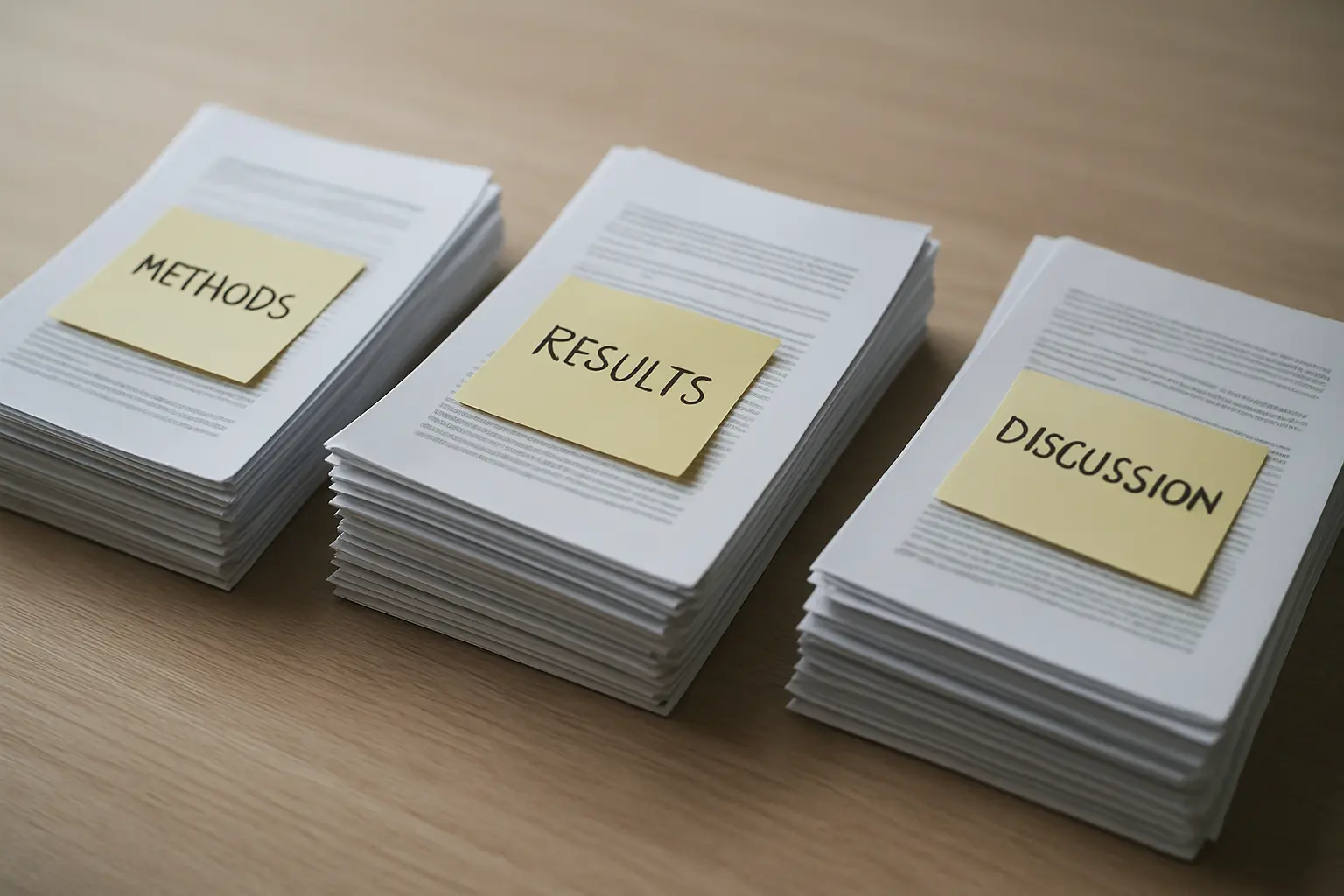
    Journal articles sorted into thematic piles rather than counted as a list
    Grouping your reading into themes tells you whether you have a range. Counting it tells you nothing.

    What should you do if your list looks thin?

    Diagnose before you search. Thin lists usually have one of three causes and each has a different fix.

    1. The question is too narrow or too new. Widen the search to the adjacent literature — the same phenomenon in a different population, or the same method applied to a different problem — and say explicitly in the review why you are drawing on it.
    2. The searching was too shallow. One database and one search string produces one slice of a field. Follow the reference lists of your three most relevant papers backwards, and follow their citations forwards.
    3. You read enough but cited too little. Common and easily fixed: claims stated without attribution, and paragraphs summarising a body of work with a single citation at the end. Attribute properly and the count rises for the right reason.

    What not to do is add sources you have not read. Markers open unfamiliar references, a fabricated or misattributed one is found quickly, and a reference list padded with classic works the dissertation never engages with reads worse than a shorter honest one. The same principle governs tool use: our guide to writing a literature review with AI honestly draws the line in the same place — never accept a citation from a tool you have not opened.

    And if your list looks too long?

    Long is rarely penalised directly, but it carries two real risks. The first is that citations you never discuss make the review a catalogue rather than an argument — exactly the “descriptive summaries” Edinburgh’s middle bands describe. The second is administrative: some departments count in-text citations towards the word limit and some do not, and a heavily cited dissertation can breach a limit for reasons that have nothing to do with its prose, as our survey of dissertation word counts across UK universities found. Check your inclusion rule before you plan chapter lengths.

    Keeping the mechanics under control makes all of this cheaper. A reference manager holds the library — our comparison of Zotero, Mendeley and EndNote covers which suits a dissertation — and the formatting rules are in our Harvard referencing guide. If you would rather the bibliography simply maintained itself, Tesify builds it from what your text actually cites as you draft, in your citation style, so the list always matches the argument. It is free to start, and everything stays 100% written by you.

    Frequently asked questions

    Is there a minimum number of references for a UK dissertation?

    No. No UK university publishes a minimum, and marking criteria are written in terms of breadth and engagement rather than count. If your handbook states a figure, that figure governs you — but most do not.

    How many references does a 10,000-word dissertation need?

    As a working range, roughly 45 to 70 for an empirical project, and materially more for a literature-based one. Treat that as a sanity check rather than a target; a well-argued dissertation at 35 sources outperforms a padded one at 90.

    Do markers count references?

    Not as a criterion. LSE’s mark frame asks for “an outstanding breadth and depth of reading” at first-class level and “a good range of relevant literature” at 2:1, and Edinburgh’s descriptors separate bands by whether literature is “synthesised in illuminating and creative ways” or handled as “descriptive summaries”. None of those is countable.

    Can I have too many references?

    Yes, in effect. Sources you list but never discuss turn the review into a catalogue, which is precisely what the middle marking bands describe, and heavy citation can push you over a word limit where your department counts in-text citations.

    Should every chapter have the same number of references?

    No. The literature review and discussion carry most of them, the methodology cites methods literature, the introduction cites lightly and a results chapter may cite almost nothing. A discussion with no citations is the pattern markers notice most.

    Do websites and reports count as references?

    They count, and in applied disciplines they can be essential, but they supplement a peer-reviewed core rather than substituting for it. A reference list built mainly from web pages reads as a search that never reached the literature.

    Does the reference list count towards my word limit?

    It depends on your department, and UK practice genuinely diverges — some count in-text citations, some exclude footnotes and bibliography entirely. Find your own inclusion rule in the handbook before allocating words to chapters.

    Is it bad to cite the same author many times?

    Not if the author genuinely dominates the relevant literature, which happens in small fields. It becomes a problem when it signals that your reading stopped at one research group — the fix is to find who disagrees with them.

    How many sources should be in the literature review specifically?

    Most of your total, since it is the chapter whose purpose is engagement with existing work. Judge it by whether you can group your sources into themes with genuine tensions between them, not by how many are in the pile.

    My supervisor said my reference list is “thin”. What do they mean?

    Usually one of three things: the searching was shallow, the reading was adequate but under-attributed, or the question is too narrow for the literature that exists. Ask which, because the three fixes are entirely different and only one of them involves reading more.

    Should I include everything I read, even if I did not cite it?

    Only if your department asks for a bibliography rather than a reference list. A reference list contains what you cited; a bibliography may include background reading. Check which your handbook requires, and never pad one to look like the other.
  • How to Reference in Harvard Style: The Complete UK Guide for Dissertations (2026)

    How to Reference in Harvard Style: The Complete UK Guide for Dissertations (2026)

    Harvard referencing is the most-used citation system in UK higher education and the least standardised. There is no single Harvard authority, no governing body and no definitive manual — which is why the guide your friend at another university swears by can be confidently, markably wrong for your department. This guide gives you the version most UK departments actually mean, the changes that landed in 2025 and now bind you in 2026, and a procedure you can follow chapter by chapter.

    One instruction before any of it: find your own module handbook or library referencing guide and keep it open. Everything below tells you what is normal and where the variation lives. Your handbook tells you what is required.

    Step 1: Work out which Harvard you have been asked for

    Most UK departments that say “Harvard” mean Cite Them Right, the author–date guide by Richard Pears and Graham Shields published by Bloomsbury, now in its 13th edition. Cite Them Right Online states that its referencing styles reflect the latest guidance from that 13th edition, and a large share of UK university libraries subscribe to it and point students straight there.

    But a substantial minority of universities maintain their own named variant. The University of Leeds says so directly: “The University uses a variation of the Harvard referencing style called Leeds Harvard.” Anglia Ruskin, Coventry, Bath and others publish their own house Harvards too. These are not cosmetic differences — they change punctuation, capitalisation, the order of elements and whether an accessed date is required.

    Expected output: one sentence you can say out loud — “my department uses Cite Them Right Harvard” or “my department uses [University] Harvard” — plus the URL of the guide that proves it. If your handbook only says “Harvard”, ask your supervisor in writing which guide the markers use, because the answer determines everything that follows.

    Step 2: Learn the four changes the 13th edition made

    This is the step almost nobody does, and it is the reason so much online Harvard advice is now out of date. The 13th edition changed conventions that had been stable for years, so a template you copied from a blog in 2023 will produce references that look wrong to a marker reading in 2026.

    UK university libraries have published the differences; the Open University Library set them out plainly in October 2025:

    1. Place of publication has been removed from citations to most source types, including books, films and maps. The old London: Routledge pattern is gone; it is now just the publisher.
    2. Paragraph numbers may be included in in-text citations where they help — optional, and useful for sources with no page numbers.
    3. Capitalisation has split. Use title case for titles of works when you mention them in your running text, and sentence case for titles in the reference list. Previous advice was to reproduce the title as given.
    4. New source types were added, including guidance on AI-generated material and on working with AI tools as part of an assignment.

    The transition matters as much as the changes. The University of the Highlands and Islands library told its students that academics will accept both the 12th and 13th edition styles during the 2025/26 academic year, that nobody would be penalised for either “provided their referencing is clear, accurate, and consistent” — and that from 2026/27 onwards all students will be expected to follow the 13th edition. Other institutions have set their own switchover dates. If you are submitting a dissertation in the 2026/27 session, assume 13th edition unless your handbook says otherwise.

    Expected output: a decision recorded at the top of your notes — 12th or 13th edition — and consistency with it across every entry. Mixing the two is the failure markers actually penalise.

    Two university library referencing guides open side by side showing different Harvard formats
    Two universities, two Harvards. This is why “I checked a Harvard guide” is not the same as checking yours.

    Step 3: Get the in-text citation right, because it is most of the work

    Harvard is an author–date system: the citation in your text carries the surname and the year, and the reference list carries everything else. Three patterns cover nearly every sentence you will write.

    Citation in brackets, when the source is doing the work and the author is not the subject of your sentence: Attendance and attainment appear to be linked (Stone and Collins, 2012).

    Author in the sentence, when you want to foreground whose claim it is: Biggs and Smith (2012) argue that constructive alignment changes what assessment measures. This is the more analytical construction and undergraduate dissertations generally use it too little.

    Several sources at once, when you are establishing that a position is well supported: (Richards, 2007; Graham, 2009; Elston, 2011; Chan, 2012).

    Add a page number whenever you quote directly, and whenever you attribute a specific claim to a specific place in a long work. Leeds Harvard puts the rule simply: include page numbers in your citation if you quote directly from the text.

    The multiple-author rule is where students most often guess. For Cite Them Right Harvard, Newcastle University Library states it precisely: use et al. in the in-text citation where the reference has four or more authors, and in the reference list record all authors, using et al. only where there are ten or more. Note that these are two different thresholds for two different places, and that the threshold is exactly the sort of thing a local variant may change.

    Expected output: a rule you can apply without looking anything up — brackets or sentence, page number if quoting, et al. at your guide’s stated threshold.

    Step 4: Build the reference list from four patterns

    Almost everything you cite is a book, a chapter in an edited book, a journal article or a webpage. Learn these four shapes and the rest are variations. The examples below follow Cite Them Right conventions as published in UK university library guides.

    Source type Pattern
    Book Author, Initial(s). (Year) Title in sentence case. Edition. Publisher.
    Chapter in an edited book Author, Initial(s). (Year) ‘Chapter title’, in Editor (ed.) Book title. Publisher, pp. x–y.
    Journal article Author, Initial(s). (Year) ‘Article title’, Journal Name, volume(issue), pp. x–y. DOI or URL.
    Webpage Author or organisation (Year) Title. Available at: URL (Accessed: day month year).

    Worked out in full, using the examples published by the University of the West of Scotland’s library guide:

    Book: Speight, J.G. (2019) Global climate change demystified. 2nd edn. Wiley.

    Chapter: Venn, A. (2019) ‘Social justice and climate change’, in T. M. Letcher (ed.) Managing global warming: an interface of technology and human issues. Academic Press, pp. 711–728.

    Journal article: Culloty, E., Murphy, P., Brereton, P., Suiter, J., Smeaton, A. and Zhang, D. (2019) ‘Researching visual representations of climate change’, Environmental Communication, 13(2), pp. 179–191. https://doi.org/10.1080/17524032.2018.1533877

    Webpage: Sneed, A. (2019) The reason Antarctica is melting: shifting winds, driven by global warming. Available at: https://www.scientificamerican.com/article/the-reason-antarctica-is-melting-shifting-winds-driven-by-global-warming/ (Accessed: 23 July 2020).

    Read the book example again and notice what is absent: no place of publication. That single omission is the fastest way to tell whether a reference was written to the current edition or copied from an old template.

    Four details carry most of the marks that get lost here. The article title takes quotation marks and the journal title takes italics — not the other way round, which is the single most common inversion. Page ranges are given in full, not truncated to the first page. A DOI is preferred to a bare URL where one exists, because it does not rot. And an accessed date belongs on web sources whose content can change, not on a journal article with a DOI.

    Expected output: a reference list in one alphabetical sequence by author surname, with no numbering, no bullet points, and no separate sections for books and websites unless your handbook asks for them.

    Step 5: Handle the four sources that break the pattern

    A source with no author. Use the organisation as author where there is one. Where there is genuinely none, the title takes the author position — do not write “Anon.” unless your guide tells you to.

    A source with no date. Use (no date). Do not guess a year from a copyright footer; a website’s footer year is the year the site was updated, not the year the page was written.

    A source you found quoted in another source. This is secondary referencing, and the honest form names both: Bourdieu (1984, cited in Smith, 2019, p. 44), with only the source you actually read — Smith — appearing in the reference list. Markers notice when a dissertation’s reference list is full of classic works the student plainly did not open. If a source matters to your argument, find it and read it.

    Generative AI output. The 13th edition added guidance for this, and separately your university will have an assessment rule about whether such use is permitted at all and how to declare it. Referencing an AI output and being allowed to use it are two different questions; answer the permission question from your own academic integrity policy first.

    Expected output: no placeholder text anywhere. Every awkward source resolved before submission week, when there is no time to resolve anything.

    A student adding a citation while drafting rather than leaving the bibliography until the end
    Cite as you draft. Every “(REF)” you leave behind is a job for the night before the deadline.

    Step 6: Automate the clerical layer and check the judgement layer

    Formatting citations is mechanical work that no marking criterion rewards, and it is the easiest part of a dissertation to hand to software. A reference manager holds your library and inserts formatted citations — our comparison of Zotero, Mendeley and EndNote covers which suits a dissertation-scale project. A generator formats individual entries from a DOI or URL, which our guide to the AI Harvard referencing generator works through, including the free options.

    Two things stay yours whatever you use. Select your institution’s exact variant in the tool’s style list where it exists, and check a sample of the output against your handbook once, early — a tool set to the wrong Harvard produces consistently wrong references, which is worse than inconsistently wrong ones because you stop looking. And verify that every entry corresponds to something you actually opened; a missing or fabricated citation is a misconduct question, not a formatting one, and it is also the kind of gap that surfaces when you run a similarity self-check before submission.

    If your bibliography keeps drifting out of step with your chapters, the structural fix is to stop treating it as a separate document. Tesify builds your bibliography from what your text actually cites as you write, in your chosen style, so cited-but-not-listed and listed-but-not-cited stop being possible. Everything stays 100% written by you, and it is free to start.

    Expected output: a bibliography that regenerates correctly after every edit, and a twenty-minute manual check against the handbook in your final week rather than a five-hour rebuild.

    Step 7: Run the pre-submission referencing pass

    Give this an hour, once, when the writing is finished.

    1. Match the two lists. Every in-text citation appears in the reference list; every reference list entry is cited somewhere in the text. Nothing else on this list catches more marks.
    2. Check the alphabetical order and that entries beginning with the same surname are ordered by year.
    3. Check five entries in detail against your handbook — one of each source type. If all five are right, the pattern is right.
    4. Check the odd sources individually — reports, government publications, theses, translated works, lecture material. This is where automated metadata guesses.
    5. Confirm what counts towards the word limit. Departments differ sharply on whether in-text citations and the reference list are included, as our survey of undergraduate dissertation word counts found, and the answer changes how much room your chapters actually have.

    And one exclusion: if you are writing a law dissertation, most of this page does not apply to you. UK law schools overwhelmingly require footnoted OSCOLA rather than any author–date system, and the workflow is different from the first sentence — start with our OSCOLA guide instead.

    Expected output: a reference list you would be comfortable having a marker open at random.

    Frequently asked questions

    Is there one official Harvard referencing style?

    No. Harvard is a family of author–date conventions with no governing body. In the UK most departments mean Cite Them Right, but some universities maintain their own named variant — Leeds, for example, states that it uses “a variation of the Harvard referencing style called Leeds Harvard”. Your library guide is the authority for you.

    What is Cite Them Right and which edition is current?

    It is the author–date referencing guide by Richard Pears and Graham Shields, published by Bloomsbury, and the current edition is the 13th. Cite Them Right Online states that its styles reflect the latest guidance from that edition.

    Do I still include the place of publication for a book?

    Not under the 13th edition, which removed place of publication from most source types including books, films and maps. A book reference now ends with the publisher. If your department is still on the 12th edition, keep the place — and either way, be consistent.

    When do I use et al.?

    In Cite Them Right Harvard, Newcastle University Library states that et al. is used in in-text citations where a reference has four or more authors, while the reference list records all authors and uses et al. only where there are ten or more. Local variants may set different thresholds, so check yours.

    Does my reference list count towards my word limit?

    It depends entirely on your department, and practice across UK universities genuinely diverges — some count in-text citations, some exclude footnotes and bibliography entirely. Find your own inclusion rule before you allocate words to chapters.

    How many references should a dissertation have?

    There is no set number, and any figure quoted as a rule is somebody’s estimate. What markers assess is whether the literature you engage with is sufficient and appropriate for the argument you are making.

    How do I reference something I read about in another book?

    As a secondary reference, naming both: (Bourdieu, 1984, cited in Smith, 2019, p. 44), with only Smith in your reference list because Smith is what you read. Use it sparingly — markers read a long run of secondary citations as evidence the primary sources were never opened.

    Is it cheating to use a referencing generator?

    No. Formatting punctuation is clerical work and no marking criterion rewards doing it by hand. What integrity requires is that the sources are real, that you used them, and that ideas taken from them are attributed — none of which a generator changes.

    What is the difference between a reference list and a bibliography?

    A reference list contains only works you cited. A bibliography may also include works you read that informed your thinking without being cited. Most UK dissertations ask for a reference list; check whether yours wants both.

    My department says “Harvard” and nothing else. What should I do?

    Ask your supervisor which guide the markers use and get the answer in writing, then follow it exactly. Where no answer is forthcoming, use Cite Them Right 13th edition and be rigorously consistent — consistency is the criterion every variant shares.

  • AI Harvard Referencing Generator: Fix Your Bibliography Before It Costs You Marks (2026)

    AI Harvard Referencing Generator: Fix Your Bibliography Before It Costs You Marks (2026)

    It is midnight, the chapter is done, and the bibliography still does not match the handbook: half the entries have the date in the wrong place, three are missing publishers, and you are no longer sure whether your department’s “Harvard” wants italics on the journal or the article. Referencing is where tired students bleed marks that have nothing to do with the quality of their thinking — and it is the most automatable problem in the entire dissertation. Tesify’s editor builds your bibliography automatically as you write, and you can start free.

    The real cost of a broken bibliography

    Markers meet your reference list twice: once as a formality check and once as evidence. As a formality, inconsistent referencing signals rushed work and invites the marker to look for other carelessness. As evidence, a reference list that omits sources you clearly used raises a far worse question than formatting ever could. Between those sits the time cost: students routinely spend the final days before a deadline hand-fixing citation punctuation — the exact days that should go on the conclusion and proofread. The bibliography is a solved problem in 2026, and solving it any other way than automatically is a choice to spend deadline-week hours on comma placement.

    Why “Harvard” is harder than it looks

    Because Harvard is not one style. It is a family of author–date conventions, and your department’s version — usually derived from Cite Them Right or a house style guide — differs in small, markable ways from the next university’s: where the date sits, how many authors before “et al.”, whether the accessed date is required for web sources. This is why a generic generator’s output can be simultaneously “Harvard” and wrong for your handbook. Whatever tool you use, the rule is the same one we give for reference managers in our Zotero vs Mendeley vs EndNote comparison: select your institution’s exact variant where it exists, and check a sample of output against the handbook once, early.

    A worked example: one source, four common errors

    Take a single journal article and the entry many tired students produce for it:

    Craig P, Theory and Values in Public Law, 2005, Public Law, p440

    In a typical Cite Them Right-flavoured Harvard, the same source should look closer to: Craig, P. (2005) ‘Theory and values in public law’, Public Law, pp. 440–447. Four separate errors were hiding in the first version: the date was not in brackets after the author, the article title was not in quotation marks, the journal name was not italicised, and the page range was truncated to the first page. None of these reflects the student’s understanding of public law — and all four are exactly the class of mechanical error a generator applies consistently so you never think about them again. (If your department is a law school, stop here: it almost certainly wants footnoted OSCOLA rather than any Harvard, and the formats are entirely different.)

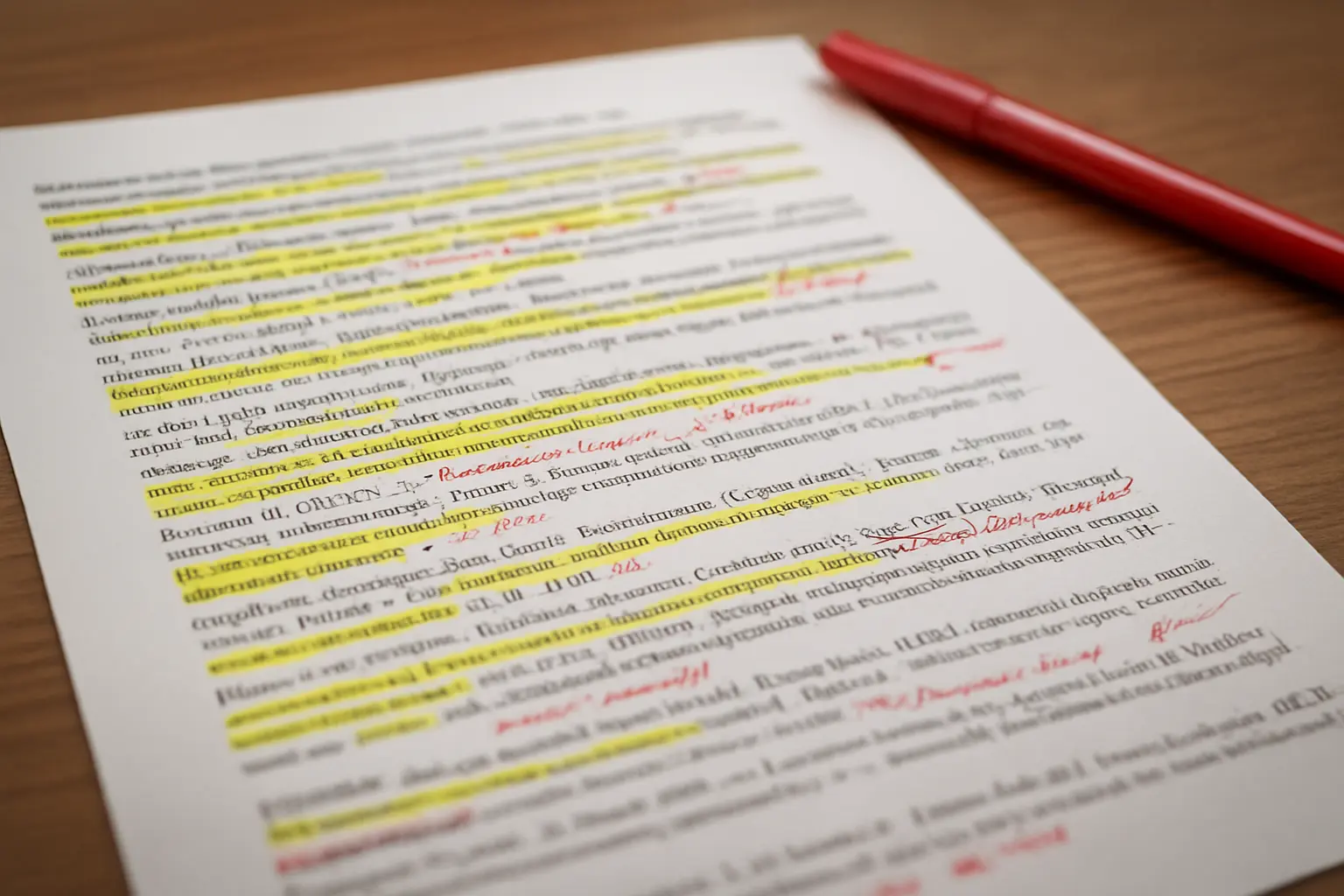
    A reference list marked up with corrections before submission
    Every red mark here is automatable — and none of them is about the quality of your research.

    What an AI referencing generator actually does

    Three things, when it is working properly. It extracts metadata — paste a DOI, a URL or a title and it identifies the source and pulls the structured details, which is where AI genuinely improves on the older form-filling generators. It formats — applying your chosen Harvard variant’s punctuation, order and italics consistently across every entry, which is the part humans do worst at midnight. And it synchronises — keeping the reference list matched to what you actually cited in the text, so nothing cited is missing and nothing uncited pads the list.

    What no generator does is read for you. The entry it produces is only as true as the metadata it found: publisher pages mis-capitalise titles, preprint versions masquerade as published articles, and a source you never opened remains a source you never opened however beautifully it is formatted. Citing sources you have not read is a misrepresentation problem, not a formatting one — the same honesty line we draw in our guide to using AI in a literature review.

    The free options, honestly

    ZoteroBib is a genuinely free, no-account bibliography generator from the Zotero team that supports Harvard styles — for a short essay it may be all you need. Full reference managers such as Zotero handle bigger projects free as well. Ad-supported web generators also exist; they work, but watch for paywalled exports and check their output more carefully. The gap all of them share is workflow: they format references, but they do not live inside your drafting, so keeping text and list synchronised across a 10,000-word dissertation remains your manual job — and that synchronisation is precisely where deadline-week errors breed.

    How it works in Tesify

    Tesify treats the bibliography as a by-product of writing rather than a separate chore. You draft your chapters in the editor; when you cite a source, the automatic bibliography records it, formats it in your citation style, and keeps the list synchronised as you edit — add a citation and it appears, delete the paragraph and it goes. Because the list is generated from what your text actually cites, the classic failure modes — cited-but-not-listed, listed-but-not-cited — stop being possible. Everything stays 100% written by you: Tesify structures and formats; the reading, the argument and the words are yours. That is the same division of labour more than 9,000 students use it for, across more than 15,000 chapters.

    The practical workflow: set your citation style once at the start; cite as you draft rather than leaving markers like “(REF)” to resolve later; and run one final pass against your department’s handbook — the twenty-minute check that catches the variant quirks no tool can know about. Law students should start with our OSCOLA guide instead, because footnote styles change the workflow itself.

    What stays your job

    Three checks, none of them long. Verify against the handbook, not against what looks right — your department’s variant is the marking criterion, and if the handbook is ambiguous, whether references count toward the word limit is worth checking at the same time, because inclusion rules differ sharply between universities. Verify the sources are real and read — every entry should correspond to something you opened. And verify the details on the handful of odd sources — old reports, translated books, grey literature — where metadata extraction is most likely to have guessed.

    Do those three and the bibliography stops being a midnight problem. Start your dissertation in Tesify free, set your Harvard variant once, and spend deadline week on the chapters that carry the marks.

    Frequently asked questions

    Is using a referencing generator cheating?

    No. Formatting citations is clerical work, and universities do not award marks for typing punctuation by hand. What academic integrity requires is that the sources are real, that you actually used them, and that the ideas you took from them are attributed — a generator changes none of those duties.

    Do I have to declare that I used a referencing tool?

    Almost never for pure citation formatting — declaration requirements target content generation, not formatting. If your department requires an AI-use statement, follow its wording; listing a formatting tool costs you nothing.

    How much does Tesify cost?

    You can start free and build real chapters with the automatic bibliography before deciding whether you need more. There is no charge to try the workflow on your actual dissertation.

    Is my dissertation safe if I write it in an online tool?

    Your work in Tesify is yours: it is not shared, published or added to any public database, and you can export your text. For any tool you use, the sensible habit is the same — keep your own exported backup of the current draft.

    Will the generated references match my university’s Harvard exactly?

    Choose your institution’s variant where available and the output will be close; the final authority is your handbook, and one sample check early in the project tells you whether anything needs adjusting. No tool can know an unwritten departmental preference.

    Can it reference websites, reports and lecture slides, not just journals?

    Yes — author–date styles have formats for grey literature, and the generator applies them. These are also exactly the source types where you should double-check the extracted details, because their metadata is the least standardised.

    What is the difference between a reference generator and a reference manager?

    A generator formats citations you feed it; a manager also stores your library, PDFs and notes across the whole project. For a dissertation you want managed references and generated formatting — Tesify does the second inside your draft, and pairs happily with a library in Zotero.

    My references are done but the chapters are not. Can Tesify help with those?

    Yes — that is the main job. It structures your dissertation chapter by chapter and helps you draft around your own research, with the bibliography maintained automatically as you go. Everything remains 100% written by you.